What a mantra is
A mantra is a word, syllable or phrase repeated deliberately — aloud, in a whisper, or silently — as an anchor for attention. The Sanskrit word is usually parsed as manas (mind) plus tra (tool or instrument): a tool for the mind. Traditions attribute sacred power to specific formulas; the practical mechanism needs no metaphysics. Repetition gives the verbal part of the brain a simple, rhythmic job, and a mind busy with one chosen sound has less bandwidth for anxious improvisation.
Three mantras you will meet everywhere
Om (Aum)
The seed syllable of Indian traditions, often described as three sounds in one — A, U and M — waking, dreaming and deep sleep, with the silence afterward as the fourth. Chanted at the start and end of many yoga classes. Try it: one long exhale, three parts, then listen to the silence. That listening is the point.
Om Namah Shivaya
One of the most widespread mantras in the world, commonly translated as "I bow to Shiva" — with Shiva understood either as the deity or, in a non-theistic reading, as the auspicious awareness within. Its five syllables (na-mah-shi-va-ya) make an ideal japa rhythm.
The Gayatri mantra
An ancient Vedic verse addressed to the light of the sun as a symbol of illuminating wisdom — for thousands of years it has been recited at dawn. If you explore only one traditional text, make it this one; whole books have been written about its twenty-four syllables.
How to practice: japa with a mala
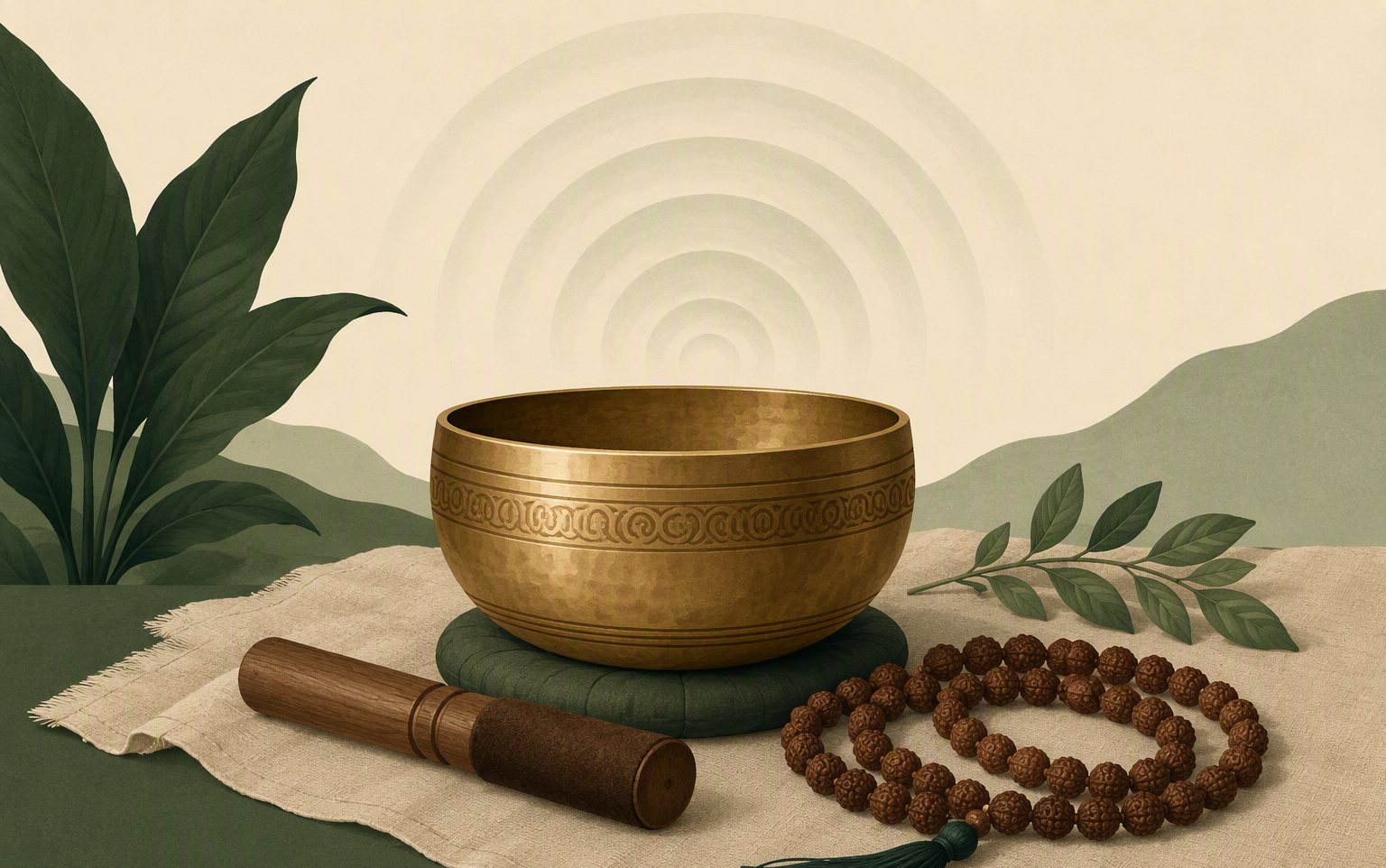
Japa is mantra repetition counted on a mala — a string of 108 beads with one larger "guru" bead as the marker.
- Sit comfortably. Hold the mala in your right hand, draped over the middle finger.
- Choose one mantra and stay with it — depth comes from repetition, not variety.
- One bead, one repetition. Pull each bead toward you with the thumb as you recite.
- When you reach the guru bead, pause. One full round is 108 repetitions, roughly ten minutes for most people.
- Finish with a minute of silence. The echo is part of the practice.
No mala yet? Count on your fingers or set a ten-minute timer. The beads help, but the repetition is the engine.
Sound and silence
Mantra practice pairs naturally with meditation: ten minutes of japa followed by ten minutes of silent sitting is a complete daily session. The mantra gathers the mind; the silence lets it settle. Some practitioners also hum a simple tone during pranayama — the bhramari "bee breath" is essentially mantra and breath practice fused into one.