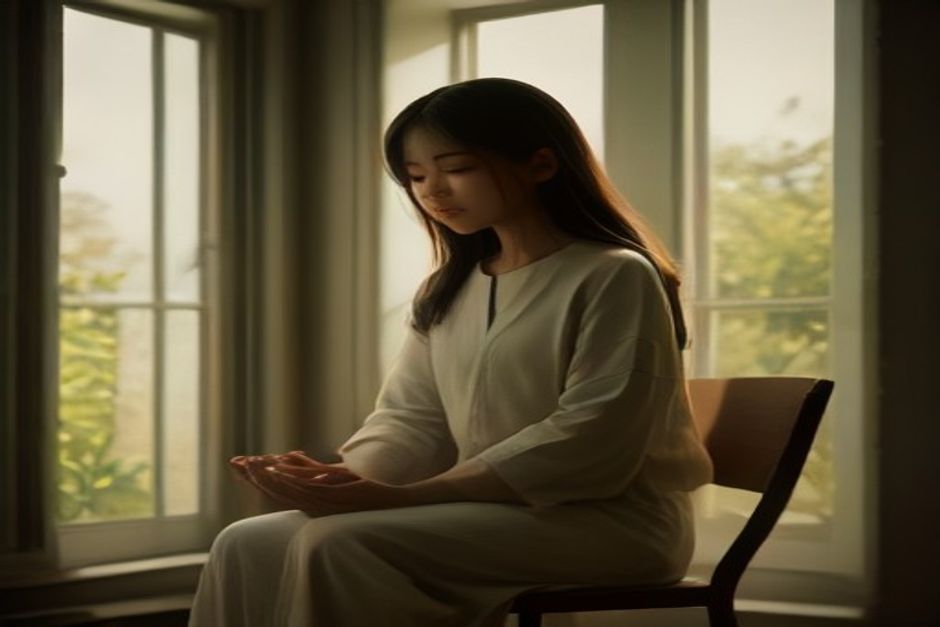
Gratitude practice has an image problem, and it earned it. Somewhere between the research literature and the social media feed, "notice what's good" got flattened into "be positive or you're doing life wrong." That version is worse than useless — it teaches people to paper over real difficulty with slogans. The older, quieter practice is different: it doesn't claim everything is fine. It simply refuses to let the difficult parts be the only data. Done honestly, gratitude meditation is an attention exercise, not a mood mandate.
Why bother at all
The mind has a well-documented tilt: threats, slights, and unfinished business get remembered in high resolution; ordinary support — the working knee, the friend's message, the hot water — registers faintly and fades fast. This negativity bias was useful on the savanna and is exhausting in a modern inbox. Gratitude practice is a deliberate counterweight: you spend a few minutes giving the quietly good things the same careful attention the anxious things get automatically. Research on regular gratitude practice links it with modest improvements in mood and sleep — modest being the honest word. It's a nudge, not a cure for depression or a substitute for therapy.
The practice (10 minutes)
Sit in any comfortable meditation posture — chair, cushion, floor. Set a timer so clock-checking isn't part of the session.
1. Arrive (2 minutes)
How: Feel the weight of the body, the contact points, the breath moving on its own. Let the day be over for now. Nothing to manufacture yet.
Why: Gratitude recalled from a racing mind comes out as a list read aloud. Two minutes of settling makes the noticing real instead of recited.
2. Three small things (5 minutes)
How: Bring to mind three specific things from the last day or two that supported you. Small is the instruction — not "my health" but "the way my shoulders loosened in the shower." Not "my family" but "my sister's ridiculous voice message." For each one, linger for a minute: replay the scene, the sensory detail, and notice what happens in the body as you do — often a faint warmth or softening somewhere around the chest or face. That bodily echo is the practice landing.
Why: Specificity is the whole mechanism. Abstract gratitude ("I'm grateful for everything") slides off the mind; a concrete memory with texture and detail actually engages it. Three items is enough — depth beats inventory.
3. Include the ordinary and the unlikely (2 minutes)
How: Widen the lens: the infrastructure of an ordinary day — clean water, a working kettle, the stranger who held the door. Then, optionally, one difficult thing you're grateful for having survived or learned from — without requiring yourself to be glad it happened.
Why: This is where the practice grows teeth. Gratitude that only works on good days is a fair-weather habit. Finding one thread of appreciation inside a hard week — "that was awful, and I'm grateful for the friend who called" — is honest, and honestly different from pretending the awful part was a blessing.
4. Close (1 minute)
How: Let the items go and rest in the residual feeling for a few breaths. If you like, direct it outward in a sentence: may some of this good reach the people who made it possible.
Why: Ending on the felt sense, rather than the list, is what turns a memory exercise into a meditation. The outward wish connects naturally to loving-kindness practice if you want to go further.
The honest difficulties
- "Nothing comes to mind." Lower the bar until something does: the coffee was hot. You woke up. The practice works at that resolution, and forcing grander items only builds resentment toward the cushion.
- "It feels fake." Then it's fake that round — noted, and continue. You're not required to feel grateful, only to look carefully. Feeling often follows looking, but it isn't the entry requirement.
- "My situation is genuinely bad." Grief, illness, and crisis are not gratitude homework. On the worst days the practice shrinks to one breath and one observation — "I'm still here, the chair still holds me" — or it waits entirely. That's allowed. For heavier weather, the body scan is often the kinder door.
Making it stick
Ten minutes daily beats an hour occasionally — this is true of gratitude practice as of everything else on the meditation page. Two anchors that work: practice right after your physical yoga (the mind is already settled), or pair it with writing — a page on yoga journaling covers that combination. After a few weeks, most people notice the practice following them off the cushion: mid-commute, mid-meeting, a small registering of this, right now, is okay. That's the whole point arriving quietly.