Three principles that matter more than any diet
1. Timing beats content
Practice on a reasonably empty stomach: two to three hours after a full meal, one hour after something light. This single rule improves practice more than any change of ingredients — a body busy digesting has no attention left for balance poses.
2. Eat to 80 percent
The yogic rule of thumb: fill half the stomach with food, a quarter with water, leave a quarter empty. Modern translation: stop at satisfied, not stuffed. Heaviness after eating is the enemy of the afternoon sit.
3. Food has an after-state
Ayurveda sorts food by how it leaves you feeling: clear and light (sattvic), wired and restless (rajasic), or dull and heavy (tamasic). Freshly cooked simple meals, vegetables, grains, legumes, nuts and dairy tend toward the first; ultra-processed, stale and heavily stimulating food toward the others. You do not need to believe the framework — just start noticing the after-state of your own meals. Your body has been running this experiment your whole life.
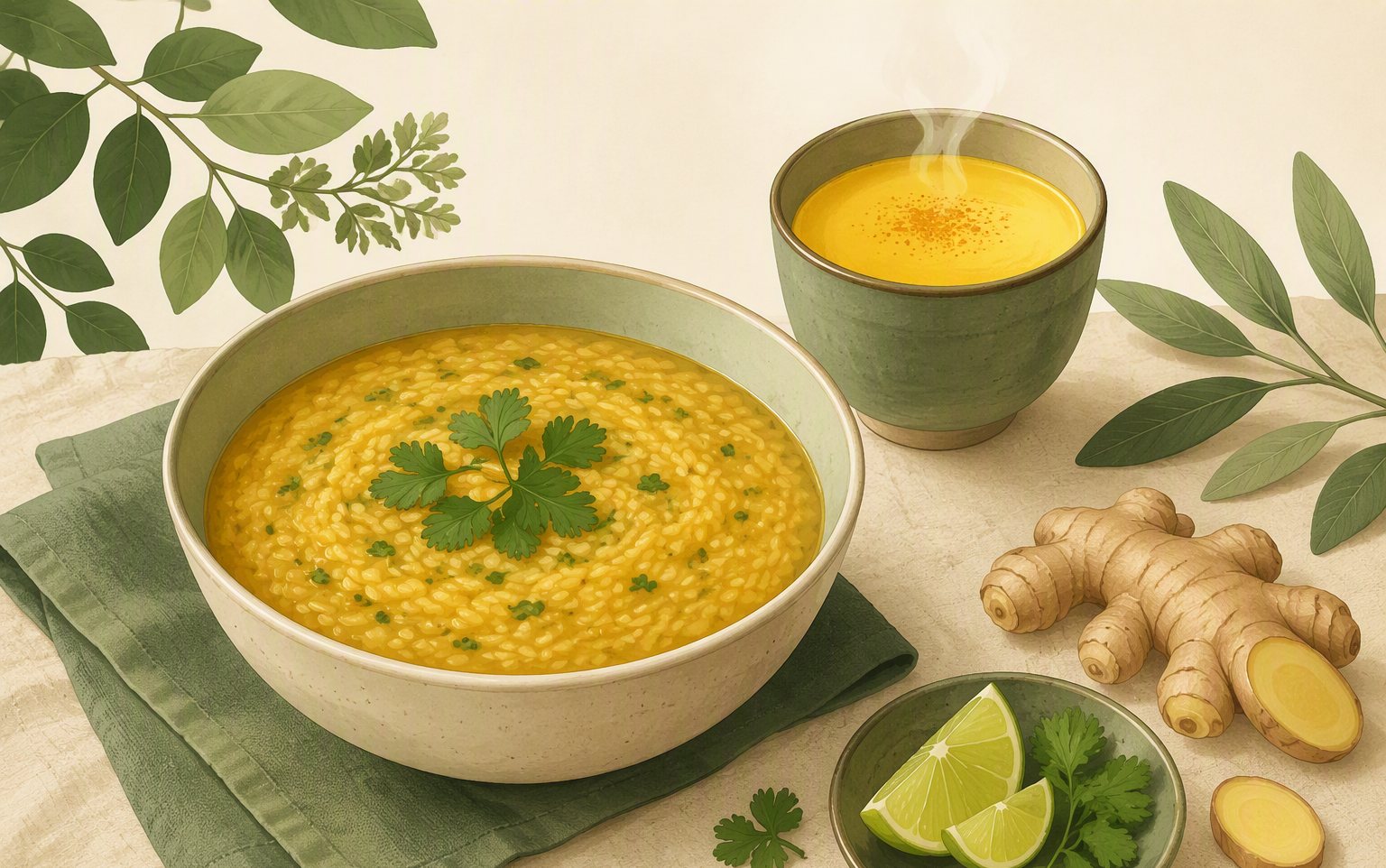
Recipe 1: Kitchari — the practitioner's one-pot meal
The classic yogic reset food: a complete protein of rice and mung dal, gentle on digestion, endlessly variable.
- Rinse ½ cup basmati rice and ½ cup split yellow mung dal until the water runs clear.
- In a pot, warm 1 tbsp ghee or oil; add 1 tsp cumin seeds, 1 tsp grated ginger, ½ tsp turmeric.
- Add rice, dal and 4 cups water. Simmer 30–40 minutes, stirring occasionally, until soft and porridge-like.
- Salt to taste; add chopped vegetables (carrot, zucchini, greens) for the last 10 minutes.
- Serve with fresh cilantro and a squeeze of lime. Serves 2–3.
Recipe 2: Golden milk — the evening cup
- Warm 1 cup of milk (dairy or oat) without boiling.
- Whisk in ½ tsp turmeric, a pinch of black pepper (it unlocks the turmeric), ¼ tsp cinnamon, a slice of fresh ginger.
- Simmer 3 minutes, strain, sweeten lightly with honey once it is below scalding.
- Drink in the last hour before bed — pairs perfectly with the evening wind-down.
Recipe 3: Date-nut energy balls — pre-practice fuel
- Blend 1 cup pitted dates in a food processor until a paste forms.
- Add 1 cup nuts (almonds, cashews or a mix), 2 tbsp cocoa or shredded coconut, a pinch of salt.
- Roll into balls, chill 30 minutes. Keeps a week in the fridge.
- One ball, forty-five minutes before practice, beats any commercial energy bar.