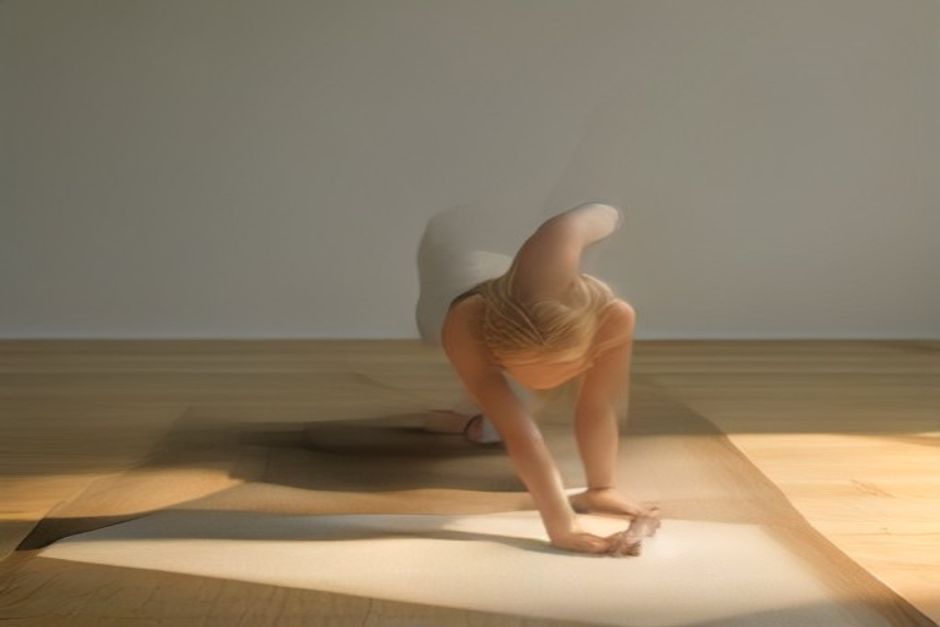
If yoga classes had a most-injured-pose leaderboard, Chaturanga Dandasana would be near the top. It shows up a dozen times in a single flow class, usually rushed, usually half-collapsed, and almost never taught with the same care as the glamorous poses. The name means "four-limbed staff pose" — chatur (four), anga (limb), danda (staff). The staff part is the point: your body stays one straight line from head to heels while your arms do the work of a slow, controlled lowering.
The problem is that most of us do not have the pushing strength to lower slowly with control, so we drop. The shoulders roll forward, the chest sinks below the elbows, and the front of the shoulder joint takes load it was never designed to take, over and over, class after class. The fix is not more willpower. It is a smaller, smarter version of the pose.
The setup that saves your shoulders
Start in a strong Plank Pose. Before you bend anything, shift your whole body forward on the toes until your shoulders come past your wrists. This forward shift is the step everyone skips, and it is the step that makes the geometry work: it pre-positions your elbows over your wrists so they can bend to a clean right angle. If you lower straight down from a normal plank, your elbows end up behind your wrists and your shoulders dive.
Full Chaturanga — Chaturanga Dandasana
How: From plank, rock forward on the toes. Hug your elbows in toward your ribs — not flared out like a gym push-up. Exhale and lower in one piece, as slowly as you can, until your upper arms are roughly parallel to the floor and your elbows are at about ninety degrees. Shoulders stay level with or above the elbows, never dipping below. Gaze slightly forward so the neck stays long. Hold for one breath, then lower all the way to the floor or press into Cobra or Upward Dog.
Why: Built this way, Chaturanga strengthens the triceps, serratus anterior, and the whole front body — the exact muscles that protect your shoulders in every other weight-bearing pose.
Knees-Chest-Chin — Ashtanga Namaskara
How: From plank, drop your knees to the mat. Keep the elbows hugging the ribs and lower your chest and then your chin to the floor, so eight points touch: two hands, two knees, chest, chin, and the tops of both feet. Your hips stay lifted — this is not lying down. From here, slide forward into Cobra.
Why: This is the classical alternative, not a consolation prize. It teaches the same elbow position and body line with about half the load, and it is what most people should be doing in a fast flow until full Chaturanga stops feeling like a trust fall.
Halfway with knees down
How: Knees on the mat, plank line from knees to crown. Shift forward, bend the elbows to ninety degrees, hold two breaths, then either press back up or lower to the belly with control.
Why: This builds the exact strength the full pose demands, at a dose your shoulders can adapt to. Two clean repetitions here beat ten sloppy full ones.
The three mistakes that cause the trouble
- Shoulders dipping below elbows. The classic. It hangs the shoulder joint on its ligaments. Stop the descent at ninety degrees, or reduce the load.
- Elbows flaring wide. Turns a triceps exercise into a shoulder grind. Keep the elbows tracking back, grazing the ribs.
- Sagging hips. The same fault as in plank — the core checks out and the low back sways. If you cannot hold the line, bend the knees.
A useful test: lower down and hold at the bottom for three full breaths. If you cannot, the full version is not yours yet. That is not failure; that is information.
How often should you do it?
In a vinyasa class you rarely get to choose — but you always get to choose your version. Treat every Chaturanga as one honest repetition rather than a toll you pay to reach Downward Dog. If your shoulders are already grumpy, swap in knees-chest-chin for a month and see what changes. Our guide on how often to practice makes the same point on a bigger scale: consistency with a sustainable version beats heroics followed by a layoff.