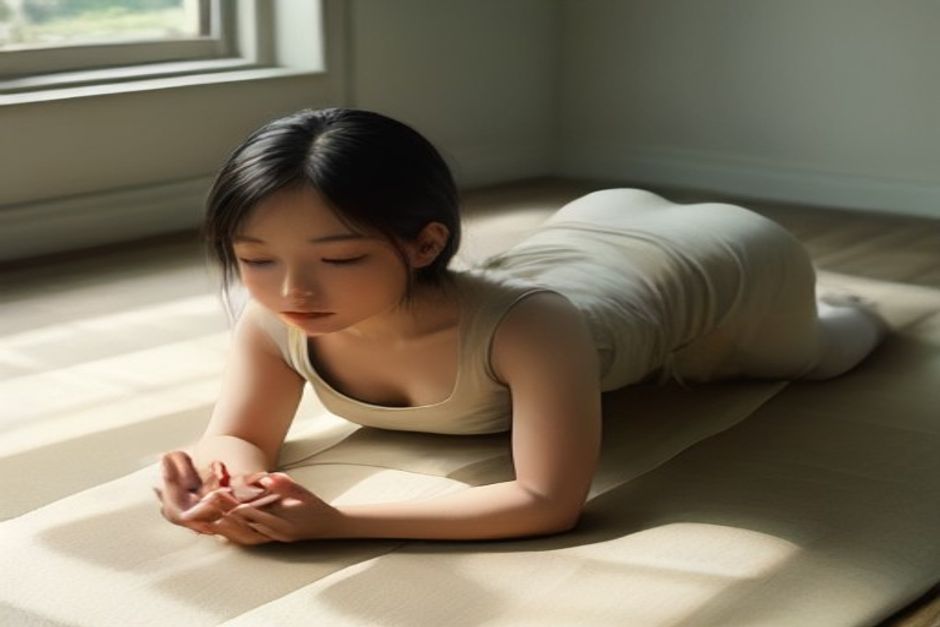
Every yoga class on Earth contains this pose, and most people rush through it to get to the "real" poses. That is backwards. Balasana — child's pose — is where you learn the skill the whole practice is built on: noticing the difference between effort and strain, and choosing rest before you desperately need it.
How to do it
The basic shape — Balasana
How: Kneel with big toes touching and knees as wide as feels good — hip-width or wider. Sit your hips back toward your heels, then walk your hands forward and lower your forehead to the floor. Arms can reach ahead (more shoulder stretch) or rest alongside your legs, palms up (more rest).
Why: The fold gently opens the hips and lower back, and the contact between forehead and floor has a reliably calming effect — this is the pose teachers offer when a class gets hard, and it works.
Supported version — for tight hips or sensitive knees
How: Place a bolster, firm cushion or folded blanket lengthwise between your knees and rest your entire torso on it. Turn your head to one side, switching halfway. Put a rolled blanket behind the knees if they pinch.
Why: Support removes the muscular work entirely, turning the pose into pure rest — ideal at the end of the day or between harder poses.
The three mistakes almost everyone makes
- Forcing the hips down. If your hips hover above your heels, that is fine — anatomy, not failure. Slide a blanket between hips and heels and let gravity work over weeks, not seconds.
- Ignoring the knees. Any pinching or sharp sensation in the knee means: knees wider apart, more padding, or skip the pose. The knee is a hinge; it does not enjoy being twisted or crushed.
- Holding the breath. The belly is compressed here, so breathing shifts to the back and sides of the ribcage. Feel the back body expand on each inhale — it is one of the best breathing lessons in yoga.
When to use it
Between any two poses, whenever your breath gets ragged, whenever your ego is writing checks your hamstrings cannot cash. In a home practice, try this: set a timer for five minutes, take child's pose, and just breathe into your back. That small act — resting on purpose, without quitting — is yoga in miniature.
Ready for a counterpoint? Downward-facing dog wakes up everything child's pose calms down — our foundational eight poses show where both fit in a full practice, and the four-week program builds rest days in on purpose.