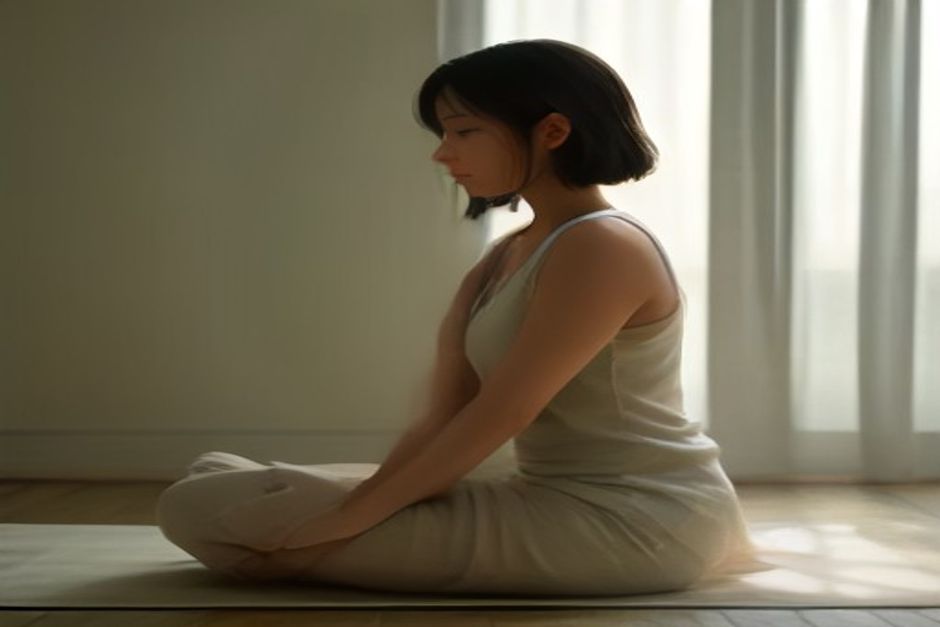
There is a particular kind of August morning when the air is already warm at seven, the mat feels slightly sticky before you have done anything, and the ambitious practice you planned in spring suddenly looks like a prank your past self played on you. Heat changes practice. Not by making it impossible, but by changing the terms: your heart rate climbs faster, your muscles feel loose before they are actually warm, and the line between "good effort" and "too much" moves without telling you where it went. The practitioners who keep going through summer are not the toughest ones. They are the ones willing to negotiate.
Practice earlier, or later, or not at noon
The single most effective hot-weather adjustment costs nothing: move the session. Early morning is the classic choice for a reason — the coolest hours of the day, a quieter nervous system, and the pleasant feeling of having done the thing before the day starts making demands. If you are not a morning person, late evening works nearly as well, especially for slower practices that set up good sleep. What does not work is the 2 p.m. power flow in a sun-baked room, unless your goal is a very educational headache. If your schedule is genuinely fixed at midday, shrink the session rather than skipping the timing question. Fifteen honest minutes beats forty-five heroic ones.
Turn the practice's thermostat down
Heat is already doing some of the work a vigorous sequence would do. Your job is to stop doubling it. Practically, that means fewer jump-backs and rapid vinyasa, shorter holds in the big effortful poses, and more time in the places heat actually helps: slow lunges, easy twists, long exhales. Think of it as cooking at a lower temperature for the same meal. A summer session might be five minutes of Cat-Cow and gentle movement, a few standing poses taken at walking pace, and a genuinely long floor finish. If you love strong practice and refuse to give it up, fine — but earn it with an early start, a fan, and a willingness to stop at "warm and worked" rather than "wringing wet."
One warning about the pleasant looseness heat creates: warm muscles stretch further, and further is not always better. Tendons and ligaments do not get more heat-resistant just because the room is hot. Treat the extra range as borrowed, not owned, and stay a step back from your edge.
Cooling breath, used honestly
Yoga's traditional answer to heat is Sitali, the cooling breath: inhaling through a curled tongue (or pursed lips if your tongue does not curl — genetics decides, and it is not a moral issue), then exhaling slowly through the nose. It genuinely feels cooling, partly through evaporation and partly because any slow breathing settles the system. Two or three minutes at the start or end of practice is plenty. Our full walkthrough is on the Sitali cooling breath page, and the broader map of breath practices lives at pranayama. Skip breathwork games like long retentions in serious heat — holding your breath in a hot room is a competition nobody wins.
Hydration without the marketing
Drink water through the day, not just during practice; arriving hydrated beats chugging mid-session. For a normal hour of practice, plain water before and after is enough — sports drinks are built for much longer, much harder efforts, and your Tuesday yoga does not qualify. The one claim to retire permanently is "sweating out toxins." Sweat is your cooling system, not your waste-disposal system; your liver and kidneys handle that department without help. Sweat more if you like, but do it because you enjoy it, not because you believe it is laundry.
The restorative evening option
Some August days, the correct practice is ten minutes of Legs Up the Wall in the coolest room you have, followed by bed. Heavy, hot, disrupted-sleep days are exactly what restorative poses are for, and using them is not a downgrade — it is the practice working as designed. If evenings are your only window, our notes on morning versus evening practice can help you match the session to the hour.
Safety note: Dizziness, nausea, chills despite the heat, a headache that sharpens, or suddenly stopping sweating are heat-illness warning signs, not sensations to breathe through. Stop, move somewhere cooler, hydrate, and if symptoms are strong or confusion appears, treat it as a medical situation. People with heart conditions, blood pressure issues, or pregnancy should talk to a clinician about practicing in heat.
Summer practice, done well, is smaller and smarter than the spring version. That is not a compromise. It is the same skill you have been building all along — paying attention to what is actually happening — applied to the weather.