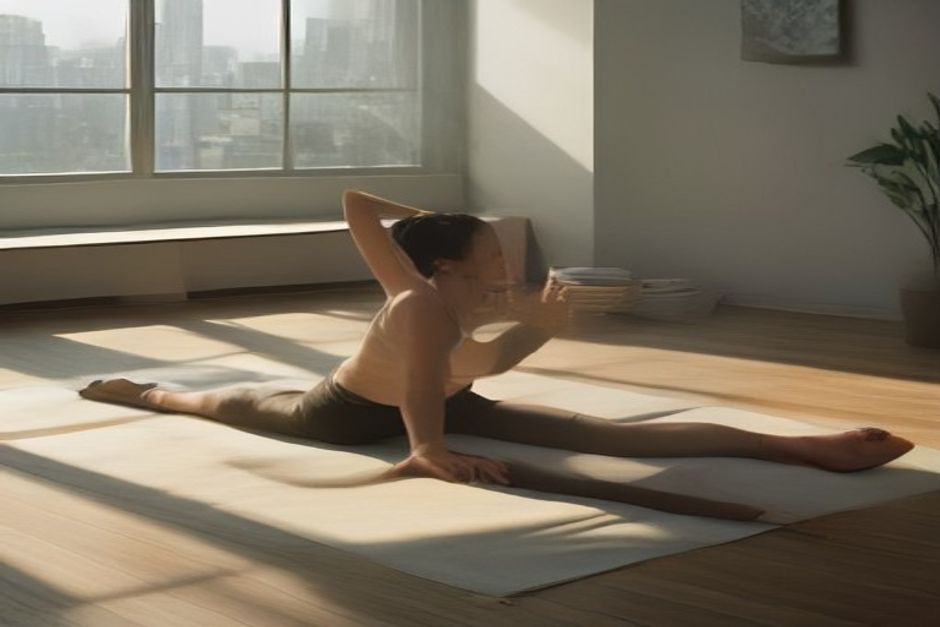
You did one yoga class — possibly your first, possibly just a harder one than usual — and the next morning your thighs have filed a formal complaint. Walking downstairs is suddenly a negotiation. This is normal, common, and almost always harmless. But "almost" is doing work in that sentence, so let's go through what the soreness is, how to read it honestly, and what actually helps.
What the soreness actually is
The stiffness that shows up 12 to 48 hours after unfamiliar exercise has a name: delayed-onset muscle soreness, or DOMS. It happens when muscles work harder, longer, or differently than they're used to — and yoga is excellent at "differently." Holding a lunge for a minute, lowering slowly through a push-up variation, stretching a hamstring past its usual Monday range: all of these create microscopic stress in muscle fibers, and the repair process is what aches. Yoga also loads muscles while they're lengthening, which produces more soreness per minute than almost anything else you can do in sweatpants.
Two honest clarifications. First, soreness is not a measure of how good your practice was. A skilful, well-paced class can leave you fresh, and a badly sequenced one can wreck you for three days. Second, soreness does not mean you were "releasing toxins" — that phrase gets repeated in studios and it isn't physiology. What you're feeling is ordinary muscle repair, the same as after a new workout of any kind. Our page on fascia covers what stretching does and doesn't change in the tissue itself.
Normal soreness versus warning signs
This is the part worth reading twice, because the whole skill is telling these two columns apart:
- Normal: a dull, spread-out ache in the muscles you used — thighs, hips, shoulders, the belly of the muscle. It's worst a day or two after, it eases as you warm up and move, and both sides of the body usually share it.
- Warning: pain that is sharp, stabbing, or electric; pain located in a joint rather than a muscle (knees, wrists, low back, neck); pain on one side only; pain that appeared during the pose rather than the next day; swelling or bruising; anything that gets worse over a week instead of better.
The first column is repair. The second column is a possible strain or joint irritation, and the correct response is to stop the thing that caused it and, if it doesn't settle within days, see a doctor or physiotherapist. Yoga should never produce joint pain; joint pain is a stop sign, not a milestone. This is the same standard we apply across the yoga basics: sensation in the muscle, yes; sensation in the joint, no.
What to do the day after
Counterintuitively, the worst response to soreness is the couch. Gentle movement increases blood flow to the repairing muscles and usually eases the ache within minutes. The day after a hard practice, the menu looks like this:
- Walk. Twenty or thirty minutes at an easy pace does more for sore legs than any stretch.
- Move slowly through range. A few rounds of cat-cow, gentle lunges, easy twists — nothing held long, nothing pushed. Think of it as showing the sore muscles that movement is still allowed.
- Rest actively at the end. Ten minutes of legs up the wall takes the pressure off heavy legs and is about the most pleasant recovery technique ever devised.
- Sleep like it's your job. Muscle repair happens mostly at night, which makes sleep the one recovery tool with no substitute. Hydration and a normal meal matter too, but neither will rescue four hours of sleep.
A very gentle practice the next day is fine and often feels good. A repeat of the hard practice is not fine. If you're unsure how to structure the week, the guide to rest days lays out a rhythm that keeps you practicing without digging a hole.
How to need this page less often
You can't avoid soreness entirely — nor should you want to, since it's the sign that your body is adapting. But you can keep it in the "mildly interesting" zone. Warm up before deep stretches; cold muscles complain far more. Increase gradually: if you practiced twice last week, three times this week is progress, and five times is a story you'll tell from the sofa. Back off ten percent before you think you need to, especially in long holds and deep hip openers. And end every practice with a few genuinely restful minutes rather than rolling up the mat mid-pant — the cool-down is where the nervous system files the session under "safe" rather than "threat."
Safety note: persistent one-sided pain, joint pain, numbness, or soreness that worsens over a week is not yoga soreness — it's a reason to pause and talk to a medical professional. No pose is worth practicing through a warning sign.
Soreness after yoga is your body adapting to a new request. Treat it as information, not as a grade: a little means "new territory," a lot means "too fast," and none means nothing at all. Move gently, sleep properly, and come back in a day or two. The mat will still be there, and so will your thighs — quieter this time.