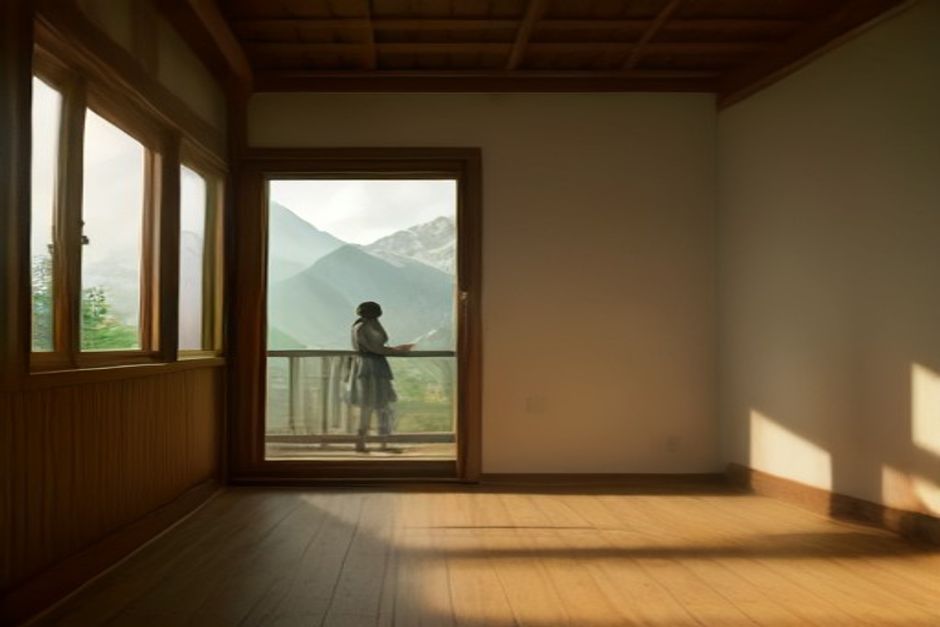
Somewhere along the way, meditation acquired a costume: crossed legs, straight spine, hands arranged just so, preferably on a cushion in a quiet room with attractive light. The costume is optional. Meditation is attention training, and attention works fine on two feet.
For some bodies, standing isn't just an acceptable substitute — it's the obvious choice. If sitting cross-legged makes your knees ache, if a chair makes your low back complain after five minutes, or if you simply fall asleep every time you get horizontal and comfortable, standing meditation removes the obstacle instead of fighting it.
Who this is for
- Knees that dislike floor sitting. Half-lotus is not a prerequisite for insight. If kneeling or crossing legs produces joint pain, standing sidesteps the whole problem.
- Low backs that seize in chairs. Standing distributes load differently, and many people with disc or SI grumbles find five upright minutes easier than five seated ones.
- The chronically drowsy. Sleepiness in meditation usually means the body read "still and comfortable" as "nap." Standing keeps the postural muscles gently employed, which keeps you awake.
- Anyone without ten free minutes of privacy. Standing practice hides in plain sight — bus stops, queues, the kitchen while the kettle boils.
None of this is a compromise. Some traditions — qigong especially — have treated standing as a primary meditation posture for centuries. Zhan zhuang, "standing like a tree," is an entire practice built on it.
The setup: mountain pose as a seat
Stand with your feet hip-width apart — not together, which is tippier than it looks, and not wide, which recruits more muscle than you need. Hip-width is the sweet spot for unremarkable stability.
Then, from the ground up:
- Feet. Spread your weight across three points per foot: base of the big toe, base of the little toe, center of the heel. Let the toes be long and quiet. (The full tour of why this matters lives in mountain pose and its variations.)
- Knees. Soft. Not bent, not locked — unlocked. Locked knees push you into your low back and cut circulation to the legs; a micro-bend keeps the joints stacked without gripping.
- Pelvis. Neutral. Imagine the pelvis as a bowl of water: don't spill it forward (arched back) or backward (tucked tailbone). Level is enough.
- Spine. Long. Let the head float up as if the ceiling had a polite claim on the crown. Ribs stacked over pelvis, not thrust forward.
- Arms. Wherever they're least interesting. Hanging by the sides is fine. Hands clasped loosely in front is fine. Pockets, surprisingly, are also fine for informal practice.
- Eyes. Closed if you're stable; open with a soft gaze at the floor a few feet ahead if you're not. Wobbling with eyes closed is normal — the visual system does a lot of quiet balance work.
The practice itself
Once the body is arranged, the meditation is the same as any seated breath practice — which is the point. The posture is the container, not the content.
A simple ten-minute version
- Minutes 1–2: Scan from feet to crown. Notice contact points, temperature, where weight actually sits. This settles attention into the body instead of the to-do list.
- Minutes 3–8: Rest attention on the breath wherever it's clearest — nostrils, chest, or belly. When you notice you've wandered (planning, remembering, judging the wandering), come back. The return is the rep.
- Minutes 9–10: Widen out. Let sounds, body sensations, and breath all be in the field at once. Then open your eyes, bend your knees a few times, and walk.
The standing-specific part
What makes standing meditation its own practice rather than seated practice without the chair is sway. Nobody stands perfectly still. Watch closely and you'll notice a constant, small oscillation — forward and back, side to side, like a tree in a light wind. This is your balance system doing its job, and it's a wonderful anchor: more honest than the breath, because you can't control it. Follow the sway for a few minutes and you'll understand why the qigong people never bothered with cushions.
Standing practice in the wild
The practical magic of standing meditation is that it's invisible. Nobody can tell the difference between "person waiting for a train" and "person meditating." Use that:
- In a queue: feel your feet, soften your knees, follow three breaths. The queue becomes a bell of mindfulness with terrible lighting.
- At the sink: hands in warm water, weight on the tripod of each foot, one full breath before you rush to the next thing.
- On a walk: if standing still feels too exposed in public, walking meditation is the same practice in motion.
Honest limitations
Standing is not automatically easier. Feet and calves fatigue; ten minutes of still standing is surprisingly athletic at first. Start with five minutes and build. If you have low blood pressure or tend toward lightheadedness, keep your eyes open and your knees soft, and sit down the moment anything feels swimmy. People with significant balance issues should practice near a wall or countertop, or choose a supported seat instead — the options in meditation posture cover the full menu.
And the usual disclaimer applies: the goal is not a special state. The goal is ten minutes of noticing what's already happening — breath, sway, sound, impatience — without immediately reacting to it. That skill transfers. The cushion never did the work anyway. You do, wherever you're standing. For more ways to build the habit, the meditation overview has the broader map.
Safety note: If you experience dizziness, faintness, or pain while standing still, stop and sit down. Persistent balance problems or lightheadedness are worth a conversation with a doctor — they're common, often simple, and not something to meditate through.