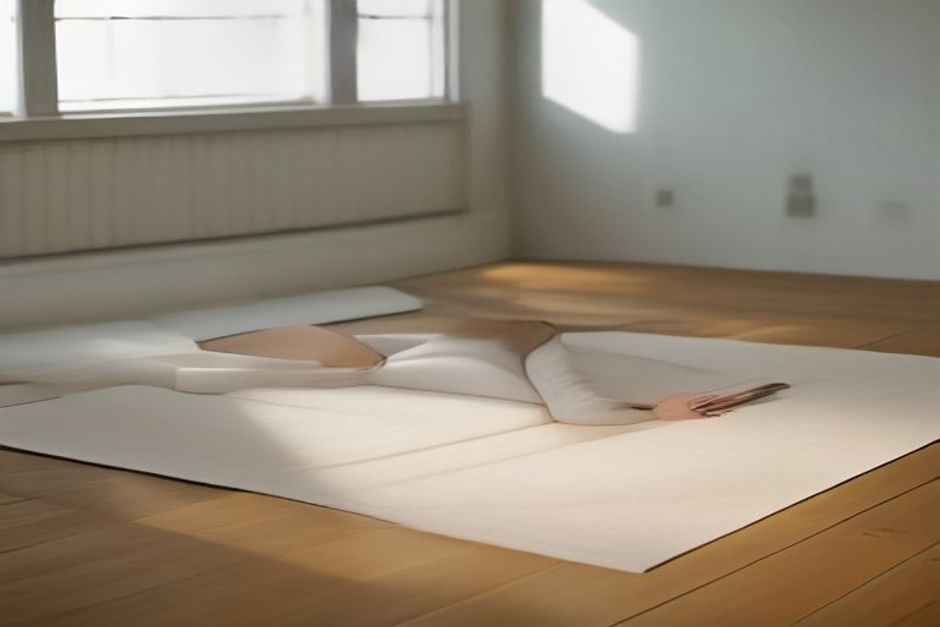
Savasana — Corpse Pose, from sava, corpse — is the pose where you lie down at the end of practice and do absolutely nothing. It is also, by near-universal agreement among teachers, the hardest pose in yoga. Not physically — a rug could do the physical part — but because there is nothing left to hide behind. No alignment to fuss over, no edge to chase, just you and your unmedicated mind lying on the floor for five to fifteen minutes. The good news: Savasana responds beautifully to engineering. The right props can talk a restless body into stillness, and the variations below cover most of the situations where the classic flat version fails.
Why the ending matters
Physiologically, Savasana is where the nervous system shifts gears — heart rate slows, breathing deepens, the stress response stands down. Skip it and you take your practice's agitation straight back into your day; keep it and the benefits of everything before it seem to settle in and stick. Tradition frames it more poetically: you rehearse letting go completely. Either way, it is the pose that makes yoga yoga rather than stretchy exercise — more on that distinction in our philosophy overview.
Classic Savasana — the baseline
How: Lie on your back, legs extended and slightly apart, feet flopping outward. Arms rest away from the body, palms up. Close the eyes. Do one deliberate scan — feet, legs, hips, belly, hands, shoulders, jaw — releasing each part as you go. Then stop managing anything. Stay five to fifteen minutes; set a timer if time anxiety keeps you alert.
Why: Palms up keeps the shoulders rolled open; the scan gives the busy mind one last job before it is asked to clock out. If ten minutes feels impossible, start with three and add thirty seconds a week. Duration is trainable, like everything else on this site.
Bolstered Savasana — for the low back
How: Place a bolster, firm cushion, or rolled blanket under your knees before lying back. Optionally slide a thin folded blanket under the head so the chin is level with the chest, not tipped back.
Why: A flat back with extended legs asks the hip flexors to hold tension, and many lower backs respond with an ache that makes stillness impossible. The bolster tips the pelvis, flattens the lumbar curve, and lets the back muscles actually disengage. If classic Savasana hurts, this is not a modification — this is the correct pose for your body.
Bent-knee Savasana — constructive rest
How: Knees bent, feet flat on the floor as wide as the mat, knees knocking together to rest against each other. Hands on the belly if you like.
Why: The most stable, back-friendly position available, and the best one for feeling the breath move the belly — useful if you are learning diaphragmatic breathing from our pranayama page. Knees together means zero muscular effort to hold the legs.
Side-lying Savasana
How: Roll to either side (left is traditionally favored), a pillow between the knees and another under the head. During pregnancy, left side-lying with generous pillows is the standard recommendation — ask your care provider.
Why: Lying flat on the back is not for everyone — late pregnancy, some back conditions, reflux, and plain discomfort all have good reasons. The pose still works on your side; stillness is the active ingredient, not the floor plan.
Eye pillow Savasana — for the busy brain
How: Any of the above positions, plus a lightly weighted eye pillow (or a folded soft cloth) over the closed eyes. A blanket over the body if the room is cool.
Why: Gentle weight on the eyes is a remarkably reliable off-switch for mental chatter — it darkens the world and gives the face something to feel besides its own tension. Body temperature drops when you stop moving, so the blanket is comfort engineering, not luxury.
When the mind refuses
Some days the body lies down and the mind starts drafting emails. Standard advice applies: count breaths backwards from twenty, or give each exhale a word (release, down, enough). If restlessness wins, do not abandon the pose — shorten it. Ninety seconds of genuine rest beats ten minutes of irritable floor time, and consistency beats heroics here as everywhere. If you want structured stillness practice, our meditation page is the next stop, and Legs Up the Wall is Savasana's even more restorative cousin for wired evenings (see also yoga and sleep).
B.K.S. Iyengar called Savasana the most difficult of all poses — to still the body is easy, he noted, but to still the mind is the work of a lifetime. Props help. Timers help. Practice helps most. Lie down, arrange your supports, and do the hardest, simplest thing in yoga: nothing, on purpose.