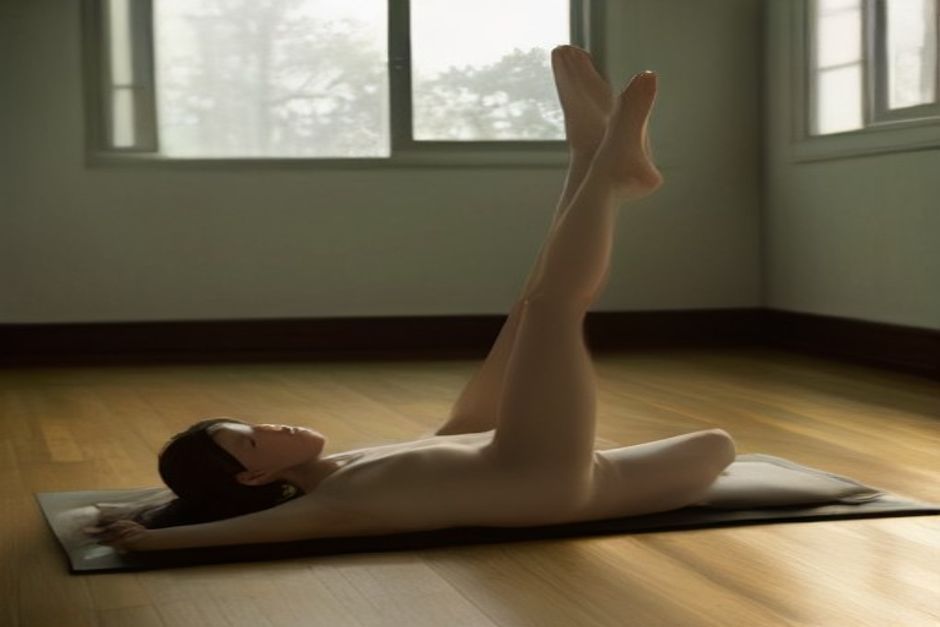
Every yoga tradition has a version of the lying-down twist, and every tradition puts it near the end of practice. That placement is not an accident. After a session of standing, folding, and bending, the spine has earned a slow, gravity-assisted rotation — and the nervous system has earned a signal that the work is over. The Reclined Spinal Twist delivers both in under three minutes.
What a reclined twist is good for
The obvious target is the spine: gentle rotation through the thoracic and lumbar vertebrae, the kind of movement desks and car seats remove from modern life. But the pose works wider than the back. The top leg stretches the outer hip and glute — tissue that runners and cyclists know intimately — and the open arm position gives the chest and front shoulder a mild stretch on the non-twisting side. Perhaps most valuable: because the pose is passive, slow breathing comes easily, and slow breathing is what actually shifts the body out of "doing mode." Twists are often described as "wringing out" tension or even toxins; the honest version is that rotation plus exhales feels like wringing out a long day, and that's enough.
Reclined Spinal Twist — Supta Matsyendrasana
How: Lie on your back. Hug both knees toward your chest for a breath. Stretch the arms out to the sides at shoulder height, palms down, in a T shape. Let both knees fall to the right, keeping the knees stacked or letting the lower one rest on the floor. If the knees hover uncomfortably, slide a pillow or folded blanket under them. Turn the head to the left if the neck allows — or keep it neutral. Stay for five to ten breaths, then bring the knees back to center on an inhale and repeat to the other side.
Why: Keeping both shoulders heavy on the floor anchors the twist in the mid-back rather than dumping it into the low back. The prop under the knees is not a compromise — it's how you make the pose passive enough to actually release.
One-Leg Extended Twist
How: From your back, extend the left leg along the floor. Draw the right knee to the chest, then guide it across the body toward the floor on the left, right hand resting lightly on the knee. Left arm extends to the left.
Why: The extended leg intensifies the outer-hip stretch on the bent-knee side — the iliotibial band and glute region that gets short from sitting and running. This version is sometimes the one pose that makes cyclists exhale audibly.
Supported Long Hold
How: Take the basic twist with a bolster or firm pillow between the knees and another under the knees. Close your eyes. Stay for two to three minutes per side, breathing into the ribs.
Why: Fully propped, the pose becomes restorative rather than a stretch. Useful before sleep, after travel, or on any day when "practice" needs to mean "lie down with intention." More ideas in this vein live on our yoga for sleep page.
Common mistakes
- Forcing the knees to the floor. If reaching the floor requires hoisting a shoulder off the mat, the floor is too far. Prop the knees. The stretch should live in the back and hip, not in a wrestling match with gravity.
- Skipping one side. Bodies are asymmetric; left and right will feel different, sometimes startlingly so. Do both, and notice the difference without judging it.
- Rushing the exit. Roll out of the twist slowly, pause in the center for a breath, then switch. The pause is where the spine recalibrates.
Where it fits in a practice
Last, or nearly last. A simple closing sequence: Happy Baby, Reclined Twist on both sides, then Savasana. After backbends like Bridge or Wheel, the twist neutralizes the spine. After standing sequences built around Warrior poses, it releases the outer hips that worked hard to stabilize you. If you only have five minutes in a day, this pose plus slow breathing is a legitimate minimum practice — something the how often should you practice discussion touches on.
Teachers sometimes say twists "detox" the organs. Take that as poetry about how good rotation feels, not physiology. What a reclined twist demonstrably does — release the back, open the hip, slow the breath — is already a full evening's work.