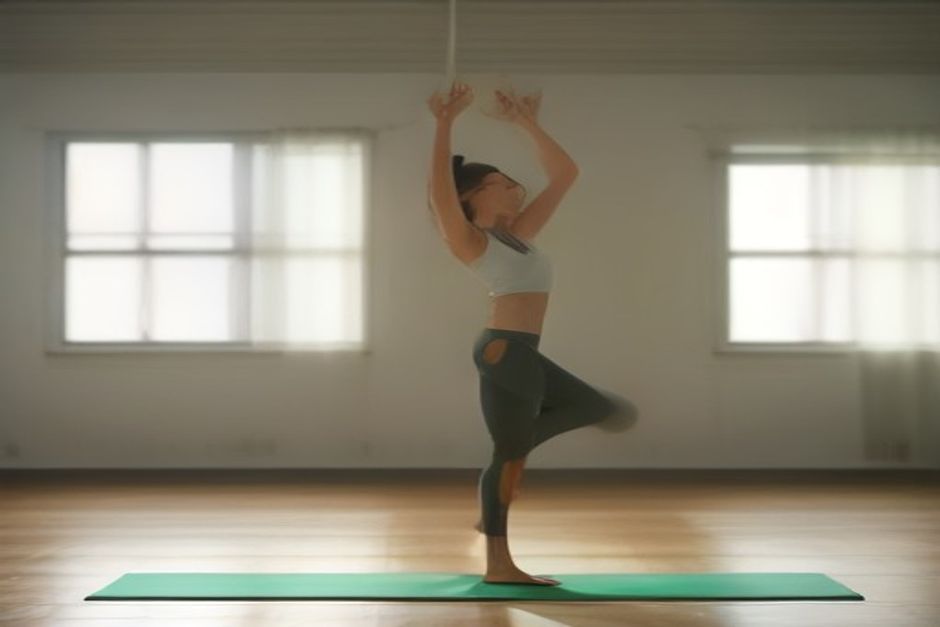
Some mornings the body is technically awake but clearly still buffering. Coffee helps, eventually. Breath of Joy is the faster option: a standing, three-part breath with big arm sweeps that takes about two minutes and leaves you feeling like someone opened a window inside your chest. It comes out of the Kripalu yoga tradition, where it is used as a warm-up — a way to arrive in the body before slower practice begins. Despite the name, there is nothing mystical about it. It is a large breath, taken in pieces, paired with large movement.
What it actually is
Most pranayama is done sitting still. Breath of Joy breaks that pattern. Each round combines a three-part inhale — three separate sips of air, each with its own arm movement — with one long, audible exhale as the arms swing down and the body folds. The result sits somewhere between breathing exercise and light aerobic movement, which is exactly why it works when a seated breath practice would just make a groggy person groggier.
It is also unusually forgiving. There is no counting to hold, no retention, no forcing. If kapalabhati is an espresso — sharp, hot, and easy to overdo — breath of joy is a brisk walk outside.
How to do it
Set up
Stand with your feet hip-width apart, knees soft. Let your arms hang. Take one ordinary breath first — you are not a machine that needs to jump straight to operating speed.
The three-part inhale
First sip: inhale through the nose to about a third of your capacity while sweeping both arms forward and up to shoulder height, palms facing each other.
Second sip: inhale another third while opening the arms out to the sides, like a cactus or a referee signaling a field goal.
Third sip: top the lungs off while sweeping the arms overhead, palms facing each other again.
The three sips are separate, rhythmic, and fairly quick — sniff, sniff, sniff — not one slow inhale chopped into pauses. Each arm position matches a region of the lungs filling: low, middle, top. If you have practiced dirga, the three-part breath, the geography is the same; only the pace and the standing posture change.
The exhale
Now exhale everything through the mouth with an open, unforced haaah while swinging the arms down and behind you, letting the knees bend and the torso fold forward. The exhale is the release — long, audible, and complete. Do not worry about looking elegant. Nobody looks elegant doing this, and that is part of why it works.
Repeat
Come back to standing and go again. Start with five rounds. If you feel good and want more, work up to ten. That is the whole practice.
Why it energizes without the jitters
Three ordinary mechanisms, no mystery:
- Full lung use. Most of us breathe into the top third of the lungs by default. Three deliberate sips recruit the lower and middle lobes, which means more oxygen exchange per breath — you feel it as alertness.
- Movement. The arm sweeps and the fold get large muscle groups working, which raises circulation and body temperature slightly. It is light exercise wearing a breathing costume.
- The audible exhale. A long, open-mouth exhale discharges physical tension — the same reason a sigh feels good, done on purpose. Our nervous system anatomy page explains why the exhale is the lever that shifts state.
What you get is wakefulness without the edge that caffeine or fast, forced breathing can produce. The breath is big but never strained, and there is no breath-holding — which is where most breathwork jitters come from.
Where it fits
Breath of joy works best as an opener: first thing on a slow morning, before a practice session, or in the 3 p.m. slump when you are about to make a coffee decision you will regret at midnight. Two minutes, then get on with things. It also pairs well at the start of the five-minute daily pranayama routine if you want your morning version to lean energizing.
Who should go easy
Honest limits, because energizing practices have real effects:
- Dizziness is a stop sign. The three big inhales can make you light-headed, especially on the first few rounds. If the room swims, sit down and breathe normally. Next time, take smaller sips and fewer rounds.
- Low blood pressure or a tendency to faint: keep the arms below shoulder height and move slowly, or skip the standing version entirely.
- Pregnancy: keep the fold shallow and the breath gentle; when in doubt, choose a seated practice instead.
- Back, hip, or shoulder issues: the forward fold and overhead reach are the parts to modify — bend more at the knees, sweep the arms lower. The breath is the point; the arms are decoration.
- Evening practice: this is a wake-up breath. Done at 10 p.m., it works as advertised. That is not always what you want at 10 p.m.
Two minutes, five to ten rounds, one open window in the chest. For quieter days, the seated techniques in the pranayama section are waiting — breath of joy is the one for mornings that need a push, not a pillow.