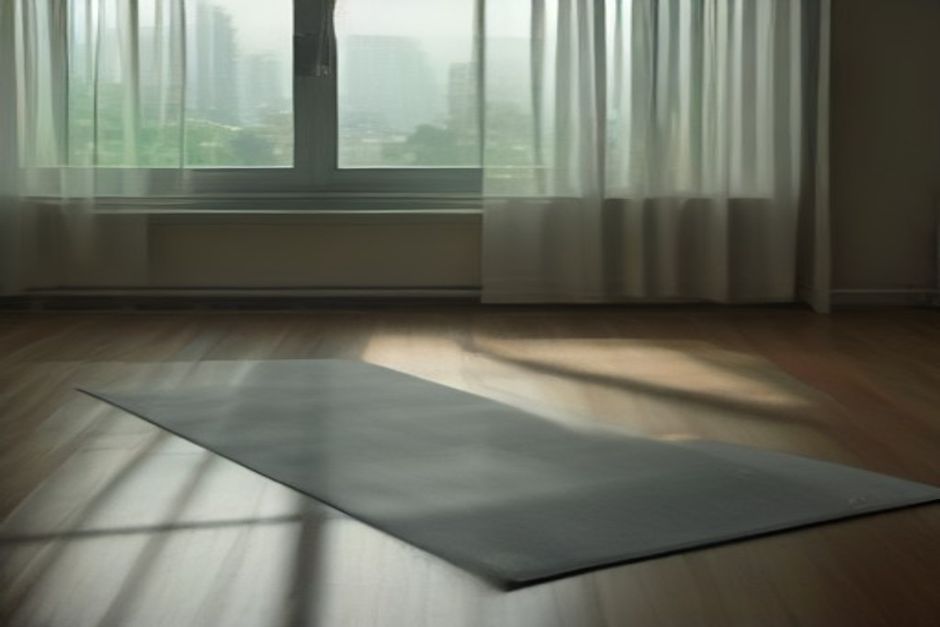
There is a particular kind of gray morning — rain tapping the window, light like dusk at ten a.m. — when the idea of a vigorous practice feels like a suggestion from a more ambitious stranger. The standard advice is to push through. Here is the better advice: don't. Rainy days are not failed sunny days. They are a different climate, and the practice that fits them is different too: slower, lower, warmer, quieter. Work with the weather and you get one of the best practices of the season. Fight it and you get twenty minutes of resentment.
Why rain changes the practice
Gray light lowers energy honestly — less light means the body leans toward rest, and pretending otherwise costs willpower you will need elsewhere. Wet, cool air also makes joints feel stiffer and muscles slower to warm. None of this is a defect; it is information. A rainy-day practice accepts the information and adjusts: more floor work, longer holds, extra warmth at the start, and no agenda of achievement. Think of it as the yoga equivalent of soup. The winter practice runs on the same logic, just with a longer season to practice it.
The sequence: 25 minutes, one blanket
Dim the lights or don't turn them on at all. Put on the socks you would normally take off. Rainy-day rules apply.
Child's Pose with a twist — Balasana, 3 minutes
How: Knees wide, big toes touching, fold forward over a cushion or folded blanket. After a minute, walk both hands to the right and breathe into the left side; then switch.
Why: Starting on the floor matches the day's energy instead of arguing with it. The side stretch wakes up the ribs, which rain-and-slump posture compresses all morning.
Cat-Cow, slower than usual — 2 minutes
How: On all fours, move through cat-cow at half your normal speed, letting the breath lead. Then add slow circles, hips swaying, spine exploring rather than performing.
Why: Cold, damp days stiffen the spine from the inside out. Slow movement with breath is warmer than any stretch.
Low lunge with padding — 2 minutes each side
How: Step one foot forward, back knee down on a folded blanket, hands on the front thigh. Stay upright; this is not a depth contest. Sway gently forward and back.
Why: Rainy days are sitting days, and sitting shortens the hip flexors. Two quiet minutes here undoes the chair more honestly than any heroic stretch.
Legs up the wall — Viparita Karani, 5 minutes
How: Sit sideways against a wall, swing the legs up, and lie back. Arms open, eyes closed, blanket over you if the room is cool.
Why: This is the pose gray weather was invented for. The rain provides the soundtrack; you provide nothing at all.
Savasana under a blanket — 5 minutes
How: Flat on your back, covered, hands open. Let the sound of the rain be the whole practice.
Why: If you like, treat it as meditating on the sound of rain — attention resting on something that asks nothing of you.
The breath that fits
Skip anything heating or aggressive today. Long, easy exhales are the whole program: inhale for four, exhale for six, through the nose, for a few minutes between poses or at the end. This is the simplest tool on our breathwork page, and on a low, gray day it works better than any energizing technique — you are not trying to manufacture sunshine, just to stop fighting the weather.
Using the sound
Rain is free ambient music, and the mind latches onto it easily — which makes it a first-class meditation anchor. Instead of labeling thoughts and returning to the breath, return to the rain. It is variable enough to stay interesting and constant enough to hold. Some of the calmest sittings of the year happen on the worst weather days, precisely because the outside world has stopped competing for attention.
Anyone who says sunshine brings happiness has never done yoga in the rain.
The gray day will end on its own schedule. Meanwhile there is a mat, a wall, a blanket, and the sound of water on glass. Some practices build fire. This one builds shelter — and on a rainy day, shelter is the more advanced pose. Save it for when you crawl into bed feeling like the day was used rather than survived.