Every yoga routine has a natural predator, and it is January. The alarm goes off in darkness, the floor is cold, the body is stiff in a way it was not in July, and the whole idea of practice feels like it belongs to a more energetic person. This is normal, it is seasonal, and it is solvable — not with willpower, but with a few deliberate changes to how you practice between November and March.
First, renegotiate the deal
The biggest winter mistake is holding yourself to your summer standard. In warm months, an hour of flowing practice feels natural. In winter, demanding the same creates a daily negotiation you will eventually lose. So change the terms: twenty minutes counts. Ten minutes counts. Three sun salutations and a long forward fold counts. Frequency beats duration — five short sessions a week will carry you further than one heroic ninety-minute class followed by six days of guilt. The how often should you practice piece makes the full case, but the winter version is simple: shrink the unit, keep the streak.
Remove the friction, physically
Winter practice dies of small inconveniences. Fix them the night before:
- Leave the mat unrolled, or at least visible. A mat in a closet is a practice that did not happen.
- Warm the room first, or practice near a heat source. Cold muscles do not open; they protect themselves by tightening.
- Practice in warm clothes — socks and a jumper are legal. You can shed layers as you heat up; you cannot will yourself warm.
- Have a default sequence memorized so there is nothing to decide at 6:40 in the morning. Decision fatigue ends more practices than stiff hamstrings ever will.
Warm from the inside
The body in winter wants heat built gradually, not imposed. A good cold-weather session starts slower and smaller than its summer twin:
- Start on the floor. Cat-cow, gentle twists, a few rounds of child's pose with long exhales. Two minutes of this tells your nervous system the plan.
- Build heat with breath. A minute or two of gentle bellows breath or simply faster-than-usual ujjayi generates real internal warmth — but go easy: strong breathwork has contraindications, and dizziness means stop.
- Then move repetitively. Sun salutations are winter's best friend: rhythmic, symmetrical, and they raise core temperature within a few rounds. Add chair pose and warriors if you want more fire.
- Finish long and warm. End under a blanket, not on bare floor. Winter savasana deserves props.
Let the season set the style
Fighting winter is optional; working with it is smarter. Dark months are the natural habitat of the slow practices: yin holds, long restorative shapes, yoga nidra under a blanket, seated meditation with a cup of tea within reach. If vigorous practice is what keeps you consistent, do that. But if you find yourself resisting the mat entirely, the answer is often not more discipline — it is a quieter practice that matches the season. Winter is when many practitioners discover that stillness was the thing they were avoiding all year, and that turns out to be the most useful discovery of all.
You do not have to practice like it is June. You have to practice like it is today.
Use the light you have
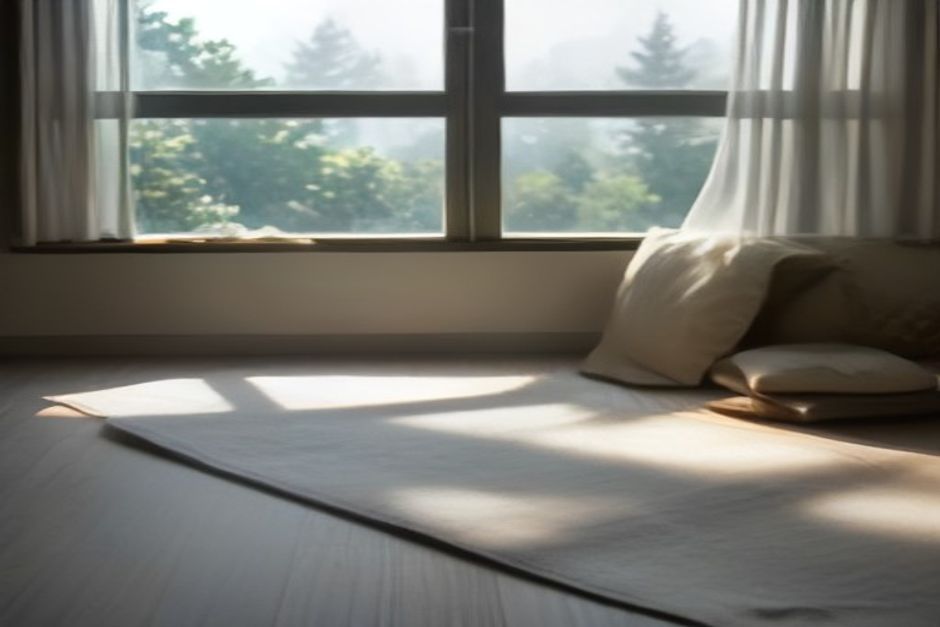
Morning light is scarce and precious in winter. If your schedule allows it, practicing near a window in the morning does double duty: the practice wakes the body and the light helps regulate the sleep-wake cycle that dark months scramble. Our morning practice page has the full argument for early sessions; in winter it matters twice as much. And if sleep itself is falling apart in the dark season, yoga for sleep covers the evening side of the equation.
The honest bottom line
Nobody maintains an identical practice twelve months a year, and the people who appear to are mostly lying or injured. Winter practice is shorter, slower, warmer, and more forgiving — and it is exactly the practice that gets you to spring with the habit intact. The mat does not care about the weather. It only cares that you show up, however briefly, in whatever you are wearing, with whatever energy the season left you.