Aparigraha is usually translated as non-grasping, non-possessiveness, or non-hoarding. It is the fifth of the five yamas — the ethical foundations that come before any posture in Patanjali's eight limbs — and the one that sounds most like a lecture about your closet. Break the word down: parigraha is grasping, seizing, accumulating; the prefix a- negates it. But the sutra that names it (aparigraha-sthairye janma-kathanta-sambodhah, roughly: steadied in non-grasping, one sees clearly how life comes and goes) is not really about stuff. It is about what grasping does to attention. The yamas and niyamas page has the full framework; this one is about putting the fifth yama to work on an ordinary Tuesday.
The grip, not the object
The useful distinction is between having and grasping. You can own a house, a mat, a favorite mug, and hold them all loosely. You can also own almost nothing and grasp constantly — at status, at being the kind of person who owns almost nothing, at being right in arguments. Aparigraha asks you to notice the clench, wherever it lives. A few places it reliably hides:
- Possessions. Not the number of things, but the relationship: the drawer you cannot open without a small negotiation, the purchase made to fix a feeling. This is the terrain yoga and minimalism covers from the practical side.
- Outcomes. Practicing for the pose photo, working for the promotion, meditating to become a person who meditates. The grasping is in needing the result to arrive on schedule.
- The past. Old injuries you define yourself by, old capacities you mourn in every forward fold, old grievances rehearsed in the shower. Grasping at what was is still grasping.
- Other people. Wanting them to be the version you prefer. The fourth yama's neighbor, asteya (non-stealing), covers not taking; aparigraha covers not clutching what you already have — including your idea of someone.
On the mat: letting the pose be enough
The mat is the cheapest laboratory for this. Watch a room of people in triangle pose and you can see grasping in high definition: the hand reaching for the floor that the hamstrings have not agreed to, the glance at the neighbor's depth, the jaw set against the body saying not today. The pose you can actually do today — with a block, with a bent knee, with breath — is aparigraha in physical form. The pose you are forcing because you did it last year is parigraha with a yoga mat under it.
Two concrete practices:
- Let one pose per session stay unimproved. Pick a pose you usually push, and deliberately practice it at eighty percent. Notice the itch to close the gap. That itch is the thing the yama is about.
- End the practice when it ends. The urge to add one more pose, one more round, one more minute after you are done — that is grasping at the session. Yoga off the mat starts with ending the mat part on time.
Off the mat: three small experiments
Aparigraha is a practice, not a personality trait, so it goes better with experiments than with vows.
The one-shelf audit. Choose one shelf, drawer, or folder. Take everything out. Put back only what you have used in the last year or genuinely love. Notice — without drama — the items you put back anyway, and why. You are not decluttering; you are watching the grip operate.
The unclaimed outcome. Do one piece of work this week without checking how it lands. Send the email and do not reread it. Cook the meal and do not fish for the compliment. This is harder than it sounds, which is the point.
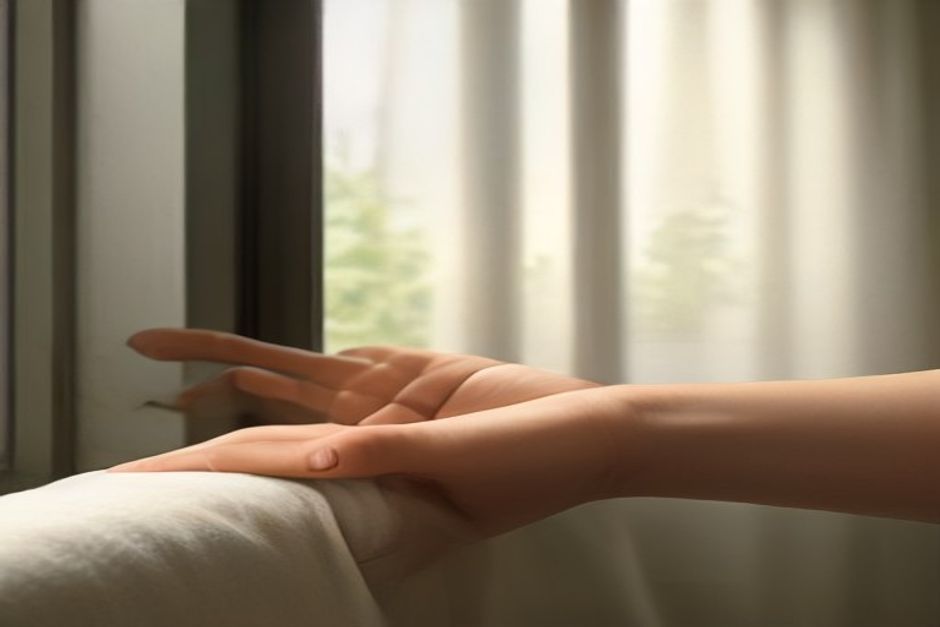
The open hand. In meditation, rest your hands palm-up on your thighs and keep them there. Each time you notice a thought you are clenching — a plan, a worry, a replay — let the hands stay open and let the thought be what it is. Noting practice pairs well with this: label it, open the hand, return.
"When you realize nothing is lacking, the whole world belongs to you." — attributed to Lao Tzu. Aparigraha's older cousin from a different tradition, making the same point.
What aparigraha is not
It is not austerity for its own sake, and it is not indifference. Non-grasping does not mean not caring — it means caring without needing to possess the result. You can train hard, save money, love people fiercely, and hold all of it with an open hand. The tradition's claim is modest and testable: the clenched hand tires; the open one does not. You can check that in one practice, on one shelf, starting today. If the other yamas interest you, the glossary and philosophy overview are good next stops.