Somewhere between the studio and the shopping cart, yoga acquired a kit: mat, mat towel, mat spray, mat bag, blocks, strap, bolster, blanket, wheels, wedges, incense, singing bowl, and a water bottle that costs more than the class. None of this is required. People practiced yoga for centuries on packed earth and woven grass, and the poses have not changed their entry requirements since.
This is not an argument for austerity as a personality. It's an argument for knowing what's load-bearing and what's decoration — because the decoration is expensive, and worse, it quietly becomes another reason not to practice. "I can't, my mat's in the wash" is the yoga-industrial complex winning.
The actual minimum: zero
The true minimum equipment list for yoga is a floor and a body. Not a metaphor — a living room carpet or a patch of grass supports a real practice. Cat-cow, standing poses, seated twists, breathwork, and meditation need nothing at all. Savasana on a carpet is still savasana. If the perfect setup is the thing standing between you and ten minutes of movement, drop the setup and keep the ten minutes. The ten-minute practice was built on exactly this principle.
The one thing worth buying: a mat
Once you practice more than occasionally, a mat earns its place — for grip, not cushioning. Downward dog on a sweaty hardwood floor is a slow-motion trust fall, and grip is a safety issue, not a luxury. You do not need the €120 mat endorsed by someone with a sponsorship. You need a mat that your hands don't slide on. The mat guide and the thickness comparison go deep on this, but the short version: mid-range, decent grip, replace when slick. A mat is a tool, not an heirloom.
The two props actually worth owning
If minimalism allows two exceptions, make them these:
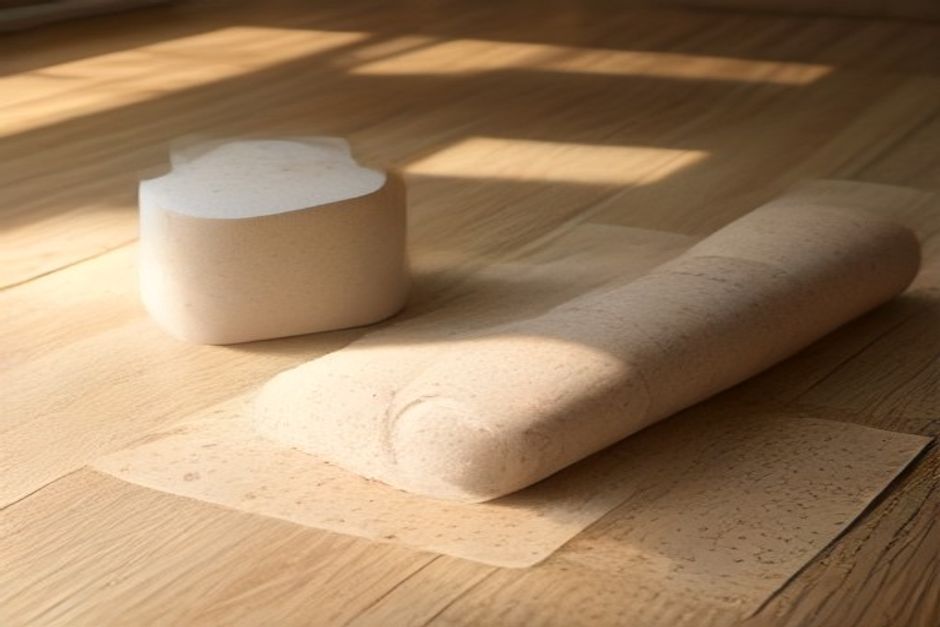
- Two blocks. Foam or cork, doesn't matter. Blocks raise the floor to meet you, which turns "I can't do that pose" into "I do that pose with blocks." They show up everywhere — lunges, folds, side bends, balance work — and the props guide is essentially a long argument for owning two. Cost of a takeaway pizza, lifespan of a decade. Best value in the entire gear economy.
- One strap. Or a bathrobe belt, which is the minimalist's strap and works identically. It extends your reach in hamstring and shoulder work without rounding your spine to fake it. Eight euros, or free from your closet.
Everything beyond that is a want, not a need. A bolster is lovely for restorative work; a firm couch cushion does the job. A yoga blanket is useful; the blanket on your bed is also a blanket. Buy the extras only when a specific, repeated practice calls for them — not because a feed suggested your practice was incomplete without them.
The psychology of gear
There's a well-documented pattern in hobbies: buying equipment feels like practicing. A new mat delivers the little spark of "I'm someone who does yoga" without the inconvenience of doing yoga. The gear becomes the hobby, and the practice becomes aspirational décor in the corner of the room. Yoga is unusually vulnerable to this because its entire aesthetic — the serene studio, the matching set, the curated shelf — is highly photographable and therefore highly sellable.
The tradition has a word for the counterweight: aparigraha, non-grasping, one of the yamas. Taken practically rather than piously, it asks a useful pre-purchase question: will this change my practice, or just my shelf? A mat changes your practice. A second mat bag does not.
It's also worth remembering what drives the whole market: yoga is a multi-billion-dollar industry that profits from the suggestion that you're one purchase away from the practice you want. The cost of yoga breakdown puts real numbers on how little of that spending is necessary. Spoiler: nearly none.
A minimalist practice audit
If your gear has already accumulated, try this: practice for one month with only a mat, two blocks, and a strap. Notice what you actually reach for. At the end of the month, the untouched items have told you something honest — they were serving an idea of practice, not the practice itself. Keep what you used, rehome what you didn't, and enjoy the square meter of floor you got back. Floor, it turns out, is the one piece of equipment you were using all along.
The poses haven't changed their entry requirements. A floor and a body remain sufficient.
Minimalism here isn't about owning nothing — it's about nothing standing between you and the mat. The less your practice requires, the more places it can happen: a hotel room, a park, the ten minutes before dinner. That portability is worth more than anything you can add to a cart.