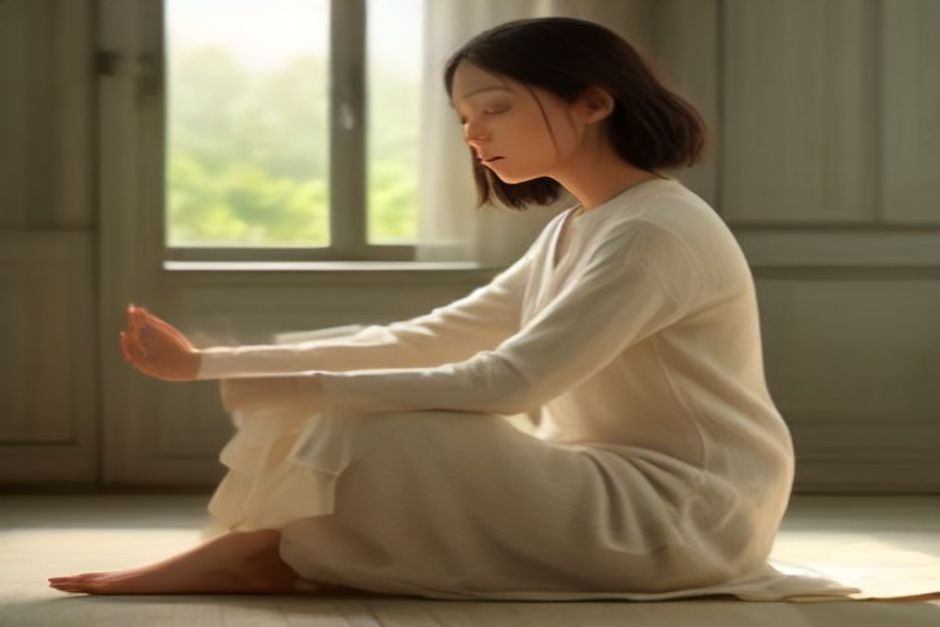
A mudra is a seal or gesture — most often of the hands, though the tradition also counts full-body positions and even breath patterns among them. If you've seen a meditating Buddha with palms stacked in the lap, or a yoga class ending with thumbs and index fingers touching on the knees, you've seen mudras. They are the oldest special effects in yoga: tiny, portable, and free. The honest question is what they actually do. The answer is more modest than the brochures and more interesting than the skeptics assume.
(We keep a short dictionary entry for mudra in the glossary; this page is the longer, practical version.)
Where they come from
Mudras appear in Indian ritual and dance long before anyone wrote about yoga poses — in temple sculpture, Bharatanatyam choreography, and Buddhist iconography across Asia. The Hatha Yoga Pradipika, the medieval manual of physical yoga, lists mudras as key practices alongside postures and breathwork. The traditional claim: the hands are endpoints of energy channels (nadis), and joining fingers in specific patterns redirects prana, seals it in, or balances the five elements, with each finger standing for one element — thumb for fire, index for air, and so on.
Can that be verified? No. Does that make mudras useless? Also no — for reasons that don't require any metaphysics at all.
The handful worth knowing
Jnana / chin mudra — the knowledge seal
Tip of the index finger to tip of the thumb, other three fingers extended, hands resting on the knees. Palms up (jnana) is receptive; palms down (chin) is grounding. This is the default meditation hand position across most of the yoga world. Practically: it gives your hands a job, keeps the arms relaxed, and the light touch of the fingertips is a small sensory anchor you can return to when the mind wanders.
Dhyana mudra — the meditation bowl
Hands in the lap, right palm on top of left (in most traditions), thumbs lightly touching to make an oval. This is the Buddha's classic meditation posture. The oval of the thumbs is easy to feel, which makes it a good anchor; some teachers say to keep the thumbs barely kissing — "holding an egg" — so that grip tension becomes a signal that your mind has tightened.
Anjali mudra — palms together
Prayer position at the heart: the gesture behind "namaste" at the end of class. Symmetry is the point — both sides of the body meeting at the midline, attention gathering at the center of the chest. It works as a punctuation mark: practice is over, we're still here, thank you.
Prana mudra — the vitality seal
Ring finger and little finger to the thumb tip, index and middle extended. Traditionally prescribed for fatigue and low energy. There is no mechanism by which this cures tiredness — but as a hand position during ten minutes of slow breathing, it costs nothing and gives the rest of the practice a container.
Hridaya mudra — the heart seal
Index fingers curl to the thumb root, middle and ring fingers touch the thumb tip, little fingers extended, hands resting on the knees. Traditionally associated with emotional steadiness and the heart. It's a common choice in loving-kindness meditation, where the theme fits the gesture.
What mudras can actually do
- Anchor attention. Meditation's whole difficulty is that attention wanders. A hand position is a physical bookmark: feel the fingertips, notice you've drifted, come back. That's the entire technology, and it works the way any anchor works.
- Signal context. Brains learn associations. Sit with the same hand position every day for a month, and the position itself starts to cue the settling. This is classical conditioning, not energy channels — and it's genuinely useful.
- Occupy the body. Restless hands sabotage stillness. A mudra is a fidget spinner from the twelfth century: it gives the restlessness somewhere small to live.
- Embody an intention. Hands at the heart feel different from fists on the knees. Posture influences state — not magically, but the way slumping influences state. The gesture is a reminder worn on the hands.
What they cannot do
Hold a mudra and your blood sugar, thyroid, and blood pressure will carry on exactly as before. No hand position treats a medical condition, and anyone selling mudras as therapy for disease is selling. If a claim about a gesture can't survive the question "compared to just resting your hands?", be polite and keep your wallet closed. Yoga has plenty that demonstrably works — movement, breathing, attention training — without needing the hands to be a remote control for the organs.
How to start
Pick one. Jnana mudra is the obvious choice: sit in any meditation posture, rest the backs of your hands on your knees, touch index to thumb lightly, and practice five minutes of breath counting. Notice the contact point of the fingertips. When you notice you've lost count, feel the fingertips again, then restart. That's the whole practice. The mudra didn't do anything mystical — it just gave you somewhere to stand.