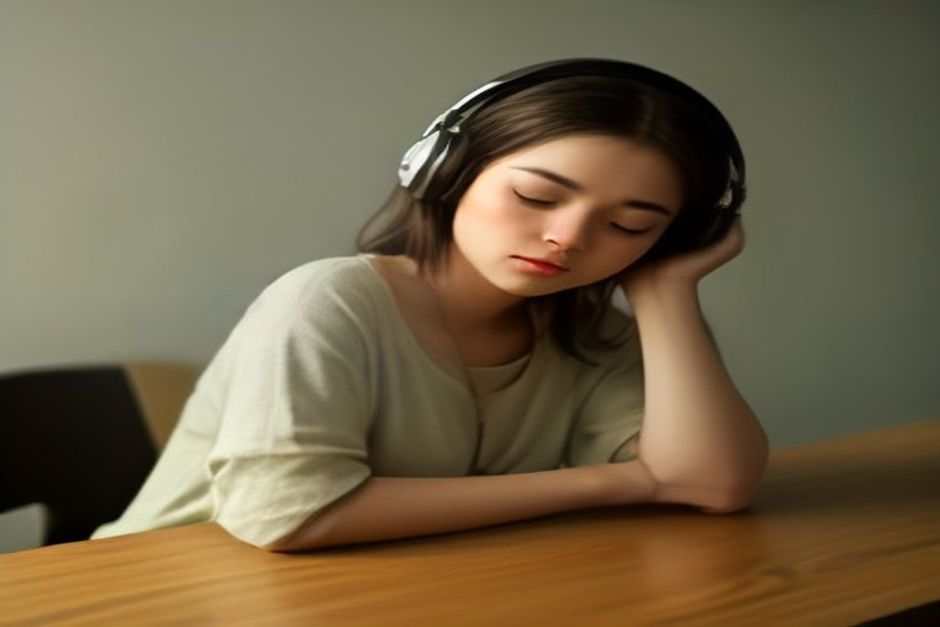
There is a full entry on pratyahara in the classical sense elsewhere in this library — the tortoise, the sutras, the place it holds between pranayama and concentration. This page is about the other question: what does the fifth limb mean when your environment is engineered, at considerable expense, to keep your senses permanently switched on? Notifications, open-plan offices, headphones feeding input into your ears from wake to sleep. Pratyahara in 2026 is not a mystical attainment. It is closer to a survival skill.
What withdrawal actually is (and isn't)
The common misunderstanding is that pratyahara means shutting the senses off — ears closed, world excluded, a kind of willed deafness. It isn't that, and it couldn't be: short of sensory-deprivation tanks, input keeps arriving whether you cooperate or not. What changes in pratyahara is the relationship. Sounds arrive and are not pursued. An itch is felt and not immediately scratched. The attention stops running out through every open channel to investigate whatever knocks.
The classical simile is worth repeating because it is precise: the tortoise withdraws its limbs into its shell. The limbs still exist. The tortoise is not dead to the world — it has simply stopped extending itself into it for a while. Pratyahara is that movement: a drawing-in, temporary and reversible, not a wall.
Why this is harder now (and more useful)
Patanjali did not have a phone. The environments he wrote for were distracting in the ordinary ways — weather, hunger, other people — but nothing in them was designed to interrupt you. Ours are. The average modern attention environment is a casino: variable rewards, bright signals, a pull-to-refresh slot machine in every pocket. In that context, the ability to voluntarily lower the gain on incoming sensation is not a subtle refinement of advanced practice. It is the difference between having an inner life and being continuously outsourced to a feed.
This is also why so many people report that they "can't meditate." They try to jump from full stimulation directly to stillness, skipping the middle step entirely — and the fifth limb is the middle step. The mind gets louder when you sit down precisely because the input channels are still wide open. Pratyahara is the transition that makes concentration possible at all.
Training it, on the mat
The good news: if you practice yoga at all, you have already been training this, probably without naming it.
- Savasana, taken seriously. Lying still with eyes closed while sounds arrive and depart — that is sense-withdrawal practice, not just a nap at the end. The sounds are still there; you are declining to follow them. Ten honest minutes of this is worth more than an hour of strained concentration.
- Single-sense anchors. Practices that flood one channel to quiet the rest: the ocean sound of ujjayi breath for the ears, candle gazing for the eyes. Giving one sense a single, boring object demotes everything else without force. The five-senses meditation works the same territory from the other direction — deliberately visiting each sense, then letting it stand down.
- Pratyahara-shaped poses. Forward folds, child's pose, any posture where the face turns toward the body and the eyes close. Tradition calls these introspective shapes for a reason: the geometry itself reduces input.
Training it, off the mat
This is where the fifth limb earns its keep in a loud century. A few honest methods, none requiring a cave:
- The two-minute arrival. Before any sit, let each sense report and then stand down: sounds without naming them, the contact points of the body, the darkness behind the eyelids. You are not blocking anything — you are acknowledging the mail and choosing not to answer.
- One-input meals. Eat a few bites daily with no phone, no podcast, no conversation. Notice how reflexively the hand reaches for a screen. The Sanskrit root of pratyahara — ahara, "intake" — is also the word for food; the ancients counted what you feed your senses as diet.
- Digital dusk. Screens off for the last half hour before bed. Not as productivity advice — as practice. The sleep benefits arrive as a side effect.
- The volume knob. On each exhale, imagine turning the world's volume down one notch. Ten breaths. It sounds like a children's exercise and works anyway, which tells you something about how the nervous system responds to imagery.
The point of it all
"When the senses cease to grasp their objects and follow instead the nature of the mind — that is pratyahara." — Yoga Sutra 2.54, paraphrased
Notice what the sutra does not say: it does not say the objects disappear. The traffic keeps sounding; the phone keeps glowing on the table. What changes is who is doing the grasping. In a world that profits from your reflexes, the unglamorous ability to not-respond is close to a superpower — and unlike most superpowers, it can be trained in two-minute installments. The wider map of where this limb sits lives on the philosophy page and in the meditation section.