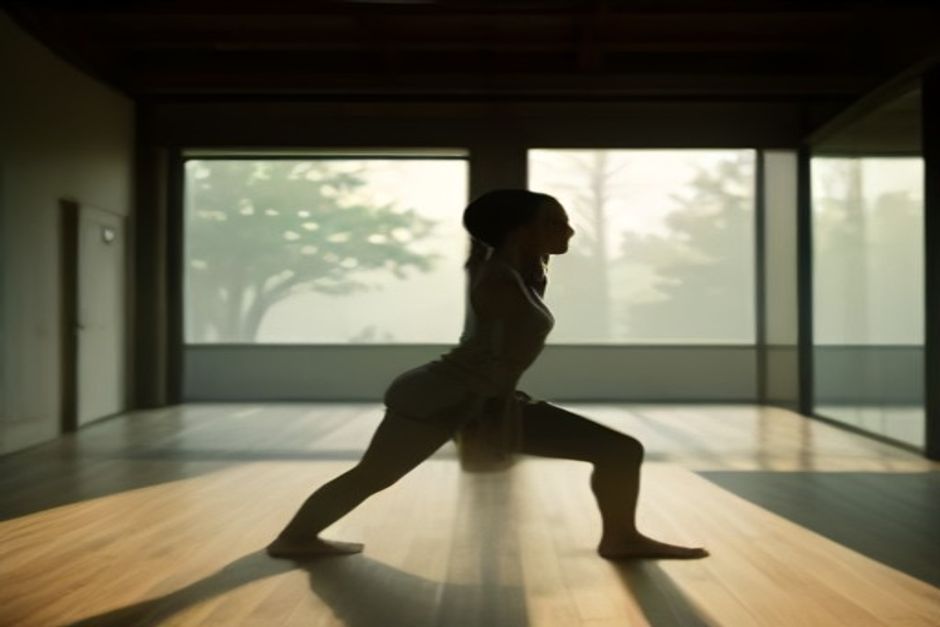
Watch a tai chi group in the park and a yoga class through a studio window, and you could forgive someone for filing them under the same heading: slow people doing graceful things with their arms. Beginners mix them up constantly, and the mix-up is understandable — both are unhurried, both are quiet, both leave people looking oddly content. But underneath the shared calm surface, they are built on different ideas, train different capacities, and ask different things of your body. We have already written about choosing between the two; this piece is about what each one actually trains, and why the honest answer for many people is not either-or but both.
Different roots, different aims
Yoga comes from India, and its oldest layers are contemplative. The postures — asana — were originally a support for meditation: a body that can sit still without complaint. The posture-heavy practice the modern world calls yoga is largely a twentieth-century construction, but it kept the old habit of arranging the body in order to settle the mind.
Tai chi — taijiquan — comes from China, and its roots are martial. It began as a fighting art, and the slow, flowing choreography you see in parks is that art practiced at low speed to refine balance, coordination, and whole-body power. The health benefits were always part of it, but the DNA is martial: every movement has a function, even if nobody in the park class is planning to use it. You do not need to care about any of this to benefit — but it explains why tai chi never holds still. A martial art that stops moving is a target.
What yoga actually trains
Yoga works in positions. You enter a shape — a lunge, a forward fold, a twist — and you stay there, breathing. That simple method trains three things well:
- Range of motion. Holding shapes at the edges of your movement slowly coaxes those edges outward. Nothing in tai chi asks your hamstrings or shoulders to go anywhere near their limits; yoga does it constantly.
- Strength at end range. Supporting your body weight in a deep lunge or a plank builds strength exactly where most exercise never reaches. Our asana library is essentially a catalog of positions that do this.
- Stillness under mild stress. A held pose is slightly uncomfortable on purpose. Staying calm inside that discomfort — breath even, face unclenched — is the actual skill, and it transfers off the mat.
Yoga also goes to the floor. Much of the practice is kneeling, seated, or lying down, which is gentle on the joints but requires getting up and down — a real consideration for some bodies.
What tai chi actually trains
Tai chi works in transitions. You are almost never in a position; you are passing through one. Weight rolls from one foot to the other, the spine rotates, the arms trace slow arcs. Standing the whole time, it trains a different set:
- Balance in motion. Yoga balances are mostly static — tree pose, held still. Tai chi balance is dynamic: staying upright while your weight is moving and one foot is often off the floor. For fall prevention, this distinction matters, because falls happen during movement, not during standing still.
- Upright stamina. Forty minutes of continuous standing movement builds leg endurance and postural endurance without any floor work at all.
- Coordination. The forms demand that hands, feet, and breath arrive together. It is choreography, and learning it is genuinely good for the brain — closer to dancing than to stretching.
How to choose, briefly
If you must pick one, the practical questions are: Do you want more flexibility and floor-based strength, or better moving balance and upright endurance? Is kneeling or getting off the floor a problem for your knees? And — unglamorous but decisive — which one has a decent class within reach of your house? A good-enough class you attend beats the perfect practice you never start. For a fuller breakdown of that decision, see our head-to-head comparison.
Why they combine so well
Here is the part that surprises people: yoga and tai chi overlap almost nowhere. Yoga's weakness is exactly tai chi's strength, and vice versa.
Yoga gives you range of motion but little practice balancing while moving. Tai chi gives you moving balance but never stretches anything deeply. Yoga spends time on the floor; tai chi never touches it. Yoga holds the body still to train attention; tai chi keeps the body flowing to train it. A week that contains both covers nearly the whole map of what a body needs as it ages: strength, suppleness, balance, coordination, and a calmer nervous system.
A pairing that works in practice: two or three yoga sessions for range and strength, one or two tai chi sessions (or park practices) for balance and flow. The yoga also makes tai chi easier — open hips and a mobile spine take the strain out of the low stances — and the tai chi, oddly, improves yoga balances, because it teaches you to stop gripping and start adjusting. If the moving-meditation quality of tai chi appeals, walking meditation trains a similar attention with even less equipment.
Yoga teaches stillness inside a shape. Tai chi teaches stillness inside motion. Between the two, there is not much left uncovered.
So the answer to the park-bench question — which one should I do? — is: whichever one you will actually show up to. But if you ever find yourself with room for both, know that they are not redundant. They are two halves of one very good idea.