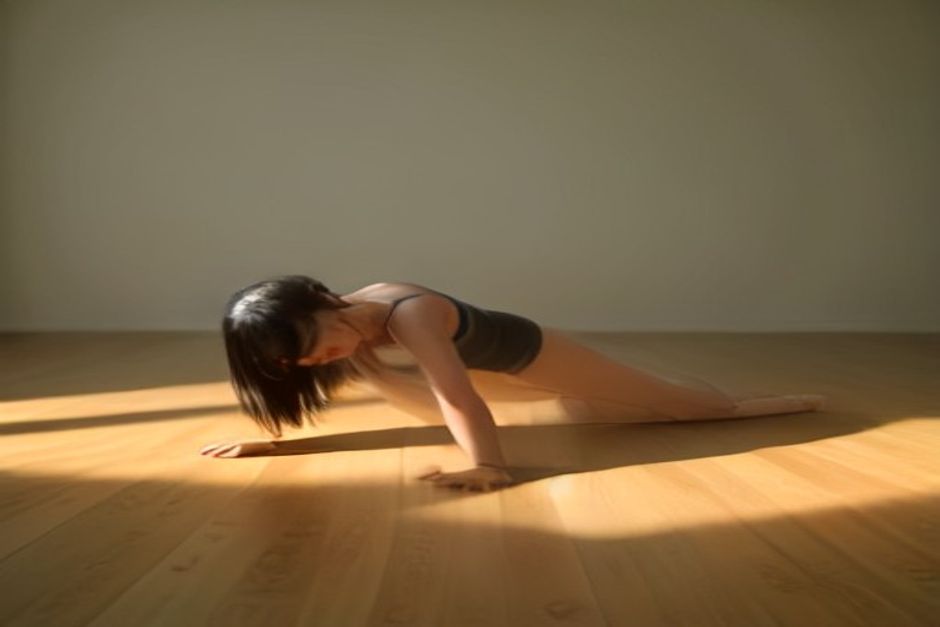
Fitness culture loves a turf war: yogis claim yoga is all the strength training you need, lifters claim yoga is stretching with incense. Both are wrong in instructive ways. Yoga builds real, useful strength — in specific places, by specific mechanisms, with specific ceilings. Knowing where those ceilings are lets you use yoga for what it is genuinely good at instead of asking it to be a barbell.
How yoga builds strength (when it does)
Strength grows when muscle is loaded close to its capacity, progressively, with enough recovery. Yoga loads muscle in three ways:
- Isometric holds. Holding Plank, Chair, or Warrior for thirty to sixty seconds is sustained tension — real work, especially for beginners.
- Slow eccentrics. Lowering through Chaturanga with control is an eccentric push-up, and eccentrics are potent strength stimulus.
- Long leverages and single-limb loading. Side Plank, Boat, and standing balances put large relative loads on stabilizers that conventional training often misses.
Bodyweight is real weight. A 75 kg person holding a one-arm-modified side plank is moving serious load through the shoulder and obliques.
What yoga strengthens well
- Deep core and trunk endurance. This is yoga's home turf. Boat, plank variations, and balances train the deep stabilizers — the muscles that hold posture for hours, not the ones that flex for photos. Trunk endurance is strongly linked to fewer back problems; this is arguably yoga's most valuable strength offering.
- Shoulder and scapular stability. Weight-bearing on the hands (down dog, plank, arm balances) builds the rotator cuff and scapular control that desk life erodes.
- Glutes and hips in stabilizing roles. Single-leg standing poses — Warrior III, Half Moon, Eagle — hammer the hip stabilizers while demanding balance. Double-duty training.
- Grip, wrists, feet. The unglamorous connective strength of holding your own weight on your hands and balancing on your feet. Ask anyone over sixty what they wish they'd trained more.
- Strength-endurance generally. A vigorous ninety-minute practice is a long, moderate load — the kind of work that builds the capacity to keep working.
What yoga does not build
Honesty section. Yoga is poor stimulus for:
- Maximal strength. There is no yoga equivalent of a heavy deadlift. If you want to move furniture, pick up a grandchild at age seventy, or build bone with maximum efficiency, progressive external load beats bodyweight holds. Sarcopenia — age-related muscle loss — is best resisted with weights.
- Muscle size. Hypertrophy wants sets taken near failure with progressive overload. Yoga occasionally brushes that zone (long Chair holds, chaturanga volume) but not systematically.
- Pulling strength. Yoga is almost entirely pushing: planks, dogs, arm balances. Rows and pulls are nearly absent. This is yoga's biggest gap as a standalone program — the upper back and biceps need something yoga doesn't offer.
- Explosive power. Jumping, sprinting, catching yourself when you trip. Slow control is its own virtue but does not train fast force production.
Who gets strong from yoga alone
Context decides everything:
- Beginners and returning exercisers: absolutely. The first year, yoga alone will build visible, functional strength almost everywhere.
- Older adults starting fresh: standing poses and balances are meaningful loading, and the balance component is a bonus most strength programs ignore — the FAQ covers safe-start basics.
- Already-strong people: maintenance of stability and control, yes; new strength, mostly no. The stimulus ceiling arrives fast.
Combining yoga with other training
The combination beats either alone, and the scheduling is simpler than the internet suggests:
- Two or three lifting sessions per week for maximal strength, pulling, and bone. Full-body, progressive, unglamorous.
- Yoga fills the gaps: core endurance, hip and shoulder mobility under control, balance, and the down-regulation work (see breathing practices) that hard training leaves undone.
- Order matters less than you think. Lift first if strength is the priority that day; do gentle yoga any time. Avoid deep stretching right before heavy lifting — temporarily reduced stiffness is not what you want under a barbell.
- Within yoga, bias the strength poses. If yoga is your only loading, practice plank variations, Chair, Warrior holds, slow chaturangas, and standing balances more than you stretch. Most people do the opposite.
The deeper answer
There's a definition problem hiding in this whole debate. If "strength" means a big squat, yoga loses. If it means the capacity to hold your body well through a long day, get off the floor at eighty, and carry the shopping without a twinge — yoga is a serious contender, especially paired with even minimal pulling work. Choose your definition, then choose your training.
"Yoga makes you strong enough to use your body well. The barbell makes you strong enough that using it is easy. There is no conflict."
Do both if you can. Do yoga alone if that is what you will actually do — done consistently, it is far from nothing. Just know which gaps you are leaving open, and why.