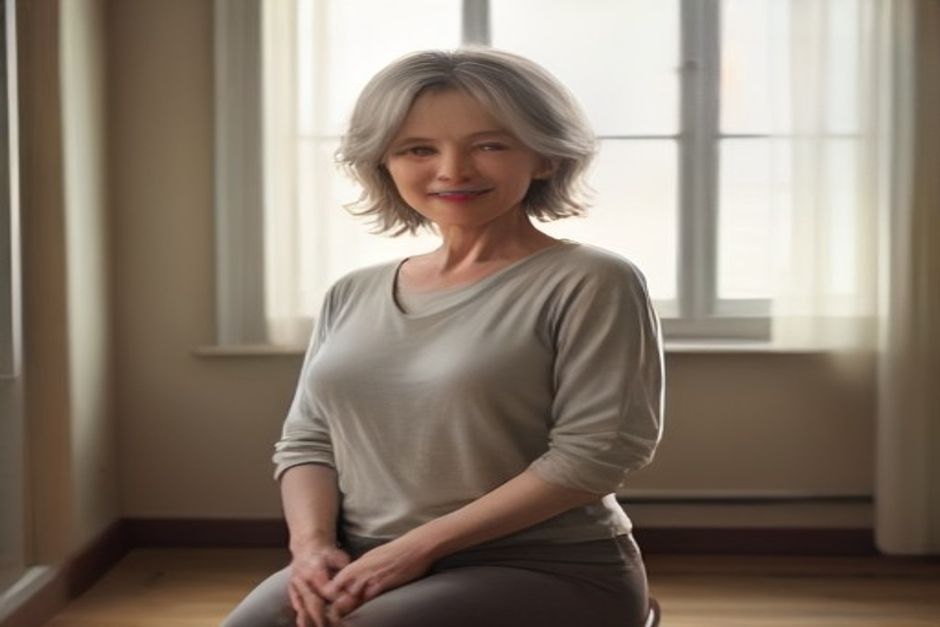
The average yoga advertisement shows a twenty-five-year-old folding in half on a beach, which has done a thorough job of convincing people over sixty that the practice is not for them. The reality is nearly the opposite. The people with the most to gain from yoga — stiffer joints, worse balance, more stress-related illness, more years of sitting — are precisely the ones the marketing excludes. If you are starting at sixty, seventy, or beyond, you are not late. You are the target audience the posters forgot to mention.
What genuinely changes with age
Honesty first, because pretending nothing changes helps nobody:
- Recovery slows. A practice that a thirty-year-old absorbs overnight may need two days at sixty-five. This argues for frequency over intensity: twenty minutes most days beats ninety hard minutes twice a week.
- Tissues get less forgiving. Tendons and ligaments stiffen and repair more slowly, so end-range stretching carries more risk and less reward than it used to. Warm up longer; chase sensation less.
- Balance declines quietly. The inner ear, vision, and ankle sensors all degrade a little, and the systems compensate for each other less gracefully — the mechanics are on the anatomy of balance page. This is the change that matters most, because falls are the enemy, and balance responds to training at every age.
- Bone density and blood pressure enter the conversation. With osteoporosis, deep forward folds and loaded spinal twists need modifying. With blood pressure issues, long head-below-heart positions need care. Neither condition cancels yoga; both change which yoga.
What does not change
Breath still works. Attention still trains. Consistency still compounds. The research on older adults and yoga keeps finding the same unglamorous things: better balance, better sleep, less fear of falling, improved mood. Nobody's study concludes 'participants touched their toes.' The goals simply migrate from the impressive to the useful — getting up from the floor without a plan, carrying groceries without negotiating, sleeping through the night.
Balance beats flexibility
If you take one idea from this page, take this one: after sixty, standing balance work is the highest-value thing on the mat. Flexibility is nice; the ability to catch yourself on a curb is essential. Practice standing on one foot while holding a chair, then lightly touching it, then near it. Practice it with your eyes closed for two breaths once the open-eye version is steady. Chair pose with a real chair behind you, gentle lunges holding the kitchen counter, slow heel-to-toe walking down a hallway — this is the training that pays out in independence. It is not glamorous. Neither is a hip fracture, and only one of them is preventable with ten minutes a day.
The chair and the wall are your friends
Two props make nearly the whole practice accessible:
- A sturdy chair turns yoga into something you can do today: seated cat-cow, seated twists, standing poses with a hand on the backrest, and the floor-free versions of almost everything. Chair yoga is not yoga-lite; it is yoga with a sensible base of support.
- A wall is the best balance teacher and the best restorative prop you own. Standing balances with fingertips on the wall build confidence safely, and legs up the wall delivers deep rest with zero flexibility required.
Blocks and straps help too, but start with furniture you already trust.
Finding the right class
Look for classes labeled 'gentle,' 'chair,' 'seniors,' or 'yin' — and look harder at the teacher than the title. The right teacher asks about injuries before class, offers options without being asked, and never physically pushes anyone deeper into anything. A fast-flow 'power' class is the wrong room for most beginners of any age, and definitely the wrong first room after sixty. The FAQ covers the practical beginner questions (what to wear, what to bring, whether you are too stiff — you are not), and the yoga basics page is a good read before your first session so the vocabulary doesn't blur past.
A sane first month
- Weeks 1–2: Ten to fifteen minutes at home, daily-ish. Seated breathing, seated cat-cow, standing balance holding a chair, legs up the wall. Nothing that hurts, nothing that impresses.
- Weeks 3–4: Add one gentle class per week, in person if possible. Tell the teacher your age, your joints, and your medications that affect balance or blood pressure. Good teachers want this information.
- Thereafter: Two or three sessions a week, forever, is a complete practice. Add nothing faster than your recovery allows.
Sixty is not too late for yoga; it is roughly when yoga starts making the most sense. Come for the balance, stay for the sleep, and let the twenty-five-year-olds have the beach.