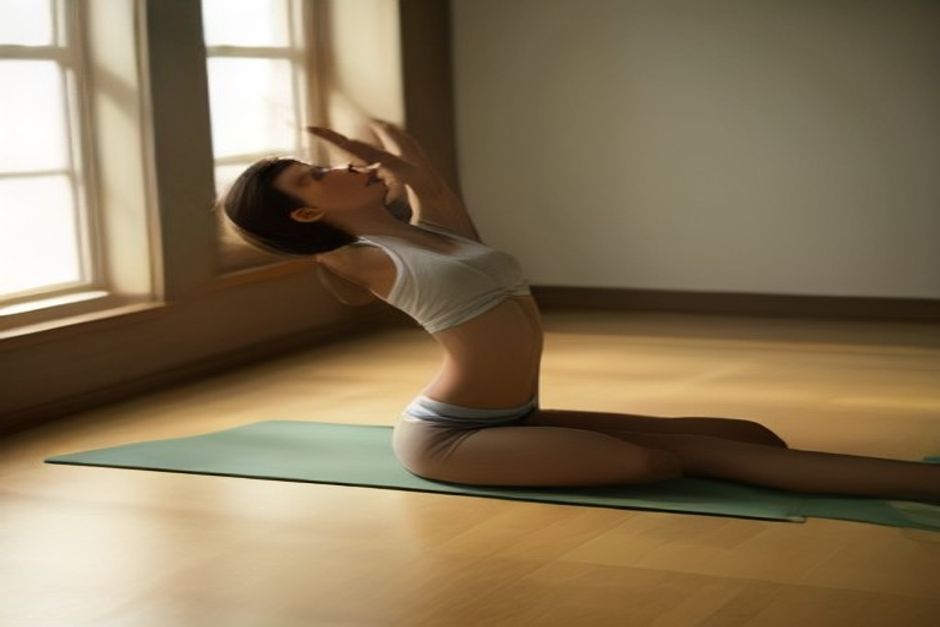
Bow Pose — Dhanurasana, from dhanur, a bow — turns your body into the shape of an archer's bow: you lie on your belly, catch your ankles, and the legs draw the chest up behind you. It is one of the few backbends that opens nearly the entire front of the body at once — hip flexors, quads, belly, chest, throat — which is exactly why it deserves a careful approach. Done with patience, it is a superb antidote to slumped posture. Done by yanking, it is a fast way to annoy your knees and low back in a single breath.
What Bow is actually asking of you
The engine of Bow is not your arms — it is your legs. You press your shins and feet back into your hands, and that pressure lifts the thighs and drags the chest up as a consequence. If you pull with the arms instead, the shoulders hunch, the knees splay, and the low back takes the whole bend. Think of the arms as ropes, not engines. The pose also asks for honest thoracic extension — the upper back bending — rather than dumping all the movement into the two most mobile vertebrae of the lumbar spine.
Bow Pose — Dhanurasana
How: Lie on your belly, legs hip-width apart. Bend your knees and reach back for the outer ankles (or the tops of the feet if the ankles are out of reach). On an inhale, press the feet firmly back and up into the hands — let that pressure peel the chest and thighs off the floor. Keep the knees hip-width, gaze forward and slightly down to protect the neck. Hold five to eight breaths, breathing into the chest since the belly is pinned. Release slowly and rest on one cheek.
Why: Pressing the feet back — rather than pulling with the arms — keeps the knees aligned and distributes the bend through the whole spine instead of parking it in the low back. The hip-width knees rule is not a style choice: knees that drift wider than the hips shear the knee joint and jam the sacrum.
Half Bow, one side at a time — Ardha Dhanurasana
How: From your belly, bend the right knee and catch the right ankle with the right hand; the left leg and arm stay long on the floor. Press the right foot back, lift the chest a modest amount, and hold five breaths. Switch sides.
Why: Half Bow teaches the leg-pushes-back mechanic with half the intensity and none of the wobble. It also reveals left-right differences in your quads and shoulders that the full pose hides. Most people should spend their first weeks here.
Bow with a strap
How: Loop a strap around the fronts of both ankles, hold the strap behind you with both hands, then press the feet into the strap to lift. Walk the hands down the strap over time as the shoulders open.
Why: If your hands cannot reach your ankles without the knees flying wide, the problem is usually shoulder or quad tightness, not effort. The strap closes the gap honestly. Padding the hip bones with a folded blanket is equally legitimate — the pelvis has corners, and the floor does not care.
The two classic errors
- Cranking the knees wide. When the lift gets ambitious, the knees drift apart to make room. Feel for it: knees wider than hips means the inner thighs have quit and the sacrum is being squeezed. Squeeze the knees back to hip-width and accept a lower pose.
- The low-back hinge. All bend, no length — the lumbar folds like a wallet while the chest stays down. The fix is to press the feet up more than back, lengthen the tailbone toward the knees, and lift less. A lower Bow with a long spine beats a high Bow with a crunched one, every time.
Warm-up and follow-up
Bow is not an opening act. Warm the spine first with Cat-Cow, wake the back body with Locust, and prepare the shoulders and quads with a low lunge like Low Lunge. After Bow, neutralize with Child's Pose or a gentle Reclined Twist — the spine deserves a return trip to neutral after that much extension. If you enjoy the prone-backbend family, Cobra — covered in our asana overview — is the gentler sibling to practice on days when Bow feels like too much.
Bow rewards restraint. Build the press of the feet, keep the knees honest, lift less than you could, and the pose will quietly open more of you than the dramatic version ever did. The bow is only useful if the archer can still stand up afterward.