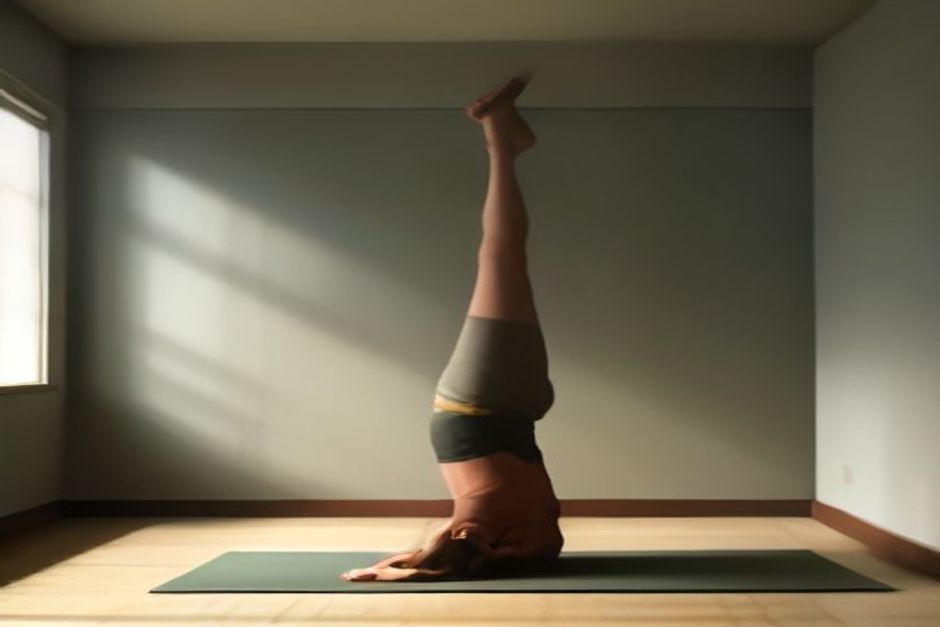
Headstand — Sirsasana, literally "head pose" — carries the grandest title in the asana catalogue: the king of poses. Tradition credits it with everything from mental clarity to reversing time's effects on the body. We make no such promises. What we can say plainly: being upside down changes your perspective, builds unusual shoulder and core strength, and feels genuinely wonderful to many people. We can also say plainly: your neck was not designed to be a load-bearing column, and the list of people who should never do this pose is longer than most yoga calendars admit.
Who should not do Headstand
Before the how, the honest who-not. Skip Headstand entirely — and none of this is negotiable — if you have:
- Neck problems of any kind: disc issues, chronic pain, past injuries.
- High blood pressure that is not well managed, or heart conditions.
- Glaucoma, detached retina, or other eye pressure concerns — inversions raise pressure in the head.
- Osteoporosis, which makes the cervical spine a genuinely fragile structure.
- Pregnancy (unless you had a rock-solid headstand practice long before and your care provider agrees).
- A body weight or build that places a heavy load on a small neck — this is anatomy, not willpower, and Shoulderstand alternatives or the restorative versions on our sleep page deliver most of the benefits with a fraction of the risk.
Choosing not to invert is not a lesser practice. Nobody has ever failed yoga by keeping their neck safe.
The prerequisites, honestly
If you're in the clear, Headstand still asks for preparation. You should be able to hold Plank and Chaturanga with clean form — the shoulder stability that protects you upside down is built right side up. You should be comfortable in Dolphin Pose (forearms down, hips lifted like a forearm Downward Dog) for ten breaths without strain. And you should be able to follow this rule without exception: no more than about twenty percent of your weight ever rests on your head. The forearms carry the load; the head is a stabilizer, not a pillar.
Dolphin — the real Headstand prep
How: On forearms and knees, interlace the fingers loosely, elbows exactly shoulder-width (measure by cupping opposite elbows first). Tuck the toes and lift the hips high, walking the feet toward the elbows. Press the forearms down firmly so the shoulders stay broad and away from the ears. Hold ten breaths. Repeat with one leg lifting, then the other — no kicking.
Why: If Dolphin exhausts your shoulders, Headstand will overload your neck. This is the pose where you build the strength that makes inversion safe, and for many people it is also where the journey happily ends — Dolphin is a serious pose in its own right.
Supported Headstand at the wall — Sirsasana
How: Kneel facing a wall. Set the forearms as in Dolphin, interlaced fingers forming a cup, and place the crown of the head on the floor so the back of the skull rests against your hands. Lift into a forearm-stand shape, walk the feet in until the hips stack over the shoulders, then draw one knee to the chest, then the other, into a tucked egg shape. Only when the tuck is steady — for several breaths — slowly extend the legs up along the wall. The forearms press down continuously; the weight stays in the arms; the neck stays long and quiet. Start with fifteen to thirty seconds and build over weeks, not days.
Why: Entering through the tuck, never by kicking, means you arrive in the pose with control and can leave it the same way. Kicking up is how people crash, twist, and scare their necks.
The rules that keep it safe
- Never in the middle of the room at first. The wall is not a crutch; it is where the pose is learned.
- Never turn your head while inverted. Come down first, always.
- Come down before you're tired. Fatigue is when form dissolves, and in Headstand form is everything.
- Rest after. Child's Pose for a minute lets blood pressure normalize. Standing up too fast after inverting is how people get dizzy.
- Some days the answer is no. Poor sleep, a headache, a cranky neck — any of these is reason enough to take a restorative rest with legs elevated instead, which offers the same head-below-heart rest with almost no demand.
Done well and by the right person, Headstand is quiet, steady, and oddly restful — less a stunt than a place to stand (on your arms) and breathe. Done by the wrong person or rushed, it is the one pose that can genuinely harm. Yoga is long. There is no prize for inverting early, and real dignity in inverting never.