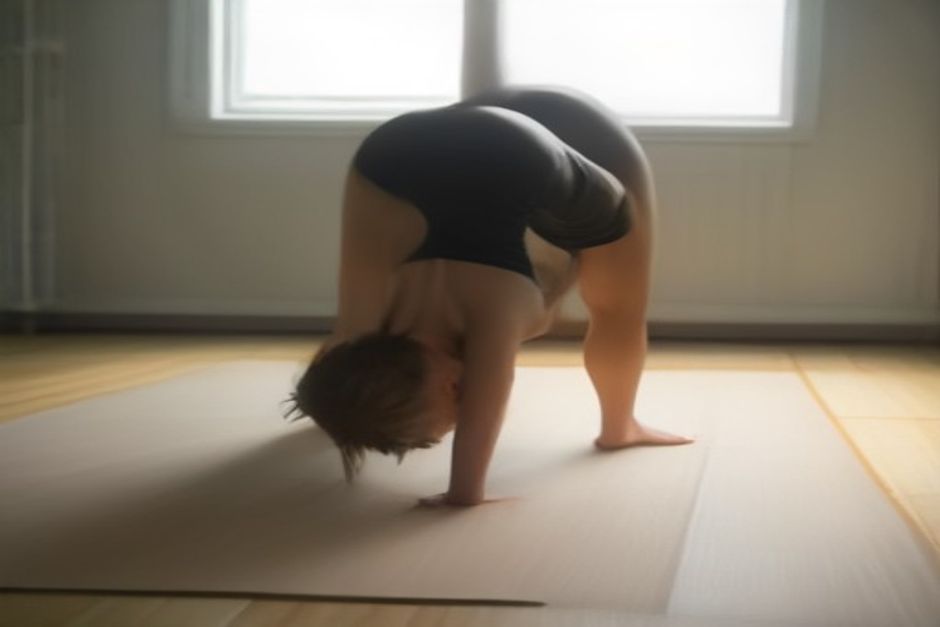
Adho Mukha Svanasana — downward-facing dog — is the most repeated pose in modern yoga. In a vigorous vinyasa class you might pass through it thirty times; in a year of practice, thousands. It gets called a "resting pose," usually by teachers who say this while your shoulders are burning, and it serves as home base in sun salutations, a transition, a hamstring stretch, a shoulder opener, and an assessment tool all at once. Given how much time you'll spend there, it's worth doing well — and doing it well starts with unlearning a couple of its most famous cues.
The heel myth, dealt with first
Heels do not need to touch the floor. Let that settle. Heels-down is a possible endpoint of the pose, not the pose itself, and chasing it wrecks the thing that matters: a long, straight spine. When tight calves and hamstrings meet a determination to plant the heels, the pelvis tucks, the lower back rounds, and you've traded the pose's actual benefit for a cosmetic detail nobody is grading. Lift the heels as high as they want to go. Bend the knees as much as they ask. A Downward Dog with bent knees, lifted heels, and a long spine is a correct pose; one with flat feet and a rounded back is a problem wearing a costume.
Downward-Facing Dog — Adho Mukha Svanasana
How: Start on hands and knees, wrists slightly ahead of the shoulders, knees under hips, toes tucked. Spread the fingers wide — index finger or middle finger pointing forward. Press down through the knuckles, lift the knees, and send the hips up and back. Straighten the legs only as far as the spine stays long; keep a soft bend in the knees as needed. Push the floor away so the chest moves toward the thighs and the sit bones reach for the ceiling. Head hangs between the arms, gaze toward the legs or navel. Five to ten breaths.
Why: The pose lengthens the entire back line — calves, hamstrings, spine — while building the shoulder stability that every other weight-bearing pose borrows. The "hips up and back" action is what makes it an inversion-lite: your head is below your heart, which is part of why it feels both energizing and, eventually, calming.
Puppy Dog and wall versions
How: For wrists that object: come to hands and knees and walk the hands forward, melting the chest down while the hips stay over the knees — Puppy Pose. Or take the whole thing to a wall: hands on the wall at hip height, walk back until the torso is parallel to the floor, and press the wall away. Same shape, no wrist load.
Why: Downward Dog loads the wrists at a steep angle, and for many people — especially early on — that's the limiting factor, not the hamstrings. These versions deliver the spinal length and shoulder work while wrists adapt over weeks. The wrist anatomy page explains the mechanics, and the props guide covers wedge and fist modifications.
The hands: where the weight actually goes
The most useful technical detail in the whole pose lives in the hands. Beginners pour weight into the heel of the hand, right over the wrist's tender structures. The fix: press actively through the knuckles and finger pads — especially the mound of the index finger and thumb — so the center of the palm stays light, almost suctioned. Imagine dialing the hands outward, as if unscrewing the mat; this rotates the shoulders into a stronger position and wakes the muscles that make arm balances possible later. If your wrists still complain, shorten your holds, take more breaks in Child's Pose, and build up over weeks rather than sessions.
Shoulders, ribs, and the neck
- Shoulders move away from the ears. Not by force — by pressing the floor away and letting the shoulder blades slide toward the hips.
- The ribs stay knitted. Pushing the chest toward the thighs shouldn't dump the lower ribs forward; if it does, you've borrowed the shape from your lower back.
- The neck hangs, it doesn't crane. Looking forward at the front of the mat compresses the neck. Gaze at your legs; the ears line up between the upper arms.
- Pedal freely. Bending one knee at a time, swaying the hips — this is not fidgeting, it's the pose introducing itself to your calves and hamstrings. Stillness comes later.
How it changes over time
Year one, Downward Dog is effort: shoulders working, breath short, counting down the breaths. Somewhere in year two or three, the pose quietly converts — the shoulders organize, the breath slows, and you realize mid-practice that you've been resting in it. That's the famous "resting pose" description finally becoming true; it was never a property of the pose, only of your familiarity with it. It also becomes a diagnostic tool: the day's tight hamstrings announce themselves here first, and a stiff, shallow-breathing Dog is honest information about whether to push or ease off.
It anchors sun salutations between Plank and the step forward, pairs with Upward Dog as its counter-shape, and stands alone as a two-minute full-body reset on days with no practice at all.
You'll do this pose more than any other. Do it with bent knees, light heels, and honest hands, and it will quietly repay you for decades — one long spine at a time.