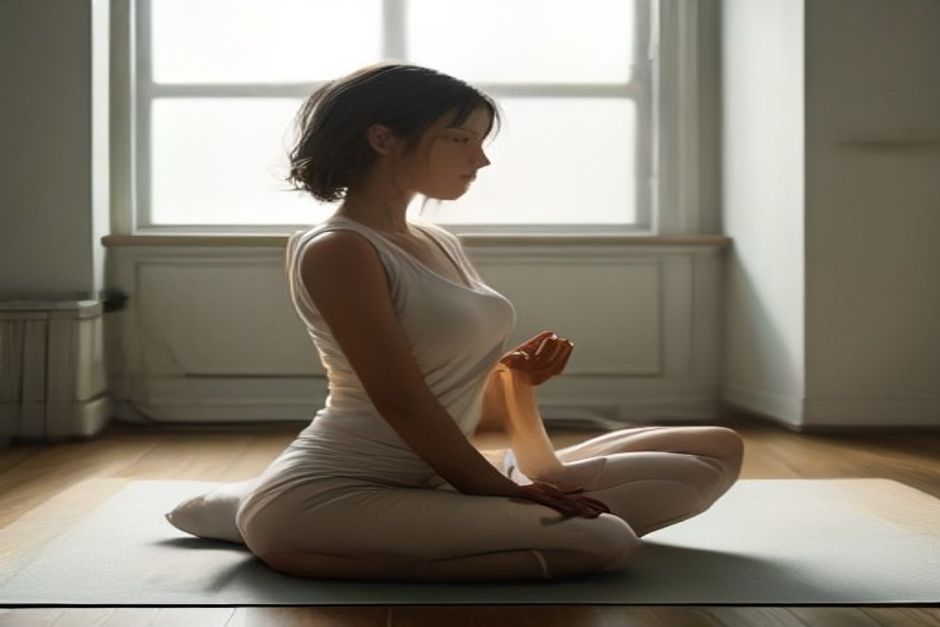
Pigeon Pose — the full Sanskrit is Eka Pada Rajakapotasana, "one-legged king pigeon pose," though the version most classes teach is the preparatory fold — is the pose people name when you ask what they do for tight hips. It targets the outer hip and glute of the front leg and the hip flexor of the back leg, which is exactly the territory that desk chairs and long runs shorten. It is also, done carelessly, a reliable way to irritate a knee. Both things are true, so let us do it carefully.
The knee rule, stated once and taken seriously
In Pigeon, the front knee is bent and rotated outward — a position where the knee joint is not built to bear load. The rotation is supposed to happen at the hip. If your hip is stiff and you force the shin toward parallel with the front of the mat, the missing rotation gets borrowed from the knee. The rule: any sensation in the front knee means the pose is wrong for you today. Not "breathe through it" — wrong. Back out, add height under the hip, bring the heel closer to the groin, or switch to the reclined version below. Hip stretch feels like a deep, dull pull in the buttock. Knee stretch feels sharp, localized, and wrong. Learn to tell them apart.
Pigeon with support — Eka Pada Rajakapotasana prep
How: From hands and knees, bring your right knee forward behind your right wrist. Angle the shin so the right foot sits somewhere near the left hip — it does not need to be parallel to the mat's front edge, and for most people it should not be. Slide the back leg straight behind you, top of the foot down, hips pointing forward. Now the key move: place a folded blanket or block under the right buttock so the pelvis is level and supported. Walk the hands forward and fold only as far as the hip — not the knee — allows.
Why: Supporting the pelvis removes the sideways torque that otherwise lands on the knee, and lets the outer hip release gradually instead of guarding.
Upright Pigeon
How: Same leg setup, but keep the torso vertical, hands on the floor or on blocks beside the hips. Stay here and breathe for a minute.
Why: The upright version loads the front hip less and adds a gentle hip-flexor stretch on the back leg. For many stiff-hipped people this is the better pose, full stop.
Reclined Figure-Four — Sucirandhrasana
How: Lie on your back, knees bent, feet on the floor. Cross the right ankle over the left thigh just above the knee. Thread your hands behind the left thigh and draw the legs toward your chest. Keep the tailbone heavy and the right knee gently pressing away.
Why: This is the same outer-hip stretch with the knee at a safe angle and zero load. If Pigeon has ever hurt your knee, make this your pigeon. It is not a downgrade; it is the same territory from a safer road.
Honest expectations
Hips open slowly. Tendons and the joint capsule adapt over months, not sessions, and no amount of grimacing changes the timeline. Two or three unhurried minutes per side, several times a week, will do more than one heroic ten-minute siege. Pairing Pigeon with standing hip work like Warrior I covers more of the joint than either pose alone. And if your hips feel emotionally loaded — people often report unexpected feelings surfacing in long hip openers — that is normal and unremarkable; breathe, and use what you know from meditation practice to simply notice it.
Setup details that matter
- Square the hips toward the front of the mat as much as your body allows, then support whatever does not reach the floor.
- Keep the back leg straight behind you, not angled out to the side.
- Flex the front foot slightly to stabilize the knee.
- Stay long in the spine as you fold — collapse into the fold and you lose the stretch in the hip and find it in the back instead.