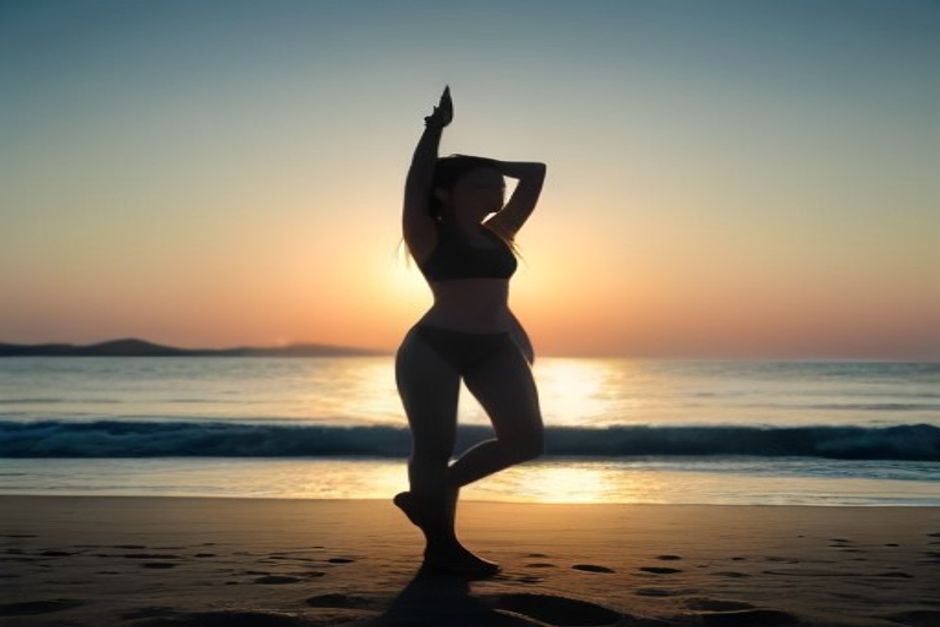
Walk into any vinyasa class and you will hear it before you see anything: a room full of people breathing like a slow tide. That soft, hollow, slightly Darth Vader-ish sound is Ujjayi — often translated as "victorious breath" (from ud, upward, and jaya, victory or conquest). It is the only common breathing technique designed to be done while moving, and it is the engine room of styles like Ashtanga and vinyasa flow.
The victory in the name is not over anyone else. It is over the scattered, hold-your-breath-and-muscle-through-it way most of us approach hard things.
How to make the sound
Fog the mirror — the training wheels
How: Open your mouth and exhale as if fogging a mirror or a pair of glasses — a soft, whispered "haaaah." Feel the slight narrowing at the back of the throat that makes the sound. Now do the same narrowing with the mouth closed, breathing only through the nose, on both the exhale and the inhale. That whispering sound, made at the glottis, is Ujjayi.
Why: The partial closure at the throat creates gentle resistance, like a valve. That valve slows the airflow, lengthens the breath, and gives you something to listen to. All three effects are the point.
Refine it — quiet is the goal
How: Once you can make the sound, make it smaller. The breath should be audible to you, and just barely to the person on the next mat. Keep it smooth and even in both directions — no catching, no snoring texture, no desperate gulping on the inhale.
Why: Loud, labored Ujjayi is a sign of strain, not skill. If your breath sounds like you are fighting for air, you have gone past your edge and the breath is reporting the fact.
What Ujjayi actually does for a practice
It paces you. In a flowing sequence, movements are timed to breaths — one inhale, one movement, one exhale, one movement. Ujjayi slows each breath to four or five seconds, which means you cannot rush. The breath becomes the metronome and the speed limit at the same time.
It anchors attention. The sound gives the mind a job. Instead of narrating ("am I doing this right, how much longer, what's for dinner"), the mind rides the hiss of the breath. This is why Ujjayi-heavy classes feel meditative even when they are physically demanding — the attention never leaves the room.
It is an honest gauge. This is the underrated one. When a pose gets too hard, the first casualty is the breath: it goes shallow, jagged, or silent. A teacher's classic cue — "if you've lost your breath, you've left your practice" — only works because Ujjayi makes the loss audible. Treat the sound like a heart-rate monitor: when it breaks up, back off the pose until the breath reassembles.
It warms. The restricted airflow and steady diaphragmatic work generate internal heat, which is part of why Ashtanga rooms feel warm even before anyone turns up the thermostat. Whether you care about traditional ideas of "burning impurities" or not, warm muscles move better.
When to use it — and when to drop it
- During flowing asana practice: this is its home. Sun salutations, standing sequences like Warrior I and Chair Pose, transitions — anywhere movement and breath need to stay married.
- During hard holds: the sound gives you somewhere to put your attention in the eighth breath of Plank.
- Drop it for restorative work: in Child's Pose at the end of class, or Savasana, let the throat open and the breath go silent. Ujjayi is a working breath; rest deserves a resting breath.
- Drop it when it strains: if maintaining the sound makes you feel air-starved or dizzy, breathe normally. The technique serves the practice, never the other way around.
Common mistakes
All exhale, no inhale. Many beginners make the sound only on the way out. The inhale should whisper too — same valve, both directions.
Throat gripping. The narrowing is subtle — maybe ten percent closed, not fifty. If your throat feels scratched or sore after practice, you are squeezing too hard. Think "sip through a wide straw," not "breathe through a coffee stirrer."
Performing it. If your neighbor three mats away can hear you, you are doing it for an audience. Come back to a volume meant for an audience of one.
"Where the breath wanders the mind also is unsteady. But when the breath is calmed the mind too will be still." — paraphrase of the Hatha Yoga Pradipika
Learn it sitting still, then take it into ten minutes of movement. Once the sound becomes second nature, you will understand why some traditions call the breath the teacher: it corrects you before any human can. Explore the rest of the techniques on the breathwork page, or see how breath fits a whole practice in the beginner's guide.