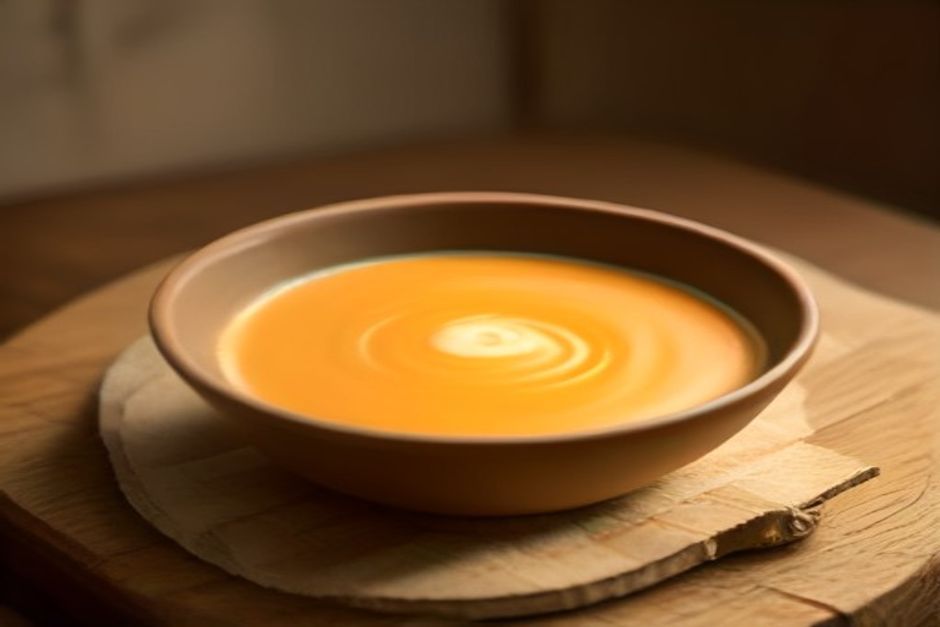
Some recipes earn their place through flavor. This one earns it through timing. Carrot-ginger soup is what you make when you come home from evening practice with a warm, loose body and an empty stomach, and you want dinner that continues the downshift instead of interrupting it. It's sweet, gently sharp, soft, and warm — food that asks nothing of your digestion and gives back exactly what a worked body wants: fluid, salt, and something easy.
Why this soup, why now
After practice, appetite often lags behind need. You've spent an hour breathing deeply and twisting your midsection; a heavy, greasy meal sounds vaguely offensive, but skipping dinner means waking at midnight hungry. Soup threads the needle — hydrating, mineral-rich, and light enough to sit comfortably in a stomach that's still in relaxation mode. Ginger adds its own quiet argument: it's been used for centuries as a digestive settler, and while we make no medical claims here, a warm ginger broth after practice is one of those traditions that needs no laboratory to justify itself. It simply feels right, which on a cold evening is reason enough.
There's also the seasonal case. Cold-weather practice and cold-weather food belong together — a raw salad in January after a candlelit yin class is a mismatch of moods. Warm food continues what the practice started. Our nutrition page makes the broader argument for eating with the season and the practice rather than against them.
The recipe
Serves 4. Takes about 30 minutes, most of it unattended.
- 1 kg (about 2 lb) carrots, chopped into rough coins
- 1 onion, chopped
- A thumb-sized piece of fresh ginger (about 2 tablespoons grated), peeled and sliced
- 750 ml (3 cups) vegetable stock or water
- 1 tablespoon olive oil or butter, plus salt
- Optional: a squeeze of lemon, a spoonful of yogurt or coconut cream to finish
1. Soften
How: Warm the oil in a pot over medium heat. Add the onion with a pinch of salt and cook five minutes until soft and translucent. Add the ginger for the last minute — you want it fragrant, not browned.
Why: The onion is the sweet base; the ginger is the spine. Salt at this stage pulls moisture out and builds flavor before any liquid arrives.
2. Simmer
How: Add the carrots and stock, bring to a boil, then lower to a gentle simmer, lid slightly ajar, for 20 minutes, until a carrot coin yields to a fork without argument.
Why: Fully soft carrots blend into silk. Firm carrots blend into sadness. Give them the full twenty minutes.
3. Blend and finish
How: Blend until completely smooth — stick blender straight in the pot is fine. Taste. It will want more salt than you think, and possibly a squeeze of lemon to wake it up. Serve with a swirl of yogurt or coconut cream if you have it.
Why: Carrots are sweet and ginger is warm; salt and acid are what turn those two notes into a chord. Taste as you go — the soup tells you what it needs.
Variations that keep it interesting
- Red lentil version: Add half a cup of red lentils with the carrots. They dissolve into the soup, thicken it, and add enough protein to make it a complete dinner with bread.
- Orange version: Swap one cup of the stock for fresh orange juice and add a strip of orange zest while simmering. Brighter, sweeter, very good in early spring.
- Curried version: A teaspoon of mild curry powder bloomed with the onions. Different soup, same soul.
- Roasted version: Roast the carrots at 200°C (400°F) for 25 minutes first. Deeper, caramelized, worth it on a weekend.
If soups become your recovery-meal genre, two neighbors on this site keep the rotation fresh: the sweet potato-ginger soup is this recipe's richer cousin, and the miso-ginger broth is the faster, lighter option for nights when even thirty minutes feels long. For colder months, the winter soup rounds out the warm-dinner shelf.
The practice of the pot
One small suggestion: treat the cooking as the cooldown. Chop slowly. Let the simmering twenty minutes be twenty minutes — sit with a cup of tea, or do legs up the wall on the kitchen floor if the mood strikes. The soup needs no supervision, and the transition from practice to dinner goes better when it isn't abrupt. Meal as meditation sounds precious until you try it once and notice you ate dinner feeling like practice never quite ended. In a good way.
"Cook the soup the way you'd teach the pose: simple, warm, and without hurry."
Five ingredients, one pot, one quiet evening properly ended. Make it once after practice and it will enter your rotation the way good poses do — without announcement, and then permanently.