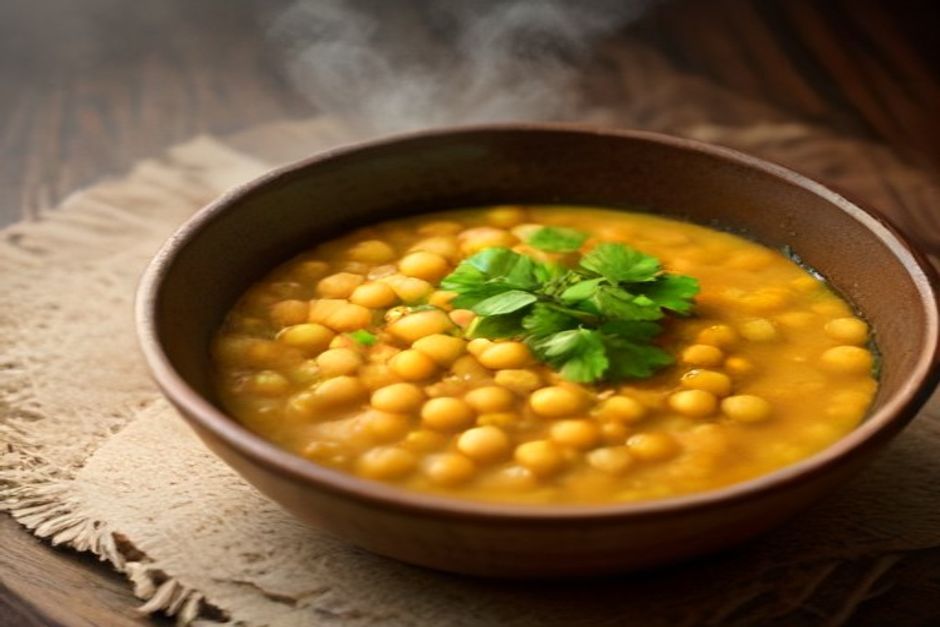
There is a particular hunger that follows an evening yoga practice — not ravenous, just clear and honest. This chickpea curry is built for it. One pot, about thirty minutes, ingredients that live in the pantry and keep for months. It is not an authentic recreation of any single regional dish; it is a respectful, simplified weeknight curry in the broad tradition of chana masala, tuned for a Tuesday. No fancy equipment, no specialty-store trip, no claims that it will detox anything. It will just feed you well, which is enough.
What you need (serves 4, generously)
- 2 tablespoons oil (coconut or neutral)
- 1 large onion, diced
- 4 cloves garlic, minced; a thumb of ginger, grated
- 1 tablespoon curry powder (or 2 tsp cumin, 2 tsp coriander, 1 tsp turmeric)
- 1/2 teaspoon chili flakes, optional
- 1 can (400 g) crushed tomatoes
- 2 cans (800 g total) chickpeas, drained and rinsed
- 1 can (400 ml) coconut milk
- 1 teaspoon salt, more to taste; a squeeze of lemon or lime
- Rice or flatbread to serve; cilantro if you have it
Method
1. Soften the base. Warm the oil in a pot over medium heat. Add the onion with a pinch of salt and cook, stirring now and then, until soft and translucent — about eight minutes. Do not rush this step; the onion is the foundation, and a rushed onion tastes like one.
2. Bloom the spices. Add the garlic, ginger, curry powder, and chili flakes. Stir for one minute, until the kitchen smells like dinner is serious. If the pan looks dry, add a splash of water. Blooming spices in fat is the difference between a curry that tastes cooked and one that tastes assembled.
3. Build the sauce. Pour in the crushed tomatoes, stir, and simmer for five minutes until slightly thickened. Add the chickpeas and coconut milk. Simmer gently for ten to fifteen minutes, partly covered, until the sauce coats a spoon. Mash a few chickpeas against the side of the pot if you want it thicker.
4. Finish. Salt to taste, squeeze in the lemon or lime, and scatter cilantro over the top. Serve over rice. The acid at the end is not optional — it is what makes the whole pot taste awake.
Why this works after practice
Chickpeas bring protein and fiber; the coconut milk makes it satisfying without being heavy; the gentle spices warm without overwhelming. It is the kind of meal that sits well an hour before bed, which matters if your practice runs late — the evening wind-down works better on a calm stomach. It also keeps for four days in the fridge and improves overnight, which makes it a reliable batch-cook for the weeks when motivation is thin. Cook once, eat three times, practice in between: that is the whole meal-prep philosophy this site believes in. The broader picture of eating to support practice — protein, timing, hydration, the honest limits of "clean eating" talk — is on the nutrition page.
A word on salt and spice tolerance: recipes are starting points, not contracts. Taste at the end and adjust. Under-salted curry tastes flat in a way no amount of chili can rescue, and the fix takes ten seconds. If you are cooking for people with different heat tolerances, keep the pot mild and put chili oil or flakes on the table — everyone seasons their own bowl, and dinner stays peaceful.
Variations that respect the formula
- Greens: Stir in two handfuls of spinach or chopped kale in the last three minutes.
- Sweet potato: Add one diced sweet potato with the tomatoes and simmer until tender — adds body and a little sweetness.
- No coconut milk: Use a cup of water and two tablespoons of tahini or cashew butter. Different, still good.
- More heat: A chopped fresh chili with the garlic. Taste as you go; you can add heat but not remove it.
Eating it like a practice
One small suggestion, no incense required: for the first three bites, put the phone down and actually taste the food. Notice the heat, the acid, the texture. That is the whole of mindful eating in its least intimidating form, and it takes about ninety seconds. Then eat the rest however you like — seconds included.
Leftovers reheat in a pot with a splash of water over low heat, or two minutes in the microwave. Freeze portions for up to three months. A pot of this in the fridge is the culinary equivalent of a mat left unrolled: an invitation you are more likely to accept.