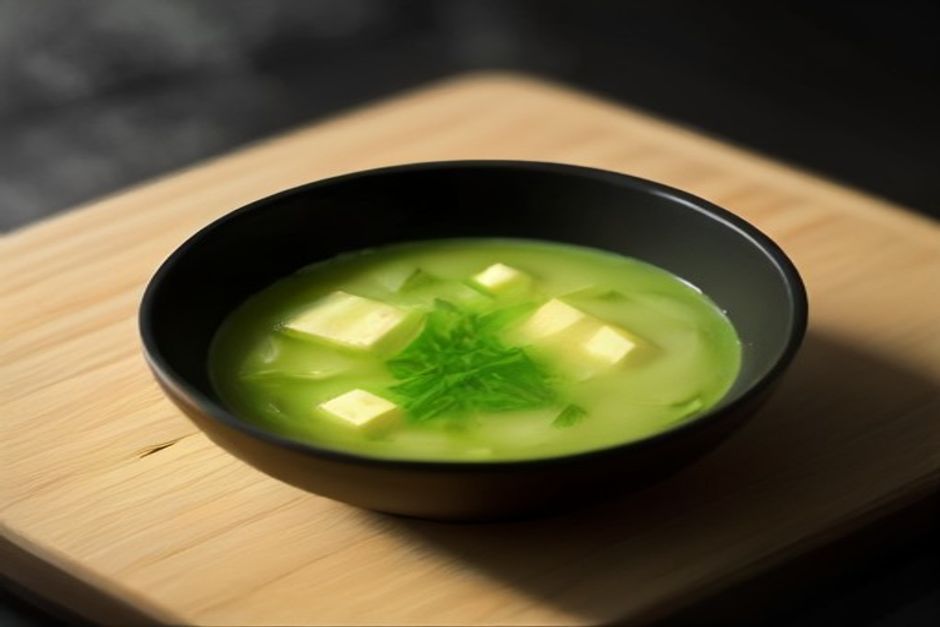
Some mornings want eggs and toast. Others — especially mornings that start on the mat — want something warm, savory, and barely there. Miso soup is that thing. In Japan it has opened the day for centuries, and the logic translates anywhere: it hydrates you after eight hours of not drinking, it's warm without being heavy, it's salty enough to feel like food, and it takes less time than brewing a pot of coffee. If your usual pre-practice choice is "nothing, then regret it by the second sun salutation," this is the fix.
The two ingredients that matter
Miso is fermented soybean paste, sold in tubs in the refrigerated section. White (shiro) miso is mild and slightly sweet — start here. Red (aka) miso is stronger, saltier, more fermented; graduate to it later. A tub lasts months in the fridge, which makes it one of the best value ingredients you can own.
Dashi is the broth underneath. Traditional dashi means simmering kombu seaweed and bonito flakes, which is wonderful and also not happening at 6 a.m. The honest shortcuts, in order of effort: instant dashi powder (a Japanese pantry staple, not a cheat — half of Tokyo uses it); a piece of kombu soaked in the water while it heats, then removed; or plain water with a tiny splash of soy sauce, which is not dashi but is fine on a Tuesday.
One shopping note: miso lives in the refrigerated section, usually near the tofu, and a plain tub of white miso is all you need to start — skip the flavored and "instant soup" versions. Once opened, it keeps for months and quietly improves other things: a spoonful in salad dressing, in marinades, stirred into butter for vegetables. The tub will not go to waste.
The base recipe (one bowl, five minutes)
- 1½ cups water
- ½ teaspoon instant dashi powder, or a 3-inch piece of kombu
- 1 tablespoon miso paste (white for beginners)
- A few cubes of soft tofu
- A small pinch of dried wakame seaweed — it expands dramatically; a pinch really means a pinch
- 1 scallion, sliced thin
Method
Heat the water with the dashi powder or kombu until steaming. Add the tofu and wakame; give them a minute. Now the one rule that actually matters: turn off the heat before the miso goes in. Scoop the miso into a ladle, hold it in the hot broth, and whisk it smooth with chopsticks or a fork, then stir it through. Boiling miso kills its aroma and turns it flat and salty — every Japanese cook will tell you this, and they are right. Scatter the scallion over the top and drink it from the bowl, slowly, while it's hot.
Three variations
- The greener bowl: add a handful of spinach or sliced mushrooms with the tofu — spinach wilts in the hot broth in a minute.
- The substantial bowl: a soft egg cracked in at the end and left to poach gently in the residual heat, plus a few leftover rice grains. This is breakfast proper.
- The evening bowl: same soup, no dashi debate, just water, miso, tofu, and ginger — a five-minute savory close to the day, in the same family as golden milk but for people who want salt instead of sweet.
Why it belongs on a yoga site
Because the hardest nutrition problem in practice is the morning one: practice works best on a nearly-empty stomach, but "nearly-empty" and "empty" are different states, and the second one ends in dizziness halfway through standing poses. A bowl of miso soup thirty minutes before practice threads that needle — warm fluid, a few cubes of protein, almost no fat, nothing to sit heavily during forward folds. On days when you want a little more, a green smoothie is the other light option; on rest days, this soup next to toast is a full breakfast.
For the wider picture of mornings, see the morning practice page, and for the sweet-versus-savory question across the whole day, the nutrition page and morning versus evening practice fill in the rest.
Turn off the heat before the miso goes in. That is the whole technique; everything else is preference.