Rajas is the Sanskrit word for the energy of activity — movement, drive, ambition, desire, restlessness. In the yogic model of the mind, it is one of the three gunas, the fundamental qualities said to run through everything from your breakfast to your personality. If you have ever lain in savasana composing emails in your head, you have met rajas. If you have ever dragged yourself to the mat when you did not feel like it, you have also met rajas. It is the same force in both directions, which is exactly why the tradition treats it with more nuance than 'bad energy, avoid.'
Where the word comes from
The guna framework appears across classical Indian philosophy — in the Samkhya school, in the Bhagavad Gita, and throughout Ayurveda. The three gunas are sattva (clarity, balance), rajas (activity, passion), and tamas (inertia, heaviness). Nothing is purely one guna; everything is a shifting blend. The overview of all three lives on our gunas page; this entry zooms in on the middle one.
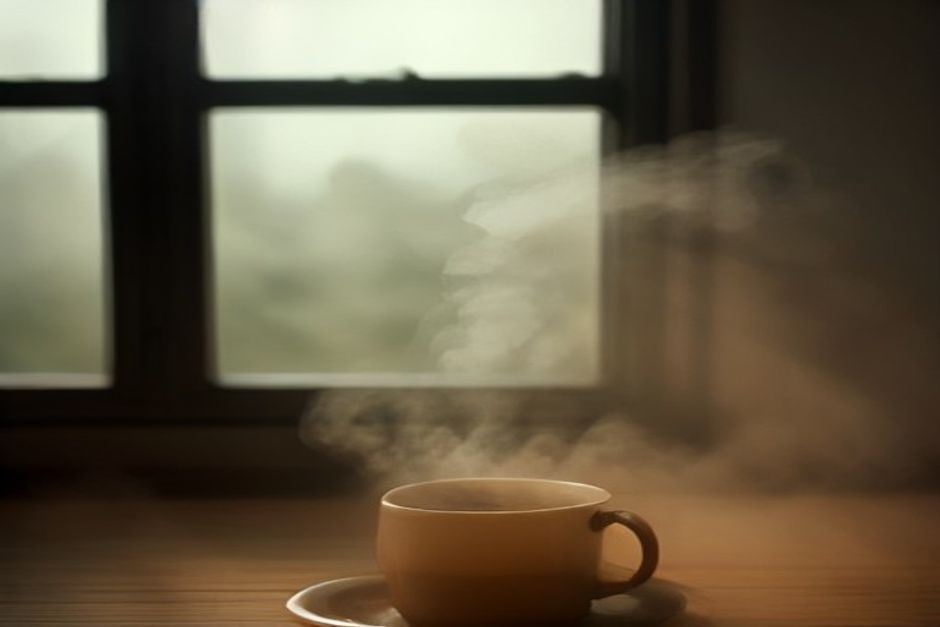
The word rajas originally carried connotations of dust, smoke, and atmosphere — the haze stirred up by motion. That image is useful. Rajas is not fire itself; it is the turbulence activity kicks up.
Rajas in the mind
A rajasic mind is a busy mind: planning, wanting, comparing, reaching for the phone. In meditation it shows up as the itch to check the time, the sudden urgency of insignificant tasks, the body that cannot quite settle into the seat. The classical texts describe rajas as binding through attachment to action — the sense that you must do, fix, achieve, respond.
Notice what that description is not: it is not a moral failing. The same drive that fragments your attention in savasana is what got you onto the cushion in the first place. A person with zero rajas does not meditate either; they stay on the couch. That is tamas's territory.
Rajas in the body and in practice
On the mat, rajas looks like rushing — muscling into poses, chasing the deepest expression, treating savasana as dead time to be escaped. It is the student who turns every class into a competition with their own reflection. Physical practice can burn off excess rajas beautifully; a brisk vinyasa genuinely settles a stirred-up system. This is why the traditional sequence starts active and ends still: you move the energy through before you ask it to rest.
But rajas can also hijack practice. Signs to notice:
- Speed without breath. Moving faster than the breath can support, arriving in each pose a half-second after yourself.
- Depth chasing. Every stretch pushed to its edge, every hold judged by intensity rather than quality of attention.
- Exit-urge in stillness. The final relaxation feels unbearable, and your hand twitches toward the phone before the teacher finishes speaking.
None of these mean you are doing yoga wrong. They mean you are doing yoga while human, with a mind built for activity. The practice is to notice the flavor of the energy and choose what to do with it.
When drive becomes burnout
The modern world runs on rajas and rewards it lavishly — productivity, optimization, hustle — right up until the bill arrives. Rajas untempered tips into agitation, then exhaustion: the nervous system cannot idle. The tradition's answer is not to eliminate rajas but to refine it. Drive aimed by attention becomes purposeful action; drive without direction becomes spinning.
Practically, the balancing acts are unglamorous:
- Finish what you start on the mat. Stay through savasana. It trains exactly the muscle rajas neglects: the ability to be done.
- Insert pauses. Three breaths in mountain pose between sequences gives a rajasic system a chance to register completion instead of immediately reaching for the next thing.
- Match practice to state. On a high-spinning day, move first and sit later. On a dull, heavy day, the same movement serves differently — it generates energy rather than discharging it. The gunas are a diagnostic, not a rulebook.
- Watch the fuel. Ayurveda links heavy stimulation — caffeine late in the day, constant inputs, inflammatory news cycles — to rajasic overload. You do not have to accept the whole system to notice the obvious: inputs shape states.
A secular way to use the idea
You do not need to believe in subtle energies to find rajas useful. Read it as a vocabulary for something you already feel: the difference between activated-and-clear and activated-and-scattered. Sattva, in this reading, is not a spiritual achievement but a description of a mind whose energy has somewhere to go. The sattva entry covers that side of the equation, and the framework as a whole sits inside the broader yoga philosophy map.
Rajas is the engine. The question the tradition asks is never 'how do we remove the engine?' but 'who is steering?'
The takeaway
Rajas gets you to class, through the hard poses, and out the door into a life that needs doing. It only becomes a problem when it runs unattended — when doing becomes compulsion and rest feels like failure. The gunas give you a way to notice which quality is driving at any moment, and practice gives you a way to shift the balance deliberately. Energy is not the enemy of stillness. Undirected energy is.