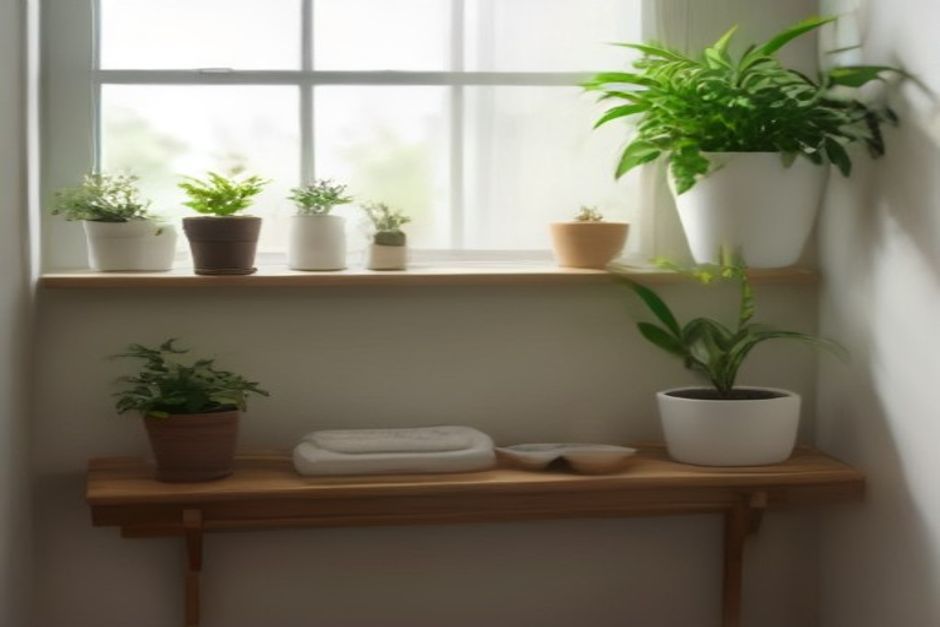
Saucha (शौच) is usually translated as cleanliness or purity, and it is the first of the five niyamas — the personal observances of yoga's eight-limbed path. That translation is accurate and slightly misleading, because it makes saucha sound like a hygiene rule, something about soap and sweat. The root śuch means to shine, to be bright, to be clear. Saucha is less about being spotless and more about being uncluttered: a body, a space, and a mind clear enough that light gets through. The Yoga Sutras place it first among the niyamas for a practical reason — everything that follows, from contentment to self-study, is easier in a space that isn't noisy with residue.
Three levels of clean
The tradition reads saucha on three levels, and the order matters: it starts with the outside and works inward.
Space. The most literal level. The room you practice in, the desk you work at, the kitchen counter. The classical texts were blunt about this — a clean dwelling, simple food, order in one's surroundings — not as moral virtue but as mental technology. Clutter is deferred decisions, and deferred decisions hum in the background of attention. You have felt this: the difference between sitting down to breathe in a clear corner and sitting down next to a pile of unsorted mail. Same lungs, different mind.
Body. Cleanliness of the body meant, historically, a whole catalog of kriyas — cleansing techniques ranging from the sensible (washing, scraping the tongue) to the extreme (swallowing cloth to clean the stomach, which you should absolutely not try at home). The modern, reasonable reading: keep the body maintained enough that it stops shouting for attention. A body that is reasonably fed, washed, rested, and moved is simply quieter. Saucha here is maintenance, not mortification.
Attention. The deepest level, and the one the Sutras care about most. Sutra 2.41 says that when attention is purified, it gains cheerfulness, one-pointedness, mastery of the senses, and fitness for self-knowledge. Notice the sequence: clarity of attention is not the reward at the end of the path — it is the precondition for everything on it. A mind carrying the residue of three arguments, nine headlines, and a half-finished email thread cannot settle, for the same reason a dusty lens cannot focus.
What saucha is not
Two distortions to clear away, because they turn a useful practice into a trap.
It is not purity culture. Saucha has been abused, in yoga circles and far beyond them, to mean policing bodies, foods, and people into categories of clean and unclean. That is exactly backwards. The niyamas are instructions for your own practice, not a scoring system for other people. The moment saucha makes you disgusted by others — their bodies, their habits, their food — it has curdled into its opposite. Sutra 2.40 actually warns about the endpoint of body-focused purity: it produces detachment from one's own body, a loosening of identification with flesh. Weaponized disgust was never the goal.
It is not perfectionism. A spotless house maintained by anxiety is not saucha; it is agitation with good lighting. The test of the practice is whether it frees attention or consumes it. If your cleaning ritual takes the hour you meant to practice in, the ritual has eaten the practice. The yamas and niyamas work as a system, and aparigraha — non-grasping — applies to tidy outcomes too.
Practicing saucha without becoming tedious
- Clear one surface. Not the whole house — one. The table where you drink morning tea. The floor where the mat goes. A single reliably clear spot acts as an anchor: the nervous system learns that this surface means practice, and arrival gets faster every week.
- Close loops before practice. Before sitting for meditation, take ninety seconds to finish or park the open task — send the text, write the reminder on paper, put the pot in the sink. You are not cleaning the house; you are closing browser tabs in the brain.
- Mind the inputs. The classical texts cared about food; the modern equivalent is the full diet of inputs — what you eat, watch, read, and scroll. Saucha asks a plain question: does this leave residue, or does it leave clarity? Nobody needs a rule about it. You already know which feed leaves you scattered and which meal leaves you heavy. The practice is noticing, then adjusting ten percent.
- Wash the mat, occasionally the ego. Practical hygiene still counts — a wiped-down mat, clean practice clothes — but treat it as care, not ritual purity. Care is quiet. Purity performs.
Why first?
Of the five niyamas, why does saucha lead? Because it is the only one you can do with a sponge. Tapas requires heat you may not yet have; self-study requires honesty that takes years; surrender requires trust. But you can clear a table today, and the effect is immediate and verifiable: sit in the cleared space and the mind settles measurably faster. Saucha is the niyama with the shortest feedback loop, which makes it the right door into the whole system. Start with the surface. The clarity spreads inward on its own — that, according to the Sutras, is what cleanliness was always for.
Saucha is not the pursuit of spotlessness. It is the removal of whatever is standing between you and a clear hour.