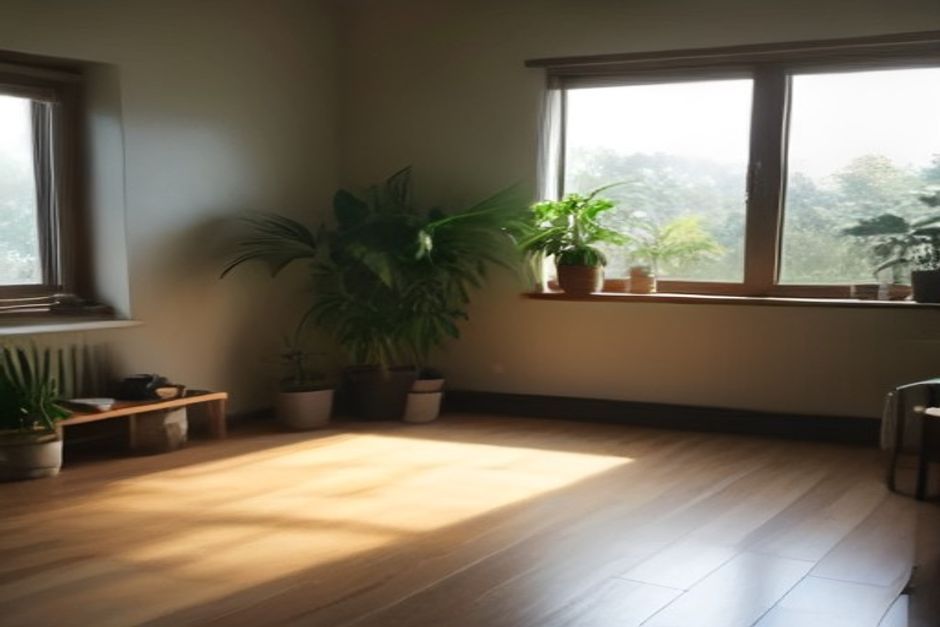
Every long-term practitioner eventually runs the same accounting: the studio costs money and time; the living room costs discipline. Neither is the "real" yoga — that argument is a marketing artifact. What follows is the honest ledger: what each actually gives you, what each quietly charges, and the hybrid most people land on once the honeymoon ends. (For the related but different question of in-person versus video classes, see online vs studio.)
What the studio gives you
Eyes. A teacher who can see that your down-dog shoulders live in your ears is the single most valuable thing in yoga, and it cannot be downloaded. Friction that works for you. A booked class has a start time and other people in it; skipping requires an act of will — which is exactly backwards from home practice, where practicing requires the act of will. Equipment and space. Props you'd never buy, floors that aren't your kitchen, heat you didn't pay a utility bill for. People. The unglamorous truth is that the nodding-acquaintance community of a regular class keeps more people practicing than any philosophy ever has.
The charges: real money — the full math is on our cost of yoga page — plus commute, schedule servitude, and the occasional 6 pm class packed like a bus.
What home gives you
Frequency. The entire case for home practice is arithmetic: a twenty-minute session that actually happens beats a seventy-five-minute class you couldn't reach. Practice daily at home and you'll out-practice the twice-a-month studio loyalist by an order of magnitude. Fit. The practice matches the day — ten minutes when that's all there is, hips when hips are the issue, silence when the world was loud. Our home practice guide covers how to build that habit. Privacy. Nobody sees the wobble, the grunting, the child's pose that lasts five minutes because that's what the day required.
The charges: no corrections, so alignment drift is a slow leak you can't feel; the couch is always closer than the mat; and motivation — the thing home practice was supposed to need less of — turns out to be the whole budget.
The failure modes, honestly
Studios fail by all-or-nothing: the busy month becomes a canceled membership becomes "I don't do yoga anymore," as if the practice lived in the building. Home practice fails by drift: sessions shorten, the hard poses quietly vanish, and within a year the practice is three stretches you already liked. Notice which failure sounds like you. People who cancel things need a mat at home; people who drift need a room with a start time.
The hybrid that lasts
- Home for volume: two to four short-to-medium sessions a week, fitted to the actual schedule, not the aspirational one.
- Studio for calibration: one class a week, or two a month, with a teacher who knows your body — expensive per hour, cheap per correction.
- A course for the plateaus: when either format goes stale, a structured course — in person or online — restarts progression better than another year of the same class.
If you must choose one: beginners and the injury-prone should start with the studio — learn what right feels like before practicing alone. Self-directed, schedule-crunched, or budget-limited? Start at home, and read the etiquette guide before your first studio visit so the room holds no surprises. And whichever you pick, the how often question outranks the where — a mediocre format practiced beats a perfect format skipped.
The studio sells you accountability; home practice asks you to manufacture it. Buy or build — but one of them has to happen.