Every January, millions of people unroll a yoga mat at home with genuine intention. By February, most of those mats are furniture. This is not a willpower story. It is a design story. Home practice fails for predictable, fixable reasons — and the people who keep going for years are not more disciplined than you. They just set it up so that practice is easier to start than to skip.
Why home practice usually dies
Three killers, in order of body count:
- The negotiation. Every session begins with a debate: now or after coffee? Twenty minutes or forty? Which video? Decision fatigue eats the practice before it starts.
- The invisible finish line. "Do yoga" has no end. A vague task is a postponable task.
- The all-or-nothing trap. You planned forty minutes, you have twelve, so you do zero. Repeat thirty times and the habit is gone.
None of these are character flaws. They are engineering problems.
Rule one: shrink the entrance, not the ambition
The two-minute rule, borrowed from habit research and abused productively by yogis everywhere: your only daily obligation is to get on the mat for two minutes. That's it. Cat-Cow a few times, one Child's Pose, done. You are allowed to stop.
Here is the trick you already see coming: once you are on the mat, two minutes usually becomes fifteen. But — and this matters — you must genuinely be allowed to stop at two. The rule works because it removes the negotiation, not because it smuggles in a longer practice. On the days you stop at two minutes, you kept the streak. The streak is the asset. The hamstrings can wait.
Rule two: a fixed time beats a found time
"I'll do it when I have a moment" means "I'll do it never." Anchor practice to something that already happens every day: after the kettle boils, before the shower, when the work laptop closes. The anchor does the remembering so you don't have to.
Which slot is best? The honest answer from our morning vs evening comparison: the one you will actually keep. Morning people get consistency; evening people get a better wind-down. Pick one, attach it to an anchor, and protect it for four weeks before judging it.
Rule three: give the practice a home
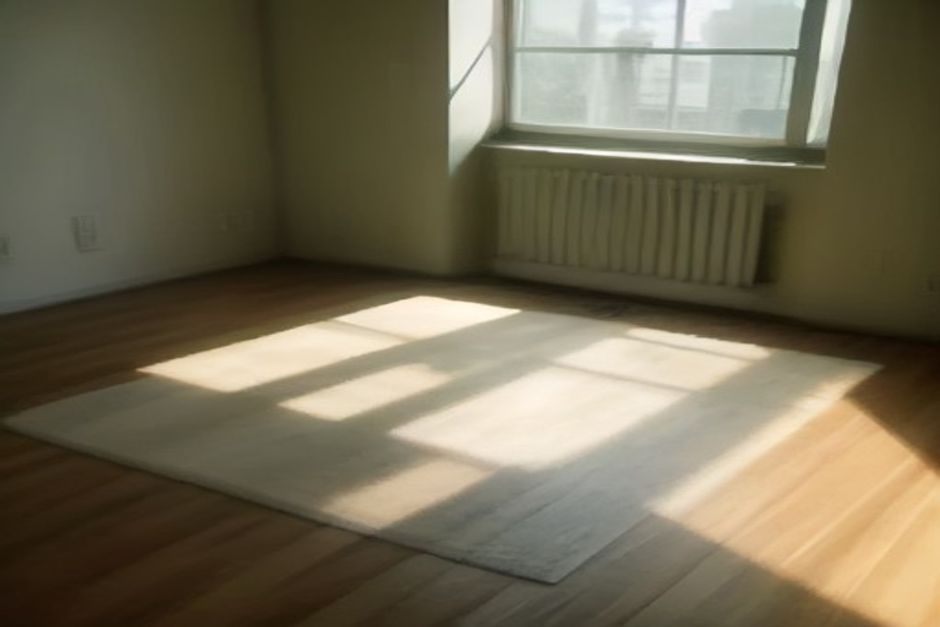
You do not need a yoga room. You need a yoga spot — a mat's worth of floor that is visibly yours. Best case, the mat stays unrolled. That sounds trivial and is not: every object you have to fetch is a small tax on starting. A mat that lives on the floor is a standing invitation. A mat in a closet is a monthly intention.
If space is genuinely tight, keep the mat and one blanket in a basket next to the spot. Setup should take under thirty seconds. If you are building a small kit from scratch, our props guide covers what is worth buying first (two blocks, a strap) and what is marketing.
Rule four: decide the content before you need it
The worst moment to choose a practice is the moment you are standing on the mat, already slightly resentful. Choose once, in advance, for the week:
- Three set sequences you rotate. For example: a gentle morning flow, a hip-focused evening session, and one longer weekend practice. Boredom is a problem for month three, not week one — repetition is how bodies learn.
- A default "bad day" practice. Ten minutes: Cat-Cow, low lunge each side, a reclined twist, done. This is the session that saves the streak when life is on fire.
- A teacher you trust, if you use videos. One or two, not a subscription to infinite choice. If you want structure, a short course with a fixed sequence removes the choosing entirely.
What a realistic week looks like
Not the brochure version — the actual one:
- Mon: 15 minutes, morning flow. Fine.
- Tue: Two minutes. Cat-Cow, off the mat. Counts.
- Wed: 20 minutes, hips.
- Thu: Missed. No drama, no doubling up.
- Fri: 10-minute bad-day practice.
- Sat: 40 minutes, the long one.
- Sun: Rest, or Legs Up the Wall before bed.
That is roughly ninety minutes of yoga across a week with a miss in it. Compounded over a year, it is a serious practice. The yogis you admire did not get there with heroic sessions. They got there with boring consistency and a low bar on bad days.
When to seek out a room full of people
Home practice is excellent at consistency and terrible at feedback. Nobody is watching your knees in Chair Pose or noticing that your "restful" forward fold is a low-back hostage situation. A live class every few weeks — or even a one-off private session — recalibrates the home practice. Think of studio time as maintenance, not the main event.
"The practice does not need to be impressive. It needs to be repeatable."
Start tomorrow. Two minutes, after the kettle boils, in the spot you cleared tonight. That is the whole system.