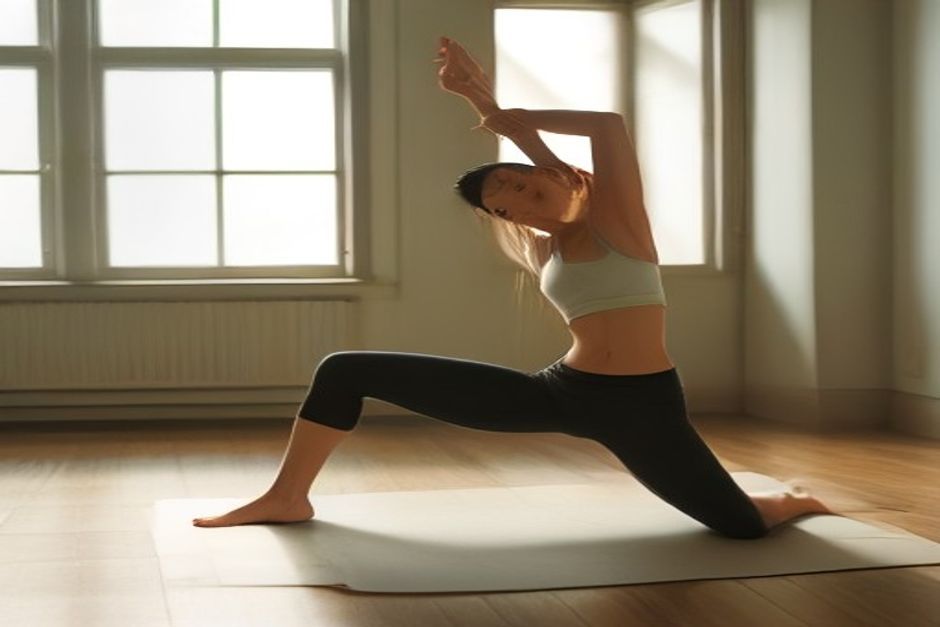
Ask a room of yoga teachers whether yoga is just stretching and you will get a lecture. Ask a room of physiotherapists and you will get a shrug: mostly, yes, with extras. Both rooms are partially right. The honest answer is that the physical overlap is enormous — a forward fold is a hamstring stretch whether you call it Uttanasana or not — and the differences are real but narrower than the marketing suggests. Here is where the two actually part ways.
Where they are the same thing
If your goal is purely mechanical — a tight hamstring, a stiff hip, a calf that will not let your ankle bend — then a well-programmed stretching routine and a well-chosen set of yoga poses will get you to roughly the same place. The tissue does not care about the branding. A lunge is a hip-flexor stretch; Pigeon is a glute stretch; a doorway chest stretch and a yoga backbend both open the front of the shoulders. For pure flexibility, the research is unglamorous: consistent, moderate, sustained stretching works, whether it comes with Sanskrit or without. Our piece on the truth about flexibility covers what actually changes tissue, and it is mostly time and patience.
Difference one: breath is built in, not bolted on
Stretching routines treat breathing as an afterthought — "remember to breathe!" — while yoga treats it as the metronome the whole practice runs on. Movement is tied to inhale and exhale; holds are counted in breaths, not seconds. This is not decoration. Breathing slowly and deliberately during a stretch keeps the nervous system from guarding against it, and it is part of why a long held pose feels different from a quick stretch-and-bounce. If you want to see how far that rabbit hole goes, the pranayama section is a whole discipline of breathing on purpose. Stretching has no equivalent chapter.
Difference two: attention is part of the training
You can stretch while watching television, and plenty of people do, with decent results. Yoga asks for something more expensive: noticing. Where is the weight in your feet? Which side grips harder? What does the breath do when the pose gets difficult? This interoception — sensing the body from the inside — is trainable, and it is a large part of what people mean when they say yoga changed more than their hamstrings. Whether you want that is a personal question. Some days, stretching in front of a screen is exactly the right amount of effort, and pretending otherwise would be snobbery.
Difference three: yoga loads, stretching mostly unloads
A stretching routine lengthens tissue. A yoga practice also strengthens it — and strengthens it at length, which matters. Holding Warrior II is endurance work for the legs. Plank and Chaturanga load the upper body in ways no stretching routine touches. Balancing poses train the ankles and hips as stabilizers, not just as things to be loosened. The practical consequence: yoga tends to produce flexibility you can control, because the same poses that stretch a muscle often demand strength from its neighbors. Stretching alone can produce range without control, which is why hypermobile people are often told to stretch less, not more.
How to choose
- One specific tight area, ten spare minutes: stretch it directly. A couch stretch for the hip flexors needs no philosophy.
- General stiffness, desk body, want to feel put together: yoga, because it works the whole chain and the breath comes free.
- Stress, sleep, a nervous system running hot: yoga, and specifically the slow kind — the breathing and stillness are doing the work the stretching cannot.
- Athletic flexibility for a sport: both — targeted stretching for the sport's demands, yoga for balance, body awareness, and the parts the sport ignores.
If you are new to the yoga side of the fence, the yoga basics page is the right front door, and our yoga vs Pilates comparison answers the neighboring question.
The honest bottom line
Calling yoga "just stretching" is wrong, but calling stretching "yoga minus the good parts" is also wrong — for plenty of goals, stretching is the good part, delivered efficiently. Yoga is stretching plus breath, plus attention, plus load, plus two thousand years of people thinking about why they were doing it. You do not have to buy the whole package. But it helps to know what is in it, so you can choose the pieces you actually need — and skip the ones you do not, without guilt in either direction.