Every long-term practitioner has the same biography in two drafts. The first draft is a story about motivation: inspired beginnings, energetic months, a practice that carried itself. The second draft — the true one — is a story about anchors: the unglamorous little structures that kept the practice standing during the months when motivation had quietly left the building. Everyone's motivation wanders. The people who are still practicing in year five are not more inspired than you. They are better anchored.
What an anchor actually is
An anchor is a fixed point that the practice attaches to, so that starting requires almost no decision. Decisions are the enemy. Every evening you have to answer "should I practice, and when, and what, and where?" is an evening the couch can win. An anchor answers those questions in advance, once, and then goes quiet. A good anchor has three properties: it is specific (not "practice more" but "ten minutes after coffee"), it is small enough to survive your worst week, and it is attached to something that already happens reliably. You are not building willpower. You are building rails.
Anchors that hold
The same time, loosely held. Attach practice to an existing event rather than a clock time — after morning coffee, before the evening shower, when the work laptop closes. Events happen even on chaotic days; 6:15 alarms get snoozed by adults with free will. Mornings work well for many people because the day has not yet had a chance to make other plans; our morning practice page has a template if that slot is open for you.
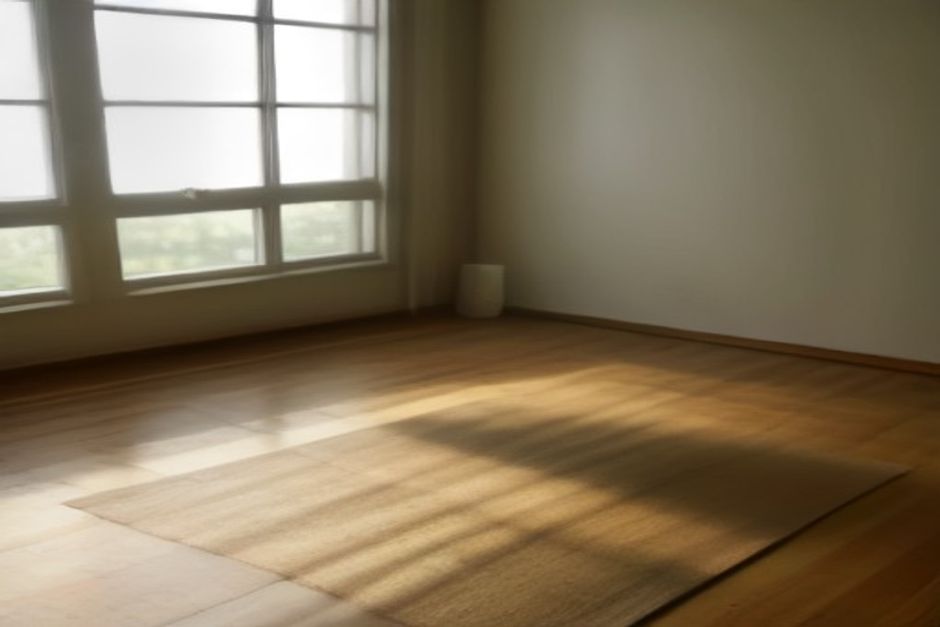
The same place, permanently set. If possible, leave the mat out. A rolled mat in a closet is a small wall you have to climb before practice even starts; a mat lying in a corner is an invitation with no administration attached. The corner does not need to be beautiful. It needs to be yours and already there.
The two-pose minimum. Commit to something absurdly small — two poses, five minutes, one song. The deal is simple: you must do the minimum, and you may stop after it. Most days you will not stop, because starting was the hard part and you have already done it. On the days you do stop, you have kept the chain unbroken, which was the actual point. This is the logic behind two poses a day, and it does not stop working once you are no longer a beginner.
The same opening. Start every session the same way — three breaths in a comfortable seat, a round of Cat-Cow, whatever suits you. A fixed opening works like the first notes of a familiar song: the body recognizes it and starts arriving before the mind has finished objecting.
Anchors for the mind, not just the schedule
The practice itself can carry anchors. A short sit after the poses — even two minutes — turns exercise into practice and gives the whole thing a center of gravity; the meditation page has simple starting points. Some people anchor with breath: begin and end with the same three slow breaths, and over months that breathing pattern becomes a switch that means "we are doing this now," usable on hotel carpets and in airport corners. Ritual sounds precious until you notice that brushing your teeth is a ritual, and it survives every bad week you have ever had precisely because it is automatic.
When the anchors break anyway
They will. Travel, illness, a new baby, a brutal work quarter — some seasons knock every rail loose. The rule for those seasons: scale down, do not shut down. Two poses in a hotel room. One minute of breathing in a hospital parking lot. The content of the practice can shrink to almost nothing; the continuity is what you are protecting, because restarting from zero is ten times harder than resuming from "tiny." And if the chain genuinely breaks — a month gone, a season gone — the move is to restart at minimum size without a tribunal about how you let it lapse. Guilt is not an anchor. It is just weather with a judgmental tone.
One useful distinction while you are rebuilding: a motivation dip and a practice plateau look similar from the inside but want different responses — the dip wants smaller anchors, the plateau wants patience or variation. Misdiagnosing one as the other is how people either push through exhaustion or abandon a practice that only needed a change of scenery.
You do not rise to the level of your inspiration. You fall to the level of your anchors — so set the anchors where a tired version of you can still reach them.
Build the rails small, attach them to things that already happen, and let the inspired days be a bonus rather than the engine. The wandering mind comes with the territory. The anchored practice comes back anyway.