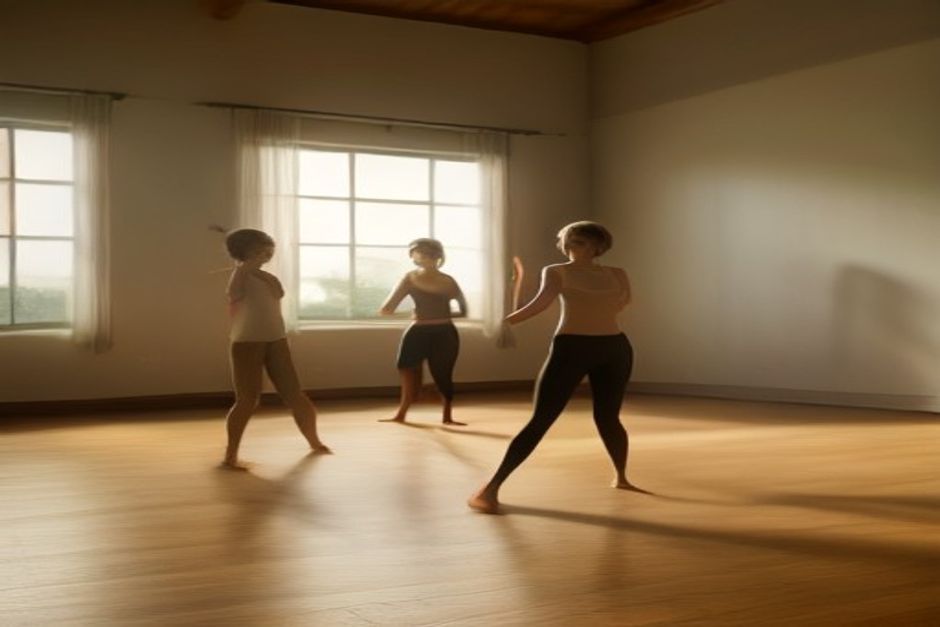
There is a quiet fantasy that a real yoga practice is a fixed thing — the same sequence, the same depth, the same body, repeated for decades. Anyone who has actually practiced for decades will tell you the opposite. The practice that survives is the one that keeps renegotiating. Poses leave. Poses arrive. What counted as progress at 25 looks absurd at 55, and what counts as progress at 55 — standing up from the floor without using your hands, sleeping through the night — would have bored you senseless at 25. This is not decline. It is the practice doing its real job: meeting the body you have today.
The decades, honestly
Bodies do not read calendars, and your mileage will vary. But some patterns are common enough to plan around.
Your 30s: the decade of borrowing
Most people in their thirties can still borrow against their body — skip the warm-up, sit at a desk for ten hours, then demand a deep backbend, and mostly get away with it. The bill arrives later. This is the decade to build the habits that cost nothing now and pay forever: warming up properly, learning what neutral spine actually feels like, and treating strength as seriously as flexibility. Tissue you strengthen in your thirties is tissue you keep in your sixties.
Your 40s: the decade of information
The forties are when the body starts leaving comments. The hamstring you pulled demonstrating a cartwheel takes six weeks, not six days. Shoulders that lived overhead without complaint begin to negotiate. None of this means stop. It means the feedback loop shortens, and listening becomes a skill rather than an option. Many practitioners find their practice actually improves here — less ego, more precision. If you are just beginning, our guide to starting yoga after 40 covers the from-zero version.
Your 50s: the decade of adjustments
Bone density, hormonal shifts, and the accumulated mileage of work and sport all enter the conversation. Recovery becomes part of the practice rather than an interruption of it — see rest days in yoga for why that is physiology, not laziness. Balance work moves from party trick to essential maintenance. Weight-bearing poses like Warrior and Chair stop being warm-ups and start being the point.
Your 60s and beyond: the decade of keeping
The goal shifts from gaining capacity to keeping it — and keeping is a genuine achievement. The research-worthy outcomes are unglamorous: getting up from the floor, stepping off a curb without fear, catching yourself when you trip. A practice built on standing poses, balance near a wall, and gentle range-of-motion work delivers exactly these. Our page on yoga after 50 goes deeper on this stage.
What never changes
Underneath the adjustments, a few things stay fixed across every decade:
- Breath leads. At 25 it makes the flow smoother. At 75 it is the whole game. The breath practices on our pranayama page are the most age-proof part of yoga — no joint required.
- Consistency beats intensity. Fifteen minutes most days outperforms ninety minutes once a week at every age, and the gap widens as you get older.
- Savasana is non-negotiable. The older the body, the more the nervous system needs the downshift. Rest is not the absence of practice; it is where the practice lands.
- Pain is information. The rule that applies at 20 applies at 80: sharp, joint, or electrical pain means stop and reassess, not push through.
The adjustments that matter most
If you want the short version of forty years of adaptation, it is this:
- Warm up longer. Five minutes at 30 becomes twelve at 60. Cold tissue is stiff tissue, and stiff tissue is where strains live. Cat-Cow and gentle joint circles cover most of it.
- Trade depth for duration. The pose you can hold calmly for a minute teaches more than the pose you survive for five seconds.
- Strength before stretch. Flexible and weak is an injury waiting; strong and moderately flexible is durable. Loaded standing poses beat passive long holds for most aging bodies.
- Balance every day. Two minutes of standing on one leg while the kettle boils is the single highest-return habit in this entire article.
- Use the floor less casually. Getting down and up is worth practicing deliberately — it is a skill that quietly disappears if you only ever sit in chairs.
- Protect your sleep. Recovery happens there. A short evening sequence and Legs Up the Wall do more for tomorrow's practice than one more chaturanga.
The exchange rate
It helps to be honest about what you trade and what you get. You trade the spectacular — the Instagram shapes, the deep binds, the jumps. You get something better: a practice that shows up on your worst days, asks almost nothing, and quietly holds together the things you care about — walking, gardening, grandchildren, sleep, stairs. Practitioners who stay for decades almost all say some version of the same thing: the poses became less interesting and the practice became more so.
"The pose is not the point. The pose is the excuse to pay attention. That works at any age, in any body, on any day."
The mat does not care how old you are. It cares whether you came back. Keep coming back, keep adjusting, and the practice will keep its side of the bargain — for as many decades as you give it.