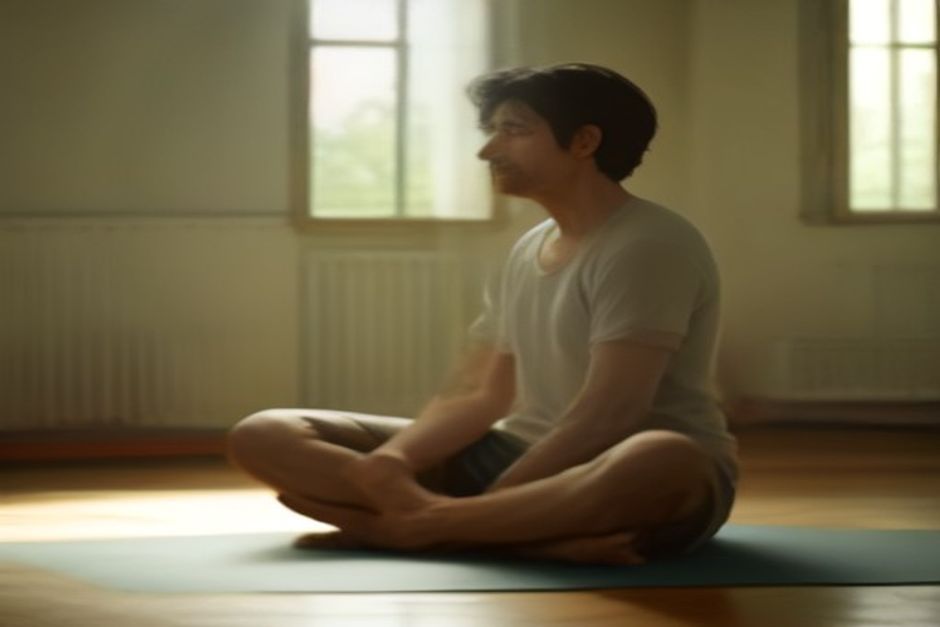
The average person who walks into their first yoga class after 40 carries two things: a body with some history, and a head full of reasons they should have started twenty years ago. The first is fine — bodies with history are the norm, not the exception. The second is useless. Nobody has ever stretched their way into the past. What you have is today, a floor, and a body that is far more trainable than the culture has told you. Let us deal in facts.
What actually changes by 40 (and what does not)
The honest list of changes:
- Recovery slows. The session a 25-year-old forgets by dinner, you may feel for two days. Solution: shorter sessions, more often, and real rest days.
- Warm-up stops being optional. At 22 you could walk in cold and fold in half. At 45, give yourself ten minutes of gentle movement first and the same poses go twice as well.
- Old injuries vote. The knee from football, the back from moving flats — they will have opinions. This is manageable, and a good teacher will help you work around them.
- Tissues adapt slower, but they adapt. Progress is measured in months. It still arrives.
And the list of things that do not change: your ability to get stronger, improve balance, expand range of motion, sleep better, and learn to breathe like a person instead of a startled animal. All of these respond to training at 40, 50, and well beyond. Flexibility is not reserved for the young — see the truth about flexibility for what actually drives it.
What kind of class to start with
The label on the door matters less than the pace in the room. Look for words like gentle, beginner, hatha, or foundations. Avoid, for now: power, hot, advanced vinyasa, and anything described as "sweat" in the first sentence. You can visit those later, if you want. You may never want, and that is also fine.
Online or in person? Both work. In person gives you a teacher's eyes on your alignment, which matters most in the first months. Online gives you privacy and zero commute. Our honest breakdown of online vs studio yoga covers the trade-offs, and the courses page lists structured options. A hybrid — mostly home practice with an occasional live class for feedback — is what works for most beginners over 40.
Your first eight weeks: a realistic plan
Weeks 1–2: floor work only
Ten to fifteen minutes, three times a week, on the floor where falling is impossible. Cat-Cow, Child's Pose, gentle Sphinx, and a reclined twist on each side. The goal is not fitness. The goal is proving to your brain that this is a thing you do now.
Weeks 3–5: stand up, near furniture
Add Mountain Pose, a supported Chair Pose with your hands on a countertop, and Warrior I with a shorter stance than your ego suggests. Start daily balance practice: stand on one leg holding the counter, thirty seconds a side. Fingers lighter each week.
Weeks 6–8: join something
Now you are ready for a real beginner class, live or streamed. Tell the teacher it is your first month and mention anything your doctor has flagged. Then ignore everyone else in the room entirely — they are either beginners pretending not to be, or experienced people who remember exactly what month one felt like.
The five traps for the over-40 beginner
- Comparing your insides to their outsides. The person next to you may have practiced for a decade. Their pose says nothing about yours.
- Chasing flexibility. Range arrives slowly; strength and balance arrive faster and protect you better. Prioritize accordingly.
- Skipping savasana. The final rest is where the nervous system banks the session. Leaving early to beat the parking is self-sabotage in its purest form.
- Going too hard in week one. Enthusiasm is wonderful. Tendons are unimpressed by it. Two short sessions in week one beats one heroic one followed by a fortnight of soreness and abandonment.
- Treating pain as a test of character. Muscle effort is fine. Sharp pain, joint pain, numbness, or tingling is a stop sign — at 40, it is a stop sign with legal authority.
Equipment: less than you think
A mat that does not slip, two foam blocks, and a strap. That is the entire kit, and the blocks do more for an over-40 beginner than any other purchase — they bring the floor up to meet you. The full reasoning is in our props guide. Knees on hard floors? Fold a blanket. That is not cheating; that is engineering.
If you are a decade further along and wondering whether the window has closed, it has not — read starting after 50 for proof. The pattern is the same at every age: start on the floor, start small, start this week. The practice does not need you to be young. It needs you to be present. Conveniently, that is the whole practice.