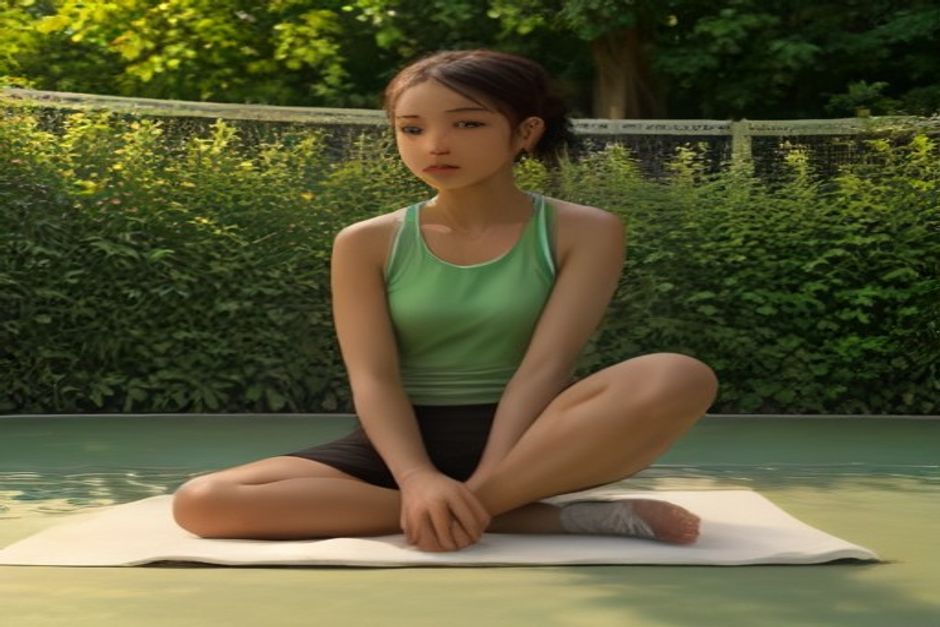
Tennis is a wonderfully lopsided sport. One arm swings thousands of times a week; the other mostly tosses a ball. You rotate explosively to one side, sprint forward more than backward, and brake hard on knees that did not sign up for any of it. The result, give it a few seasons, is the classic tennis body: a shoulder that clicks, a forearm that aches, hips that turn like a rusty gate, and a back that complains on the second set tiebreak.
Yoga will not fix your footwork, and it will not add ten miles per hour to your serve by magic. What it does well is exactly what tennis neglects: the non-dominant side, slow rotation, overhead shoulder control, and the kind of hip mobility you cannot get from a foam roller alone. Think of it as maintenance work — boring, quiet, and the difference between playing at sixty and watching at sixty.
What tennis actually does to a body
The serve is the most violent movement in recreational sport that people casually repeat a hundred times per session. It loads the rotator cuff eccentrically — the muscles are lengthening while they brake the arm — which is precisely how small tears become big problems. The forehand and serve both rotate the trunk hard in one direction, so one set of obliques gets ropey while the other naps. Add the split-step, the lateral shuffle, and the occasional full sprint, and the hips and ankles absorb thousands of small impacts a week.
None of this is a reason to stop playing. It is a reason to spend fifteen minutes a few times a week on the parts the game ignores. For the shoulder specifics, our page on the rotator cuff in yoga explains the four muscles doing the braking, and shoulder anatomy for practice covers the overhead mechanics in plain language.
The shoulder work
The cuff needs two things: gentle rotation under control, and a break from being compressed. Two yoga staples deliver both.
- Thread the Needle. From hands and knees, slide one arm under the body and rest that shoulder and cheek on the mat. Ninety seconds per side. It rotates the mid-spine and gently stretches the back of the shoulder — the exact tissue that gets ropey from serving. Our Thread the Needle page has the full setup.
- Eagle arms, seated. Wrap one arm under the other, palms together if they reach, elbows lifted to shoulder height. This targets the posterior cuff and the muscles between the shoulder blades, which take the brunt of every groundstroke.
- Wall slides. Back against a wall, arms in a goalpost shape, slide up and down slowly ten times. Humbling, and the best overhead-mobility drill per minute we know.
The hip rotation work
Groundstrokes start from the ground: legs load, hips rotate, and the racket is almost an afterthought. If the hips do not rotate well, the rotation has to come from somewhere — usually the low back or the front knee. Neither volunteers happily.
The single most useful pose is Pigeon, done with props and patience — it opens the deep external rotators that coil into every forehand. Follow it with a gentle seated twist for the mid-spine, and Low Lunge for the hip flexors, which shorten from all the ready-position crouching. Two minutes a side, most days, beats an hour-long stretch session once a month.
A 15-minute off-court routine
Do this after playing, or on rest days. No mat required beyond something soft.
- 2 min: Cat-Cow — wake the spine up gently, one vertebra at a time.
- 3 min: Thread the Needle, 90 seconds per side.
- 4 min: Pigeon with a cushion under the hip, 2 minutes per side.
- 3 min: Low Lunge with an easy twist toward the front knee.
- 2 min: Wall slides, then a doorway chest stretch.
- 1 min: Seated, breathe slowly with the exhale longer than the inhale — the same downshift you want between points.
The mental carryover
Tennis is a game of resets. You have twenty seconds between points, and the players who spend them fuming about the last error usually donate the next two points as well. Breathwork is the practical tool here: a long exhale actually does slow the heart rate and settle the hands. Our pranayama section covers the simple versions — nothing esoteric, just breathing on purpose. Double fault, exhale, next point. That is the whole practice, and it works.
The deal is simple: the game is asymmetric and loud; the practice is symmetric and quiet. Give your non-dominant side fifteen minutes of attention, keep the shoulders rotating under control, and the hips turning freely — and the serve will stay honest a lot longer than your knees expect.