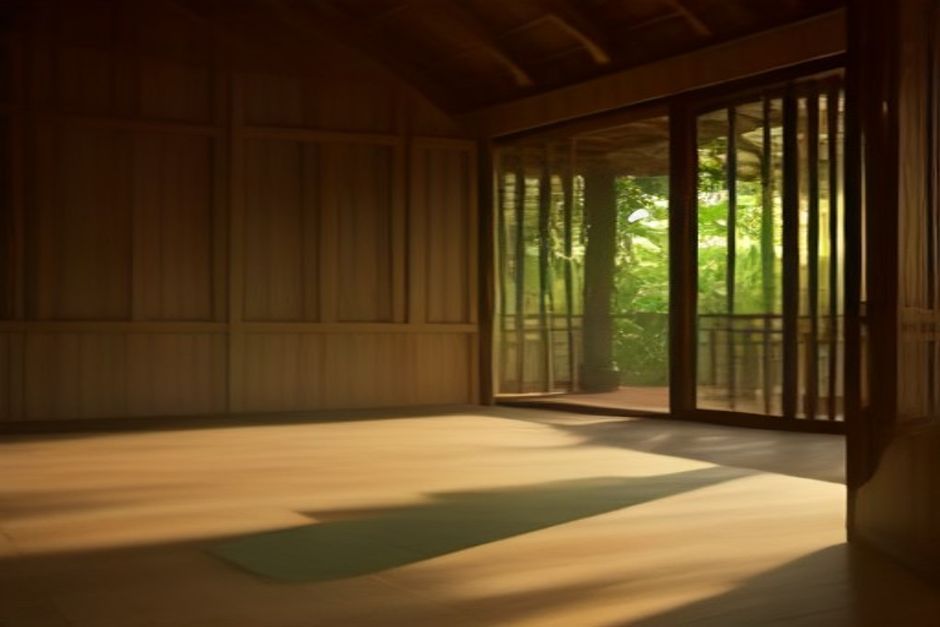
Somewhere between the brochure photo and your bank balance sits a question: what is a yoga retreat actually like? Not the marketing version — the real one, with the 6:30 a.m. bell and the stranger snoring in the next room and the moment on day three when you wonder why you paid to be this sore. Here's the honest picture, so your first retreat surprises you only in the good ways. When you're ready to browse, our retreats page lists the kinds of programs worth considering.
What a day actually looks like
Schedules vary, but the skeleton is remarkably consistent:
- 6:30–8:00 — morning practice. Usually the strongest session of the day: ninety minutes of asana, sometimes pranayama and meditation first. Yes, before breakfast. You'll adapt faster than you expect.
- 8:00–10:00 — breakfast and a long gap. Retreat mornings are slow on purpose. Bring a book.
- Midday — free time or an optional workshop. Hiking, massage, excursions, or nothing. Nothing is a legitimate choice.
- 16:30–18:00 — afternoon practice. Typically gentler: yin, restorative, or a technique workshop.
- Evening — dinner, then maybe a talk or kirtan, then bed early. Retreats run on farmer's hours. By day two you'll understand why.
Two sessions a day is about twice what most people do at home. Your body will notice, and it will comment.
Choosing a retreat that fits
Three questions filter out most mismatches:
- Who's teaching, and do you like their actual teaching? Watch a full class recording, not a highlight reel. If none exists, that's information too.
- What's the style and level? "All levels welcome" on a page full of handstand photos means "all levels who can do handstands." Look for language about modifications and rest — or email and ask directly how beginners fare.
- What's the ratio of practice to everything else? Some retreats are teacher trainings in disguise; others are spa weeks with yoga garnish. Neither is wrong — but you should know which one you're buying.
Red flags worth taking seriously
Most retreats are run by decent people. A few patterns should make you walk away:
- No rest, ever. A schedule with four mandatory sessions a day and language like "push through" is an injury factory, not a retreat.
- Guru dynamics. A teacher who can't be questioned, discourages outside friendships, or treats discomfort at adjustments as a spiritual problem — leave. This is the one red flag that isn't negotiable.
- No screening. A program that never asks about injuries, pregnancies, or conditions before you arrive isn't being inclusive; it's being careless.
- Upsell pressure. The retreat should be the product. If the week is a funnel for a $3,000 teacher training, the sessions will feel like it.
What to pack
Less than you think, plus a few things nobody mentions:
- Your own mat if you have opinions about mats — borrowed ones are a lottery. Our mat guide covers travel-friendly options, and the travel mat comparison goes deeper.
- Two changes of practice clothes per day is the honest number in warm climates; one and a half elsewhere. Quick-dry everything.
- Layers for savasana. You will be sweatier and then colder than at home. A light blanket or big scarf earns its luggage space.
- Snacks. Retreat meal times are fixed and appetites on double-practice days are not. Nuts and dates have saved many evenings.
- Earplugs and an eye mask. Shared rooms, early bells, thin walls. Enough said.
- A notebook. Something about twice-daily practice loosens thoughts. You'll want somewhere to put them.
The permission slip
Here is the part first-timers need to hear and nobody puts in the brochure: you are allowed to skip sessions. Not because you're lazy — because you're paying attention. A body doing twice its normal workload will, at some point, ask for a morning off, and the correct answer is yes. The retreat is yours. The teacher offering the class is not owed your attendance, and the nap you take instead of the afternoon vinyasa might be the most restorative thing that happens all week. The logic is the same as at home — see why rest days are part of practice, not an escape from it.
The same applies socially. You don't have to share your breakthrough at circle time. You don't have to be friends with everyone by Tuesday. Quiet people have excellent retreats.
What you'll actually bring home
Probably not a new handstand. More likely: proof that you can practice daily and like it, two or three poses that finally made sense under a teacher's hands, a notebook's worth of thoughts, and a recalibrated sense of what "enough" feels like. Retreats rarely transform anyone in a week — what they do is compress a year of small lessons into seven days and hand you the summary.
Go in with modest expectations and a packed snack bag, and you'll likely come home planning the next one. For the softer skills of practicing alongside strangers, our notes on yoga class etiquette transfer directly to retreat life.
A good retreat doesn't give you a new self. It gives your actual self a week of decent sleep, real meals, and two practices a day — which turns out to be plenty.