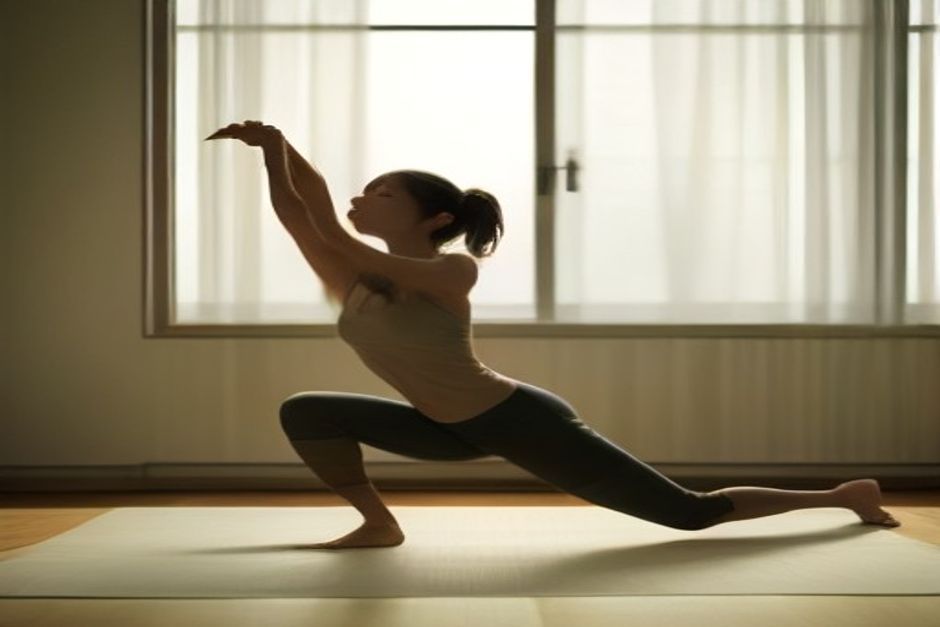
The run ends, and the negotiation begins. You are sweaty, slightly smug, and the couch is right there. Stretching now feels like a tax on a job already done. Here is the counter-offer: ten minutes, six moves, in the order below, while you are still warm. That is the entire ask. Do it most runs and the day-after stairs stop being personal.
Why does timing matter? Because warm muscles lengthen willingly and cold ones defend themselves. The fifteen minutes after a run is the easiest stretching window you will get all day — the tissue is warm, the nervous system is already in "body" mode, and you are wearing the right clothes. Skip it and you will be doing the same work later, colder, with more grumbling.
Minute zero: walk first
Before the mat: walk for two to three minutes. Let the heart rate come down on its own terms. Going from a run straight to the floor is how light-headedness happens; going from a run straight to the couch is how stiff hips happen. The walk is the bridge.
The ten-minute sequence
Calf Release at the Wall — 90 seconds
How: Hands on a wall, one leg back, heel pressing down, back knee straight for forty-five seconds — then bend the back knee slightly for the deeper soleus stretch, another forty-five. Switch legs.
Why: Calves take the first and last load of every stride. Two angles, because the calf is two muscles and both of them worked today.
Standing Forward Bend, knees soft — Uttanasana, 90 seconds
How: Feet hip-width, knees generously bent, torso resting on the thighs, head heavy. This is a hang, not a pull. Hands can hold opposite elbows.
Why: Post-run hamstrings are defensive — they worked eccentrically for miles and they are suspicious. Bent knees let them release instead of guard. Full details in the Uttanasana guide and the honest backstory in hamstring anatomy.
Low Lunge — Anjaneyasana, 90 seconds per side
How: Back knee down — pad it with a folded towel, runner's knees have earned cushioning. Hips sink forward and down; hands rest on the front thigh. No backbend, no arms overhead today. Keep it quiet.
Why: Every stride shortens the hip flexors a little more. This is the direct antidote, and the low lunge guide has the fine print on keeping the low back out of it.
Reclined Figure-Four — 90 seconds per side
How: On your back, cross one ankle over the opposite knee, thread the hands behind the thigh, and draw the leg in until the outer hip of the crossed leg speaks up. Keep the tailbone heavy.
Why: Glutes and outer hips, minus Pigeon's knee risk. After a run is not the time to negotiate with a complicated pose; the figure-four delivers the same tissue with a safer setup.
Legs Up the Wall — Viparita Karani, 3 minutes
How: Sit sideways to a wall, swing the legs up, lie back, arms out. Three minutes minimum — five if the run was long. Breathe like you are already asleep.
Why: The recovery pose. Gravity drains the heaviness out of the legs while the nervous system gets the memo that the emergency (your run, which felt very important to your legs) is over. Setup in the Legs Up the Wall guide.
Adjust by run length
- Short run (under 30 minutes): the full sequence stands, but sixty seconds per pose is enough.
- Long run: double the Legs Up the Wall time and add a second round of the forward bend. The long run is where tomorrow's stiffness is manufactured; this is where you intercept it.
- Speed work or hills: extra time on calves and lunges. Hill repeats are a calf exercise wearing a running costume.
- Race day: walk longer, stretch less. The cooldown after a race is mostly about not sitting down immediately in the car for two hours.
What this will and will not do
Honest expectations, since the internet oversells stretching: a post-run cooldown will not prevent all soreness, and it will not fix a training error. What it reliably does is reduce the duration of stiffness, keep hip and ankle range from quietly shrinking over a season, and — underrated — give the run a defined ending, so the rest of the evening is actually rest. For the bigger picture of yoga around a running life, including recovery days and injury patterns, the full yoga for runners guide is the companion piece.
"The run is the deposit. The cooldown is what keeps the interest. Ten minutes, most days, while you are still warm."