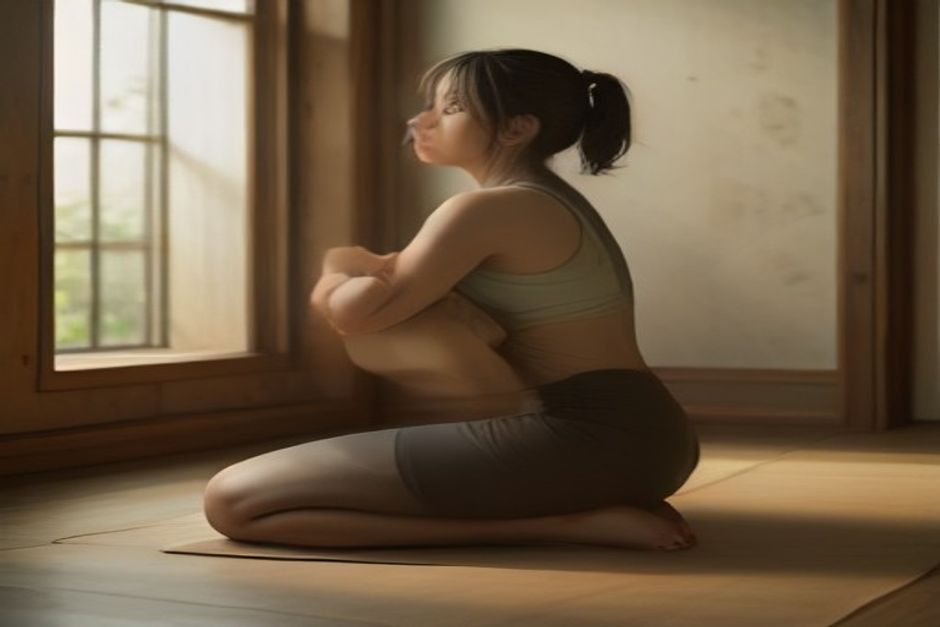
Hero Pose — Virasana, from vira, hero or warrior — is the kneeling seat where the hips sit between the feet rather than on top of them. It has been a meditation seat for centuries and appears in classical texts as a pose for breath and contemplation. For modern bodies, it is also one of the deepest quad stretches available without any equipment beyond a block — and one of the poses where ignoring your knees has the fastest consequences. The heroism is in the patience, not the depth.
What Hero actually does
Two things, mainly. First, it stretches the quadriceps and the front of the ankles — tissues that shorten in anyone who runs, cycles, or simply sits in chairs. Second, it creates a stable, grounded seat for meditation and breathwork: the broad base of the folded legs lets the spine stack upright with almost no muscular effort, which is why tradition favored it for long sittings. Notice what it does not do: it does not require your hips to touch the floor. That version is a destination for some skeletons and a dead end for others.
Hero Pose — Virasana
How: Kneel with your knees together and your feet slightly wider than your hips, tops of the feet flat on the floor. This is the crucial geometry: the feet live outside the hips, not under them. Place a block, a firm cushion, or a stack of folded blankets between your feet, and sit back onto it — most people need the prop, and tall bodies may need two blocks. Sit tall, hands resting on the thighs, and check in with the knees. Any pain inside the knee joint: come out and add height. Comfortably intense stretch across the front of the thighs: that is the pose working. Stay one to three minutes.
Why: The block is not a beginner's crutch; it is the mechanism that makes the pose safe. Sitting on the floor between the feet with tight quads forces the knees to absorb the gap — the joint twists and compresses to make up for what the thigh muscles will not yet give. Height lets the quads, not the knees, take the stretch.
Half Hero — Ardha Virasana
How: Extend one leg straight in front of you, fold the other into Hero position, and sit on support. This is also the leg arrangement of Half Hero Forward Bend (Triang Mukha Eka Pada Paschimottanasana) if you hinge forward over the straight leg.
Why: One side at a time halves the intensity and lets you compare left and right — most people have a tighter quad, and it is rarely the one they expect.
Reclined Hero — Supta Virasana (advanced)
How: Only if seated Hero on the floor is completely easeful for you: lean back onto the hands, then the forearms, and eventually the back, with a bolster along the spine as support.
Why: This is one of the deepest quad and hip-flexor stretches in yoga — and one of the least necessary. Treat it as optional dessert, not dinner. Any knee protest means backing out immediately; there is no version of this pose worth a knee injury.
Ankle and foot notes
The tops of the feet pressing into the floor is its own stretch — welcome for runners, occasionally fierce for everyone. If the ankles complain, put a folded blanket under them, or tuck the toes under for a few breaths first to warm the joints. And spread the toes: letting the little toes splay keeps the outer ankle from collapsing and the pressure even.
Where Hero fits
Hero shines as a bookend. At the start of practice, a minute or two opens the quads before standing work like Warrior I or High Lunge. At the end, it pairs naturally with Cow Face as a seated wind-down, and it is a legitimate alternative seat to cross-legged for meditation — many people with tight hips sit taller and more comfortably in propped Hero than in any cross-legged position. After long Hero holds, extend the legs and bounce the knees a few times, or take a gentle forward bend, to let the knees remember they can also straighten.
Hero Pose has a quiet dignity when practiced honestly: prop yourself properly, sit tall, breathe, and let the front of the legs open on their own timeline. The hero in the name was never the person who got their hips to the floor — it is the person who keeps showing up to the block.