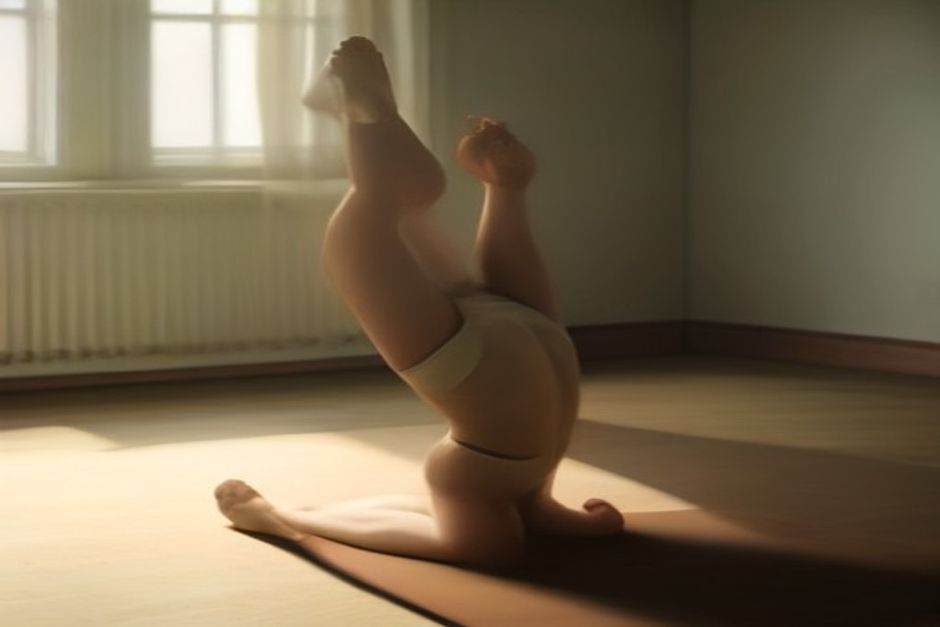
Upward-Facing Dog — Urdhva Mukha Svanasana, "upward-facing dog pose" — is one of the most frequent poses in flow yoga and one of the least examined. Most people arrive in it by rolling over their toes from Chaturanga, hang their weight into their wrists and low back, glance at the ceiling, and move on. That version is a backbend in name only. The real pose is active: legs working, arms straight, chest moving forward and up, and only the hands and the tops of the feet touching the floor.
Upward Dog is not Cobra
These two get mixed up constantly, and the difference matters.
- Cobra (Bhujangasana): thighs, pelvis, and lower belly stay on the floor. Elbows can bend. The backbend is smaller and mostly upper-back. This is the beginner-friendly, low-back-friendly option.
- Upward Dog: only hands and the tops of the feet touch the mat. Arms are straight. Thighs are engaged and lifted. The backbend is bigger and asks more of the wrists, shoulders, and spine.
Neither is "better." Cobra is the right choice on tired days, stiff mornings, or any day your low back feels compressed. Upward Dog is the right choice when you have the wrist comfort and the leg engagement to hold your pelvis off the floor without dumping into the spine. If you cannot tell which one you are doing, you are probably doing a third, unnamed thing — thighs dragging, shoulders by the ears — and Cobra would serve you better.
Upward-Facing Dog — Urdhva Mukha Svanasana
How: Lie on your belly, hands under your shoulders, elbows hugging the ribs, tops of the feet flat on the mat. Press into your hands, straighten your arms, and lift your chest, belly, hips, and thighs off the floor. Roll the shoulders back and down, away from the ears. Press the tops of the feet down so firmly that the knees hover. Gaze forward or slightly up — no cranking the head back. The chest moves through the arms, not just up.
Why: Straight arms with engaged legs turns a passive spine-hang into an active front-body opener: hip flexors, abdomen, and chest all lengthen while the back muscles do honest work.
Cobra, the honest understudy — Bhujangasana
How: Same setup, but press only until the chest lifts comfortably — pelvis and thighs stay down, elbows soft. Think of dragging your hands back toward your feet without actually moving them; that action broadens the collarbones.
Why: All the chest-opening benefit with a fraction of the wrist and low-back load. In a long flow class, alternating between the two is smart programming, not slacking.
Wrist and low-back care
Wrists: Spread the fingers wide and press through the knuckle mounds, especially the base of the index finger. If your wrists object — and many do — try the pose with hands on two yoga blocks to raise the floor, or simply choose Cobra. Wrist pain is information, not weakness. Warming up with a few rounds of Cat-Cow before weight-bearing poses helps more than people expect.
Low back: The sensation you want is length, not pinch. If you feel compression in the low back, three things usually fix it: firm the thighs more (lift the kneecaps), reach the tailbone toward the heels, and lower the pose — you do not have to straighten the arms fully. Still pinchy? That is your cue for Cobra today.
In the flow
Upward Dog usually arrives as part of a vinyasa, paired with breath: inhale into it, exhale back to Downward Dog. Let the breath set the pace rather than the music or the teacher's counting. One clean Upward Dog with lifted thighs teaches your body more than five rushed ones. For more on syncing breath to movement, see our pranayama guide, and browse the asana library for the poses that surround this one in a sequence.