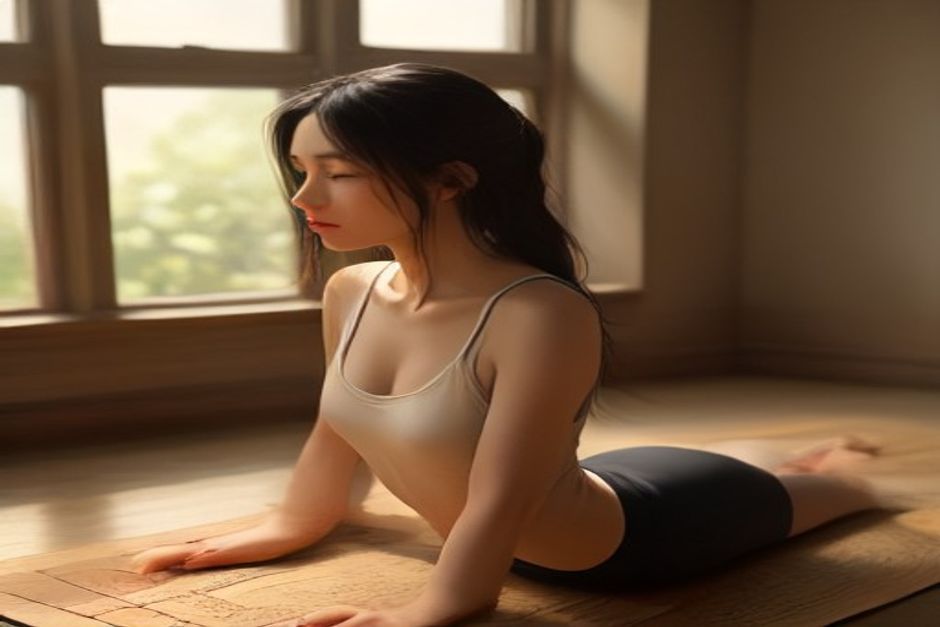
Cobra pose has a branding problem. The photo version — arms straight, chest high, dramatic arch — is what most people aim for, and it is exactly the version most backs don't need. The real Bhujangasana (bhuja = arm or shoulder, anga = limb) is quieter: a low lift powered mostly by your back muscles, with the hands acting as light supports. Done that way, cobra is one of the most useful poses in yoga for the modern spine — a direct countershape to the hours we spend folded forward over screens and steering wheels.
What cobra is actually for
Sitting rounds the thoracic spine and shortens the front of the chest. Cobra reverses both: it extends the upper and mid back, opens the chest and the front of the shoulders, and wakes up the spinal extensors — the muscles along your back that hold you upright all day and get remarkably little direct training. It also appears constantly in practice, most famously inside sun salutations, so learning it well pays off every single session.
It is worth knowing what cobra is not: it is not a deep backbend, and it is not primarily a flexibility pose. The depth is modest on purpose. If you want a bigger arch, that job belongs to upward-facing dog or camel — different poses with different demands. Our spine anatomy guide explains why extension belongs mostly in the thoracic spine, and that principle is the whole game in cobra.
How to do it
Cobra pose — Bhujangasana
How: Lie on your belly, legs extended behind you, tops of the feet on the floor. Place your hands under your shoulders, elbows hugging in toward your ribs. Press the tops of your feet and your pubic bone gently into the mat. On an inhale, lengthen your chest forward and up — think of dragging your heart through a low window. Lift only as high as you can while keeping your hands light; you should be able to hover your palms off the floor for a second without collapsing. Elbows stay bent and tucked. Shoulders draw away from your ears. Hold for three to five breaths, then lower slowly on an exhale.
Why: Lifting with the back muscles rather than pushing with the arms is what makes the pose strengthening instead of just bendy. If your hands could leave the floor, your back did the work — that's the real cobra.
Baby cobra — the low version
How: Same setup, but lift only your head and chest an inch or two off the floor, hands hovering or barely touching the mat. Look down at the mat to keep the neck long. Hold for five breaths.
Why: This is arguably the more valuable version. With no arm strength available, the spinal extensors do everything. It is small, unglamorous, and exactly what a stiff desk back needs.
Sphinx, the gentler cousin — Salamba Bhujangasana
How: Come onto your forearms, elbows under shoulders, and let the chest broaden forward. Stay for a minute or two, breathing into the belly.
Why: Sphinx pose gives you the same extension with less effort and more time — better for stiff mornings, tired days, or anyone rebuilding after back trouble.
The three mistakes that jam the low back
1. Pushing up with the arms. Straightening the arms shoves the pelvis and ribs apart and dumps the bend into the lumbar spine — the segment that extends least and complains most. Bent elbows are not a beginner modification; they are the correct geometry.
2. Shoulders by the ears. The lift comes with an urge to shrug. Instead, press the shoulder blades gently down the back and widen across the collarbones. If your neck feels pinched, you've lifted into your shoulders instead of your back.
3. Going for height over length. The useful direction in cobra is forward, not up. Imagine your sternum reaching toward the far wall. Length first; height arrives on its own, in smaller amounts than your ego would prefer.
A note on the lower body
Opinions differ on the legs in cobra, and both common cues have merit. Squeezing the glutes can protect the low back but also tilts the pelvis into more extension — for most people, keeping the buttocks softly engaged rather than clenched is the sweet spot. More important: press the tops of the feet down and keep the legs active, knees pointing straight back. That grounds the pose so the upper body can float.
When to keep it low — or skip it
Honest contraindications, because this is a backbend:
- Low-back pain or disc issues: extension can aggravate some backs and genuinely help others. If backbends have ever made things worse, work with sphinx or skip cobra entirely, and read our honest guide to yoga and lower back pain. When in doubt, ask a professional who has actually examined you.
- Pregnancy: lying on the belly stops making sense fairly early — choose standing backbends instead.
- Wrist problems: cobra loads the wrists less than plank, but if yours complain, sphinx or baby cobra removes the issue. See wrist care for workarounds.
- Recent abdominal surgery or hernia: get clearance first.
The best cobra is the one nobody photographs: low, long, and powered by a back that is learning to hold you up again.