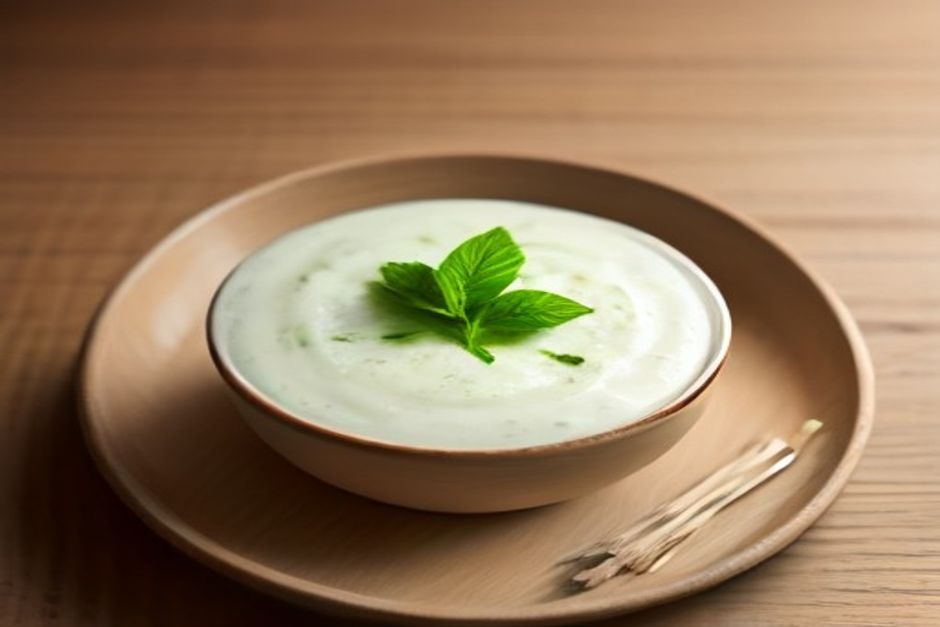
Every spicy dish in the Indian repertoire understands a basic truth: heat needs a counterweight. Raita is that counterweight — yogurt, something crisp, a little salt, maybe a spice or two. It takes five minutes, requires no cooking, and turns a bowl of dal or a chickpea curry from 'good' into 'complete meal.' After an evening practice, when you want dinner to be easy and genuinely restorative rather than a project, raita is the highest return on effort in the entire kitchen.
What raita is (and is not)
Raita is seasoned yogurt with additions — vegetables, fruit, or herbs — served cold alongside spiced food. It is not a dip, exactly, and not a salad, exactly; it is a condiment that behaves like a side dish. The yogurt cools the palate between bites of heat, and the fat and protein make a light meal more satisfying. In Ayurvedic terms, it is the cooling element that balances heating food. In plain terms, it is why your mouth survives dinner.
Cucumber raita is the most common version and the best place to start: one vegetable, one technique, five minutes.
Ingredients (serves 2 as a side)
- 1 cup (250 g) plain yogurt — full-fat gives the best texture, but any plain yogurt works
- Half a cucumber (about 150 g)
- Half a teaspoon of salt, plus more to taste
- Half a teaspoon of ground cumin — toasted if you have the patience
- A small handful of fresh mint or cilantro, chopped (optional but recommended)
- A pinch of black pepper or a few grinds from the mill
The one technique that matters: salting the cucumber
Cucumber is mostly water. Stir it straight into yogurt and within twenty minutes your raita has thinned into soup. The fix takes two extra minutes and is the whole craft of this recipe:
- Grate or finely dice the cucumber. Grating gives a softer, more integrated raita; dicing gives more crunch. Both are correct.
- Salt it and wait. Toss the cucumber with the half teaspoon of salt and leave it in a strainer or bowl for five to ten minutes. The salt pulls water out.
- Squeeze. Take handfuls and squeeze firmly over the sink, or press the cucumber against the strainer with a spoon. You will be surprised how much liquid leaves. What remains is crisp, seasoned cucumber that stays put in the yogurt.
That is it. Everything else is assembly.
Assembly
Stir the squeezed cucumber into the yogurt. Add the cumin, the herbs, and the pepper. Taste. It should be distinctly seasoned — raita is eaten alongside assertively spiced food, so it can handle more salt and cumin than feels polite. A small squeeze of lemon is not traditional everywhere but brightens a dull yogurt nicely. Serve cold or at room temperature, in a bowl, with a little extra cumin dusted on top if you want it to look like you tried.
What to serve it with
Raita exists to sit next to heat. It belongs beside our chickpea spinach curry or a bowl of lentil dal with rice. It also works as a sauce for grain bowls, a topping for roasted vegetables, a spread inside a wrap, or — honestly — eaten straight with a spoon while you decide what to cook, at which point dinner sometimes just becomes raita and flatbread. No judgment. That is a reasonable meal.
Swaps and variations
- Dairy-free: use an unsweetened coconut or soy yogurt with some body. Thin, sweetened plant yogurts make a sad raita; thick, tangy ones make a good one. A pinch of extra salt and lemon helps compensate for missing dairy tang.
- No cucumber: grated carrot, diced tomato (seeded), or finely shredded zucchini all work with the same salting logic. Beet raita — cooked, grated beet — turns the whole thing magenta and is worth making once just for the color.
- No fresh herbs: skip them, or use a small pinch of dried mint, which is genuinely good in raita and used across the Middle East for exactly this purpose.
- Extra credit: a tadka — cumin seeds sizzled in a teaspoon of hot oil or ghee and poured over the top — adds a toasted depth that makes the five-minute version taste like considerably more.
Storage and honest expectations
Raita keeps two days in the fridge, though it is best on day one — the cucumber softens and the yogurt thins as it sits. If you are meal-prepping, store the salted, squeezed cucumber separately and stir it into fresh yogurt when you eat; that takes ninety seconds and the difference is real.
One more honest note, since this site does not do food mythology: raita is not a probiotic cure or a digestive medicine. It is yogurt and cucumber, well-seasoned, doing exactly what good simple food does — making the rest of the plate better. Our approach to eating around a yoga practice runs on the same principle: ordinary food, prepared with a little care, beats superfood theater every time. For something warm on the other end of the evening, golden milk pairs well with a light dinner like this.
Five minutes, one bowl, no stove. Raita is proof that 'cooling side dish' does not have to mean effort.