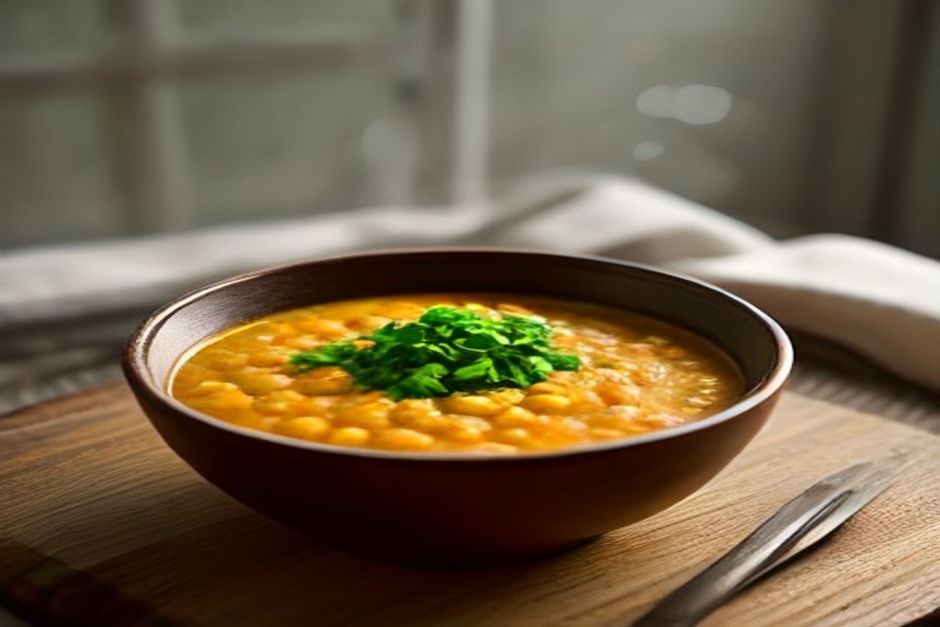
Some recipes earn their place through novelty. This one earns it through repetition — the pot you make on a tired Tuesday when the fridge holds half a bag of spinach and the pantry holds everything else. Chickpeas and spinach in a spiced tomato base is a classic combination across North Indian home cooking (you'll see it called chana saag), and it survives every shortcut a weeknight throws at it. Canned chickpeas: fine. Frozen spinach: fine. Ground spices from a jar that's been open a year: it'll still be good dinner.
It's also the kind of meal that supports a practice without making a production of it — legumes and greens, cooked down with warming spices, substantial without sitting heavy. The nutrition page has the broader philosophy; this is the practical arm of it.
Ingredients (serves 4, generously)
- 2 tablespoons oil or ghee
- 1 large onion, finely chopped
- 4 cloves garlic, minced, and a thumb of ginger, grated
- 1 tablespoon ground cumin, 1 tablespoon ground coriander, 1 teaspoon turmeric, 1/2 teaspoon chili powder (or to taste)
- 1 can (400 g / 14 oz) chopped tomatoes
- 2 cans (800 g total) chickpeas, drained and rinsed
- 250–300 g (about 10 oz) fresh or frozen spinach
- 200 ml (3/4 cup) water or light coconut milk
- 1 teaspoon garam masala, salt, and a squeeze of lemon to finish
Method
1. Build the base. Heat the oil in a wide pot over medium heat. Add the onion with a pinch of salt and cook 6–8 minutes until soft and golden at the edges — this step is where the flavor lives, so don't rush it. Add garlic and ginger, stir for a minute until fragrant.
2. Bloom the spices. Add cumin, coriander, turmeric, and chili. Stir constantly for 30 seconds. If the pan looks dry, add a splash of water. Spices burn fast and turn bitter; keep them moving.
3. Tomatoes and chickpeas. Pour in the tomatoes, scraping the bottom of the pot. Simmer 5 minutes until the sauce thickens and darkens slightly. Add the chickpeas and the water or coconut milk. Simmer gently for 10 minutes, crushing a few chickpeas against the side of the pot with your spoon — that starch thickens the sauce naturally.
4. Spinach and finish. Stir in the spinach in handfuls until wilted (frozen spinach goes straight in; give it 3–4 extra minutes). Add garam masala, salt to taste, and the lemon juice. Rest off the heat for five minutes — the curry settles and the flavors marry.
Serve over rice or with flatbread. A spoonful of plain yogurt on top is not traditional in every household and excellent in all of them.
Notes from repetition
- Better tomorrow. Like our lentil dal and kitchari, this curry improves overnight. Make double; lunch is solved.
- Greens are flexible. Kale, chard, or a frozen spinach block all work. Tougher greens just want five more minutes in the pot.
- Richness control. Water keeps it light; coconut milk makes it rounder and more dinner-party. A spoon of cashew butter stirred in at the end lands somewhere in between.
- Heat honesty. The chili powder amount here gives warmth, not fire. Adjust at the end with fresh chili or flakes — you can't un-spice a pot.
- Dry chickpeas. If you cook your own (about 250 g dry yields the right amount), the texture is better and the cost is lower. Save the cooking liquid — it replaces the water in the recipe with something far more flavorful.
Why this pot keeps coming back
Chickpeas bring protein and staying power; spinach brings iron and the virtue of having eaten something green; the spices make it taste like you tried. It reheats without complaint, freezes without separation, and accepts every substitution listed above without losing its identity. If you like this format, the vegetable curry and chickpea stew run on the same logic: one pot, honest ingredients, no ceremony.
Eating around practice
A practical note for the evening yogis: this sits well before practice if you give it ninety minutes, and even better after it. The chickpeas are substantial enough to restore you without the leaden feeling that a cream-heavy curry leaves behind. If you practice first and cook second, chop the onion before you roll out the mat — the whole pot comes together fast enough that dinner lands within half an hour of savasana, which is about the limit of post-practice patience.
The best recipe is not the most impressive one. It's the one still in your rotation in five years.
Thirty minutes after you start, there's a pot of food that smells like effort and asked for almost none. Eat, rest, practice tomorrow.