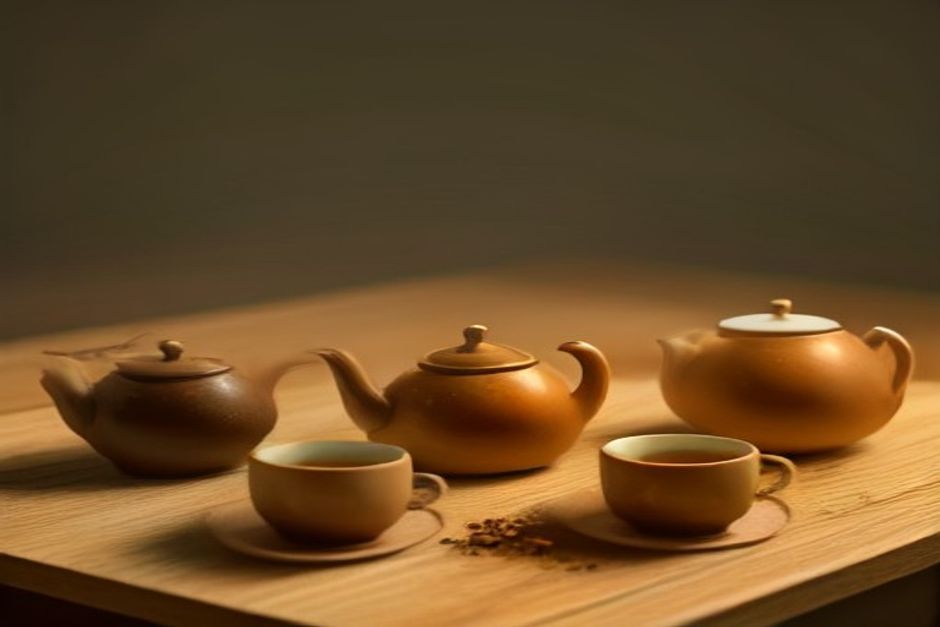
Herbal tea marketing promises everything: detox, glow, inner peace by the third sip. Let's skip that. A good herbal blend does three honest things — it hydrates you, it tastes like you meant to make it, and it marks a transition: morning into practice, practice into the day, day into evening. That ritual function is real and worth more than any antioxidant claim. Here are three blends matched to the rhythm of a practice day. All are caffeine-free, all use ingredients from an ordinary grocery store, and none require a mortar, a scale, or a philosophy degree.
Blend one: morning — ginger, lemon, lemongrass
The idea: something bright and warming before an early practice, when coffee would be too much on an empty stomach and plain water too boring to get you out of bed.
You need (for one large mug):
- 4 thin slices of fresh ginger (no need to peel)
- 1 stalk of lemongrass, bruised with the back of a knife and cut into pieces — or 1 teaspoon dried
- A strip of lemon peel, plus a squeeze of juice at the end
- Optional: half a teaspoon of honey, added once it's drinkable-warm, not boiling
Method: Simmer the ginger and lemongrass in 400 ml of water for 8 minutes — simmering, not just pouring, is what pulls the flavor out of fresh roots. Take off the heat, add the lemon peel, cover, and steep 3 more minutes. Strain, add the juice, drink while you unroll the mat. It's sharp enough to wake you and gentle enough not to sit in your stomach during forward bends.
Blend two: post-practice — mint, fennel, nettle
The idea: after practice you've been breathing deeply, sweating a little, and asking things of your digestion — twists especially. This is the classic yogi combination for a reason: it tastes clean and settles the stomach without sedation. If you like our turmeric-ginger tea, think of this as its cooler cousin.
You need (one pot, two cups):
- 1 tablespoon fresh mint leaves, lightly torn (or 2 teaspoons dried)
- 1 teaspoon fennel seeds, lightly crushed
- 1 teaspoon dried nettle leaf — grassy and mineral; skip it if you can't find it, don't stress
Method: Boiling water over everything, cover the pot (uncovered mint loses its aromatic top notes to the room instead of your cup), steep 6 to 7 minutes, strain. Drink it warm rather than scalding — post-practice your body is already warm, and lukewarm-to-warm liquid sits better. Make a pot after evening practice and it doubles as a gentle way to rehydrate before dinner.
Blend three: evening — chamomile, lavender, rose
The idea: the signal that input is over for the day. This one pairs naturally with an evening wind-down — it works well alongside the routine in the evening wind-down practice or before the sleep sequence.
You need (one mug):
- 1 heaped teaspoon dried chamomile flowers
- A small pinch of culinary lavender — seriously, a pinch; lavender goes from pleasant to soap in about two extra buds
- 4 to 5 dried rose petals, or a small piece of rose hip
Method: Water just off the boil (around 90°C — let the kettle sit a minute), covered steep for 7 minutes, strain. Covered matters even more here: chamomile's calming aromatics are volatile and escape with the steam. Drink it slowly, ideally somewhere that isn't in front of a screen.
Three honest rules for all of them
- Cover the steep. The smell rising off an uncovered cup is flavor leaving the cup. A saucer on top of the mug is the whole technique.
- Buy small, buy often. Dried herbs fade within months. A dusty jar from 2023 makes dusty tea.
- No miracles. These blends are pleasant, hydrating, and part of a rhythm. They will not detox you — your liver handles that without assistance — and they're not medicine. If you're pregnant, on medication, or managing a condition, check with your doctor about specific herbs; nettle and concentrated herbal preparations in particular are worth one question at a pharmacy.
Make it a practice
The most useful thing a tea ritual offers isn't in the cup. It's the five minutes of standing in the kitchen while it steeps — a built-in pause where there's genuinely nothing to do but wait. You can stretch that pause into something more deliberate with tea meditation, which treats the whole process as the practice. Or you can just stand there and watch the steam. Both count.