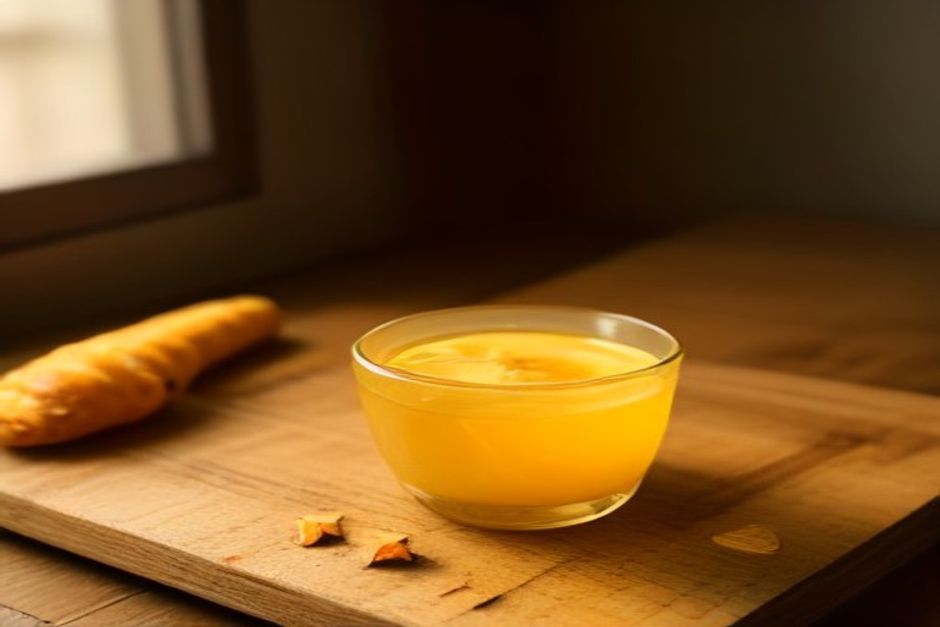
Some recipes earn their place in a routine because they are impressive. This one earns its place because it is easy, warming, and forgiving. Turmeric ginger tea is what you make when you want something hot that is not coffee and not quite a meal — before morning practice, after a cold walk, in the hour when dinner is too far away. It takes ten minutes and one saucepan, and it is very hard to ruin.
A quick honesty note, in keeping with this site's food philosophy: turmeric contains curcumin, which researchers study for all sorts of things. We are not going to promise it will fix your joints or detoxify anything. What we can promise is a genuinely pleasant hot drink with ingredients your grandmother would recognize. That is reason enough.
Ingredients (makes 2 cups)
- 500 ml water
- A 4–5 cm piece of fresh ginger, sliced thin (no need to peel)
- A 3–4 cm piece of fresh turmeric, sliced — or 1 teaspoon ground turmeric
- A generous pinch of freshly ground black pepper
- Honey and a squeeze of lemon, to finish
Method
1. Bring the water to a gentle boil in a small saucepan. Add the ginger and turmeric, turn the heat down, and simmer — do not boil hard — for 8 to 10 minutes. The water will turn a deep, slightly alarming gold. This is correct.
2. Add the black pepper in the last minute. This is the one step people skip and shouldn't: piperine, the compound that gives pepper its bite, significantly improves how much curcumin the body actually absorbs from the turmeric. A small amount of fat helps too, which is why the milk-based version — our golden milk — exists. For tea, a teaspoon of coconut oil stirred in does the same job if you like.
3. Strain into mugs. Add honey once the tea has cooled for a minute (very hot liquid degrades honey's more delicate compounds, and honestly it just tastes better), plus a squeeze of lemon to brighten the earthiness.
Fresh vs ground: an honest comparison
Fresh turmeric looks like ginger's smaller, more orange cousin and lives in the produce section of most supermarkets now. It gives the tea a brighter, almost peppery flavor and slightly more aromatic oils. Downsides: it stains everything it touches — fingers, cutting boards, dish towels — a cheerful yellow that lasts days. Treat it like a beets-level staining hazard.
Ground turmeric makes a perfectly good brew: earthier, a little more bitter, no staining of anything except the spoon. Use one level teaspoon per two cups; more turns the drink muddy and bitter rather than stronger. If you keep both in the house, use fresh when you have ten unhurried minutes and ground the other 90 percent of the time. The best recipe is the one you actually make.
Variations worth trying
- Warming evening version: add a cinnamon stick and two crushed cardamom pods to the simmer — closer to the spice profile of our homemade chai, without the caffeine.
- Summer version: brew double-strength, chill, and pour over ice with extra lemon. It keeps two days in the fridge.
- Fire version: leave the ginger slices in the mug and add a thin slice of fresh chili to the pot. Not before bed. You have been warned.
When to drink it
The tea is naturally caffeine-free, which makes it one of the few hot drinks that works at any hour. Many people on this site pair it with an evening wind-down — warm cup, quiet kitchen, ten slow breaths before the first sip. If you like structure around that ritual, our yoga for better sleep article fits the same hour of the day. In the morning it sits well alongside a light breakfast like the Ayurvedic breakfast bowl, especially on cold days.
Make it once and it becomes muscle memory: ginger, turmeric, pepper, simmer, strain, honey. The kettle does most of the work. All you have to do is stand in the kitchen for ten minutes and let something warm happen.