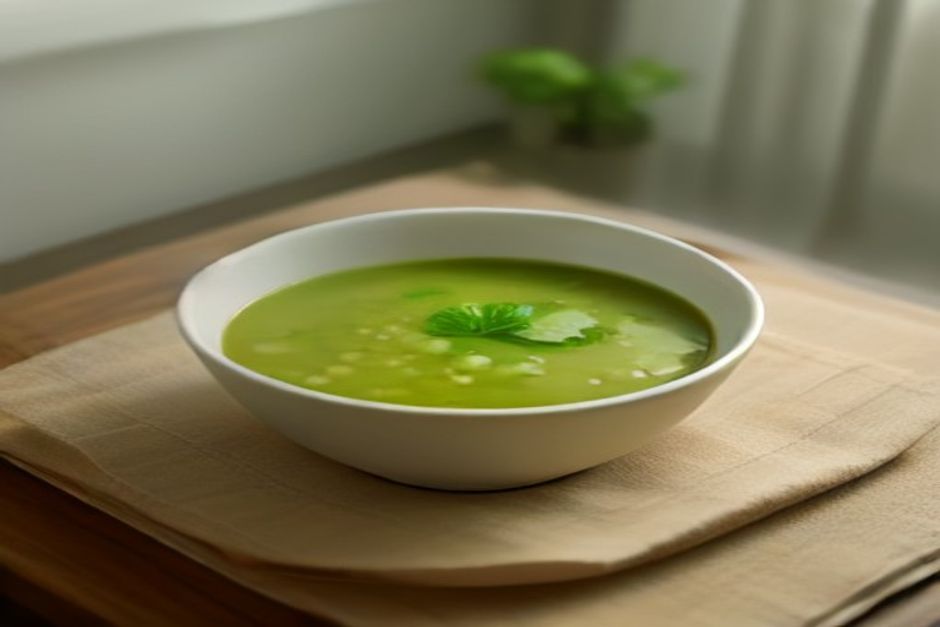
Some evenings call for food that behaves. Not a feast, not a salad — something warm, gentle, and done with you in forty minutes, so you can eat at six and be on the mat by half past seven without feeling like you're digesting a mattress. Mung bean soup is that meal. It sits in the same family as classic kitchari — the ayurvedic one-pot of rice and split mung — but skips the rice and most of the ceremony. What remains is a pale golden soup that's easy to digest, quietly spiced, and genuinely filling in a way that vegetable broths never quite manage.
Split yellow mung beans (mung dal) are the key. Unlike most legumes, they cook quickly without soaking and have a long reputation in Indian home cooking as the lentil you feed people whose stomachs are off duty. Whether or not you care about the tradition, the practical result stands: this is the legume least likely to argue with an evening practice.
Ingredients (four bowls)
- 1 cup split yellow mung beans (mung dal), rinsed until the water runs clear
- 1 tablespoon ghee or coconut oil
- 1 teaspoon cumin seeds
- 1 thumb of fresh ginger, grated
- ½ teaspoon ground turmeric
- 1 small carrot and 1 small zucchini, diced small (optional but good)
- 5 cups water or light vegetable stock
- Salt, a squeeze of lemon, fresh cilantro to finish
Method
One: Warm the ghee in a pot over medium heat. Add the cumin seeds and let them sizzle for thirty seconds — this step, the tempering, is where most of the flavor is born. Add the ginger and turmeric, stir for another thirty seconds.
Two: Add the rinsed mung beans, the vegetables, and the water. Bring to a boil, skim off any foam, then lower to a gentle simmer, half-covered.
Three: Simmer 30–35 minutes, stirring now and then. The beans will soften, split, and partially dissolve into the broth — that's the goal, not a problem. You're after a soup with body, somewhere between brothy and creamy. Add hot water if it thickens more than you like.
Four: Salt generously at the end, add the lemon, and top each bowl with cilantro. A spoonful of plain yogurt or a drizzle of ghee on top is welcome but not required.
Why it works on practice days
The soup is warm and liquid, which most people find easier to digest than a plate of dry, dense food — useful when Child's Pose or a deep forward fold is on the evening agenda. The spice level is warming rather than hot: cumin, ginger, and turmeric bring flavor and a pleasant internal glow without the reflux risk of chili. And because it's mostly water and legume, it fills without stuffing. The general rule from our nutrition page applies here: eat a real meal two to three hours before practice, or something like this — light and warm — about an hour before.
Variations worth knowing
- Heartier: stir in a handful of spinach or chopped kale for the last five minutes, and serve over a small scoop of rice. Now it's dinner for a non-practice night too.
- Reset mode: skip the vegetables, keep it to beans, water, and spice, and cook it fully soft. This is the version ayurvedic kitchens reach for when digestion needs a quiet week — the same instinct behind kitchari, minus the grain.
- Cold-weather: add a cinnamon stick and a pinch of black pepper to the simmer, and lean on the ginger. On genuinely cold nights, our winter soup is the heartier alternative.
- Batch: the recipe doubles cleanly and keeps three days in the fridge. It thickens as it sits; loosen it with water when reheating and re-salt.
The honest note
No soup resets your body, detoxes anything, or realigns your digestion in a weekend. Your liver handles detoxing; it doesn't outsource to legumes. What this soup does is simpler and more useful: it's a warm, balanced meal that treats your stomach kindly, takes one pot, and doesn't punish you for wanting to practice after dinner. On a tired Tuesday, that's worth more than any cleanse.
If beans of any kind reliably disagree with you, start with a small bowl and see how you feel — individual digestion varies more than any food rule admits. And if you like this style of cooking, the red lentil dal is the thirty-minute weeknight version with a bolder spice profile.