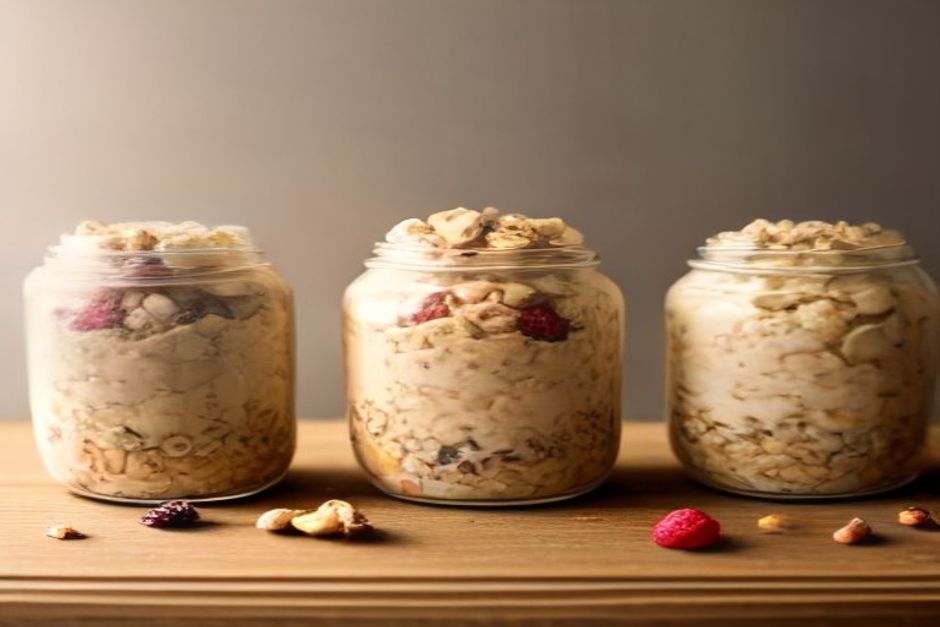
The morning-practice breakfast problem has a familiar shape: eat too much and you're regretting it by the second forward fold; eat nothing and you're lightheaded by the standing poses; eat nothing and skip practice, and the day starts with two small failures instead of none. Overnight oats solve the logistics half of this. Assembled in five minutes the night before, they wait in the fridge with zero morning effort, and — crucially — you can eat half before practice and half after, which is the actual correct answer to how much to eat before yoga. Here is the base ratio and three versions worth rotating.
The base ratio (the only thing to memorize)
½ cup rolled oats + ½ cup milk of choice + ¼ cup yogurt + a pinch of salt. Stir in a jar, refrigerate overnight, done. That's it — the rest is flavoring and opinion. A few notes on the components:
- Rolled oats, not instant. Instant oats dissolve into paste overnight. Rolled (old-fashioned) oats soften but keep some texture. Steel-cut oats don't soften enough on their own — skip them here.
- The yogurt is not optional. It adds protein and a slight tang that keeps the jar from tasting like cold porridge. Greek yogurt makes it thicker and more filling; regular makes it looser. Dairy-free yogurt works fine.
- The pinch of salt matters more than any topping. Unsalted oats taste like wallpaper, and no amount of honey fully fixes it.
Version one: apple, cinnamon, walnut
To the base, add half an apple grated (squeeze out a little juice if it's very wet), a quarter teaspoon of cinnamon, a small handful of chopped walnuts, and a teaspoon of honey or maple syrup. The apple mostly melts into the oats overnight, the cinnamon does what cinnamon does, and the walnuts survive the night with their crunch intact — add them in the morning if you're precious about texture. This is the autumn jar, the reliable one, the version to make when you can't be bothered to think.
Version two: berry, almond, vanilla
Base plus a half cup of frozen berries (frozen is correct — they thaw overnight and bleed their juice through the jar, which is the whole point), a drop of vanilla extract, and a tablespoon of almond butter stirred through or dolloped on top in the morning. This is the prettiest jar and the one that most resembles dessert, which on a dark winter morning is a feature. If the berries are tart, a teaspoon of maple syrup settles them.
Version three: banana, peanut butter, cocoa
Base plus half a banana mashed in, a tablespoon of peanut butter, and a teaspoon of unsweetened cocoa powder. This is the most filling of the three — the one for mornings when practice is long, or lunch is far away, or you're feeding a teenager who regards hunger as a personal insult. Slice the other half of the banana on top in the morning so it doesn't brown overnight.
Timing it around practice
The strategy that works: eat half the jar thirty to forty-five minutes before practice, and the other half after. The first half is enough carbohydrate to feel fueled without enough volume to notice in forward folds or twists; the second half is recovery. If you only have fifteen minutes between eating and moving, eat a third of the jar, and choose the moment honestly — a full jar five minutes before sun salutations is a mistake with a spoon. On days when practice comes first and breakfast after, the jar waits in the fridge exactly as well as it waited overnight, which is the whole genius of the format.
For other light morning options, the five-minute miso soup is the savory route and the green smoothie the drinkable one. The wider picture — how much, how long before, what to avoid — lives on the nutrition page and the morning practice page.
Make the jar while the kettle boils for evening tea. Future-you has enough problems; breakfast shouldn't be one of them.