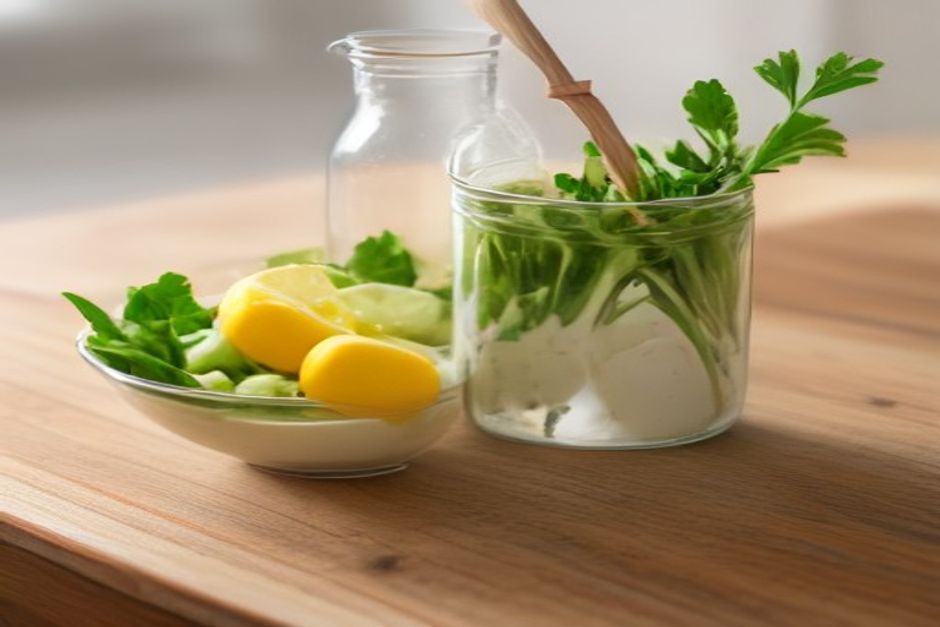
Every kitchen that cooks a lot of plants eventually develops a house sauce — the thing that turns "some roasted vegetables and rice" into dinner people are glad about. In this one, the house sauce is lemon-tahini dressing. It takes five minutes, needs no blender, keeps all week, and has ended more standoffs with leftover broccoli than any other recipe on this site. If you have tried our miso-tahini dressing, this is its brighter, simpler sibling: same sesame base, no fermentation, more lemon.
Ingredients
- 1/2 cup tahini (well-stirred — see below about the oil layer)
- 1/3 cup cold water, plus more as needed
- 1/4 cup fresh lemon juice (about one and a half lemons)
- 1 small garlic clove, grated or pressed
- 1/2 teaspoon fine salt, plus more to taste
- Optional: 1 teaspoon maple syrup or honey if your tahini is bitter; a pinch of cumin if you want it warmer
Method
Put the tahini, lemon juice, garlic, and salt in a bowl or a jam jar. Add the water. Now comes the part that alarms everyone the first time: as you whisk or shake, the mixture will seize. It goes from pourable to a stiff, grainy paste that looks broken, and you will briefly believe you have ruined it. You have not. Keep adding water a spoonful at a time, whisking after each addition, and the paste will relax into a smooth, pale, creamy sauce. Tahini seizing is chemistry, not failure — the lemon's acidity tightens the sesame proteins, and water persuades them to let go again.
Taste. It should be bright, a little nutty, salty enough to make you want another taste. Adjust: more lemon for sharpness, more salt for depth, a touch of sweetener if the tahini brand is on the bitter side (some are; it varies by roast). Done. Total elapsed time, including finding the whisk: five minutes.
Getting the consistency right
The dressing thickens in the fridge, so make it slightly looser than you want at serving time. The texture targets, roughly:
- For drizzling over bowls: the consistency of heavy cream — it should fall off a spoon in a slow ribbon.
- For dressing a salad: thinner still, almost like buttermilk, so it coats leaves instead of clumping.
- For a dip or spread: leave it thick, like hummus, and it will hold a swoosh on a plate nicely.
Stir the tahini jar itself before measuring. The oil rises, the solids sink, and scooping from the top gives you a greasy, thin dressing while scraping the dry bottom later is an arm workout nobody asked for. A butter knife and ninety seconds of stirring fixes the jar for the week.
Where it goes
The honest answer is "on everything you were going to eat anyway," but the greatest hits: grain bowls with roasted sweet potato and chickpeas; any green salad with something crunchy in it; roasted cauliflower, carrots, or the aforementioned broccoli; drizzled over falafel in a pita; thinned out as a sauce for soba noodles; or as the dip that makes a plate of raw vegetables at a desk lunch feel like a decision rather than a punishment. It also rescues reheated grains remarkably well — yesterday's rice plus a fried egg plus this sauce is a complete meal with almost no cooking.
Storage and small print
Keep it in a jar in the fridge for up to a week. It will thicken; loosen with a spoonful of water and a stir. The garlic flavor strengthens over a day or two, so if you are making it ahead, go easy on the garlic at first. Sesame is a common allergen — if you are cooking for others, it is worth a mention, and sunflower seed butter makes a passable substitute in a pinch (add extra lemon to balance it). For the bigger picture of how sauces like this fit into an actually-sustainable way of eating, the nutrition page has the philosophy; this page has the jar.
The best healthy eating plan is the one where the vegetables taste like something. A good sauce is not cheating. It is the plan.
Make one batch on Sunday. By Wednesday you will understand why this recipe has survived every kitchen clean-out: it is five minutes of effort that keeps paying you back all week.