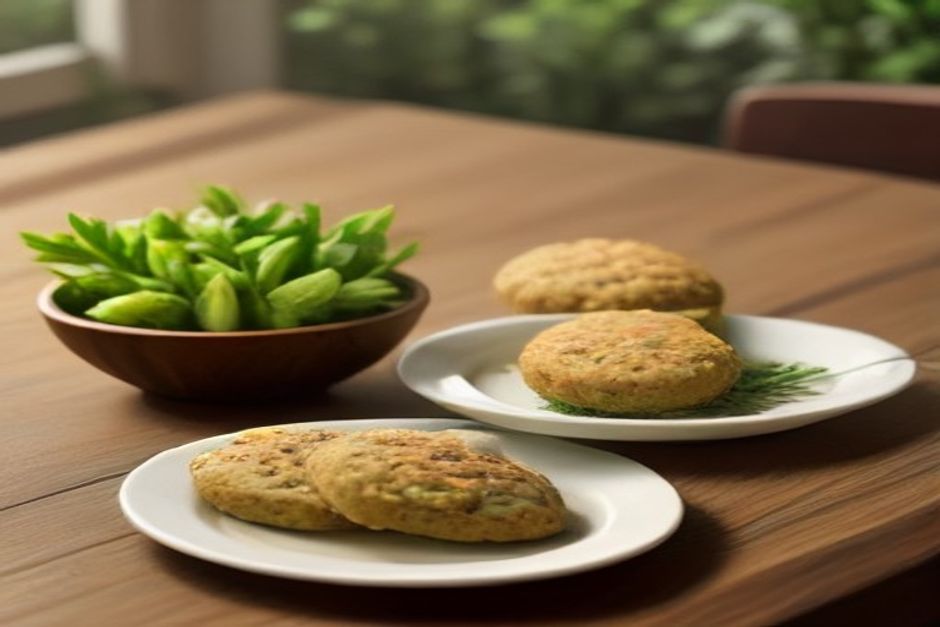
Falafel has a reputation problem in home kitchens, and it is entirely the fault of canned chickpeas. Make falafel from a can and you get a paste that falls apart in the pan or a dense puck that tastes like hummus with ambitions. Make it the traditional way — dried chickpeas, soaked but never cooked — and the mixture practically binds itself, bakes up crisp, and keeps for days. The oven version below trades the deep fryer for a hot sheet pan and loses almost nothing. What you gain is a protein you can cook in bulk on Sunday and eat well on until Friday, which for anyone trying to eat sensibly around a regular yoga practice is most of the battle.
Why bake instead of fry
Frying is traditional and delicious, and also a production: a pot of oil, spatter management, the smell in your curtains for two days. Baking at high heat with a generous brush of oil on both sides gets you perhaps eighty-five percent of the crust with ten percent of the ceremony. For a weeknight protein, that trade wins every time. The interior of a falafel was never the fried part anyway — it cooks through either way. What the oven asks in return is patience: a genuinely hot oven, a preheated pan, and the discipline not to flip early.
Baked falafel (makes about 18)
- 250 g dried chickpeas, soaked in plenty of water 12–24 hours, drained well (do not cook them)
- 1 small onion, roughly chopped
- 4 garlic cloves
- A large bunch of parsley or cilantro, stems and all, about a packed cup
- 1 tsp ground cumin, 1 tsp ground coriander, ½ tsp baking soda
- 1 tsp salt, black pepper, a pinch of chili flakes
- 2–3 tbsp olive oil for the pan and brushing
Method: Heat the oven to 220°C / 425°F with the sheet pan inside it — a hot pan is the secret to a bottom crust. Pulse the soaked chickpeas in a food processor until they look like coarse couscous, not paste. Add the onion, garlic, herbs, and spices, and pulse until the mixture holds together when squeezed but still has texture. Refrigerate thirty minutes if you have the time; it firms the mix. Form small patties — patties, not balls, because more surface area means more crust. Brush the hot pan with oil, set the patties down, brush their tops, and bake 12–15 minutes per side until deep golden. Flip once, gently, and not before the bottom releases easily.
The post-practice bowl
Falafel's real job on this site is to anchor the dinner you actually want after an evening class: substantial but not heavy, plant-based, and assembled rather than cooked. The template is a grain, a protein, something raw, something acidic, and a sauce. In practice: warm grains (rice, bulgur, or leftover quinoa), four or five falafel, a handful of chopped cucumber and tomato, pickled red onion if you keep a jar going, and a quick sauce of yogurt thinned with lemon juice, garlic, and salt. The whole thing takes ten minutes if the falafel exists already — which is the entire argument for the Sunday batch. If you like this way of eating, the buddha bowl and chickpea curry follow the same logic, and beet hummus makes a loud, pink companion on the side.
Freezer strategy
Freeze the falafel after baking, not before — the raw mixture weeps when thawed. Cool completely, freeze on a tray so they do not fuse, then bag them. Reheat straight from frozen in a hot oven or a dry pan for eight to ten minutes; the crust comes back almost entirely. A double batch costs you five extra minutes of shaping and buys a second week. This is the same batch-cooking logic that makes lentil soup a practice-day staple: cook once, eat well repeatedly, and spend your weeknight energy on the mat instead of the stove.
Notes and honest troubleshooting
- Mixture too wet? Add a spoonful of chickpea flour or let it rest longer in the fridge. Too dry and crumbly? Pulse a few seconds more — the chickpeas' own starch is the binder.
- Falling apart in the oven? Almost always canned chickpeas, or mixture processed to paste. Dried-and-soaked is not a suggestion here; it is the recipe.
- Bland? Falafel takes more salt and more herbs than feels reasonable. Taste the raw mix (it is safe — nothing is cooked) and correct boldly.
- No food processor? A box grater for the chickpeas and a sharp knife for everything else works, at the cost of twenty extra minutes and some forearm training that counts toward practice.
None of this is a prescription — how you eat is yours to design. But a freezer bag of falafel and a bowl template remove the two most common reasons practice-day dinners go sideways: no protein ready, and no plan. Remove those, and the evening class stops competing with dinner and starts fitting inside it.